
The CSTA survey: most CS teachers never studied CS. That is fixable
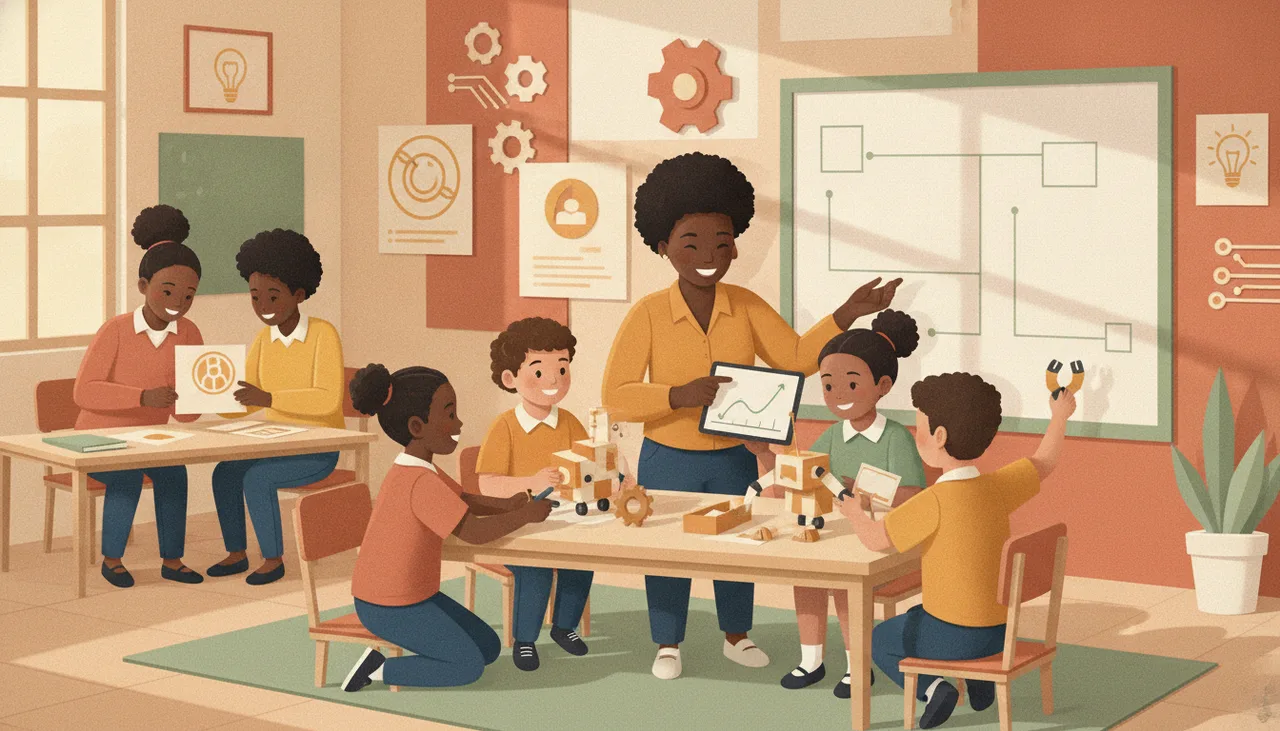
A 2025 CSTA survey found most CS teachers never studied CS and half teach alone. The fix is not hiring specialists: it is curriculum, rehearsal, peer support and honest tools.
In 2025 the Computer Science Teachers Association, working with the Kapor Foundation, published its CS Teacher Landscape survey of 2,882 PK-12 teachers. The most-quoted number is uncomfortable: 81% of those teachers entered the CS classroom with no computing background of their own. It reads like a crisis. It is closer to a design problem, and design problems get fixed with the right training, curriculum and support.
What the survey actually found
Three findings do most of the work. First, 81% of the CS teachers surveyed came to the subject with no CS or technical background. They were maths, science, art or language teachers who were asked, or who volunteered, to take on code. Second, 50% are the only CS teacher in their school. There is no colleague down the corridor to ask when a lesson stalls. Third, on artificial intelligence the gap is wide: 81% believe AI should be foundational to CS education, but only 42% feel equipped to teach it.
Read together, this is not a shortage of willing teachers. It is a shortage of support around them. The full write-up sits on the CSTA landscape page.
Why this matters for South African schools
South Africa is living the same story on a compressed timeline. The Coding and Robotics curriculum is rolling into CAPS, and the teachers asked to deliver it are, overwhelmingly, not computer scientists. They are the Grade 5 class teacher, or the Life Skills teacher who is good with computers. The CSTA numbers describe them well.
The isolation finding matters most here. A single CS teacher in a building, often part-time on the subject, carries the whole thing: kit, curriculum, marking and the parents' questions. Add load shedding, uneven bandwidth and tight budgets, and the job gets heavier still. None of this means the teacher is under-qualified. It means the school has under-built the scaffolding around a new subject.
What to do about it
The survey points at fixes that are within a school's control. You do not need to hire a computer scientist. You need to reduce isolation and give the teacher a spine to teach from.
- Give the teacher a sequenced curriculum, not a pile of activities. A week-by-week path removes the daily what-do-I-teach-next decision. A structured curriculum does more for a non-specialist than any single clever lesson.
- Let teachers practise before they perform. Most of the anxiety comes from doing something new in front of thirty children. A browser simulator lets a teacher rehearse a full lesson with no kit and no electricity; you can try one in the browser during a free period.
- Break the one-teacher isolation. Pair your CS teacher with a peer at another school, or bring in periodic outside support. Structured school service exists precisely so the lone teacher is not the only line of defence.
- Budget for spares and setup time, not just kits. A class set that half-works erodes confidence fast. Budget roughly 10 to 15% of kit cost for spares, and give the teacher paid setup time before term one.
- Treat AI as a topic to learn together. With only 42% of teachers feeling ready, the honest move is to learn alongside students rather than pretend to expertise.
Where vendors carry responsibility
If 81% of your customers are non-specialists, handing over a kit and saying good luck is not a product. It is an abdication. The survey is really a brief to everyone who sells into schools: the tool has to teach the teacher, not just the child.
In practice that means a few things. Lessons should be scripted enough that a nervous teacher can run them cold, with answer keys and common-mistake notes. Hardware should fail gracefully and be repairable. And there should be a way to practise without the physical kit, because the first place a lesson breaks is setup. Our own approach leans on one board across levels, the sheenbot∞, paired with a simulator so the plastic and the browser behave the same way. Whatever brand a school picks, judge it on how much it lowers the load on that single, non-specialist teacher.
The takeaway
The CSTA survey is not a verdict on teachers. It is a description of a young subject that has outgrown its support structures. Most CS teachers never studied CS, half work alone, and most feel unready for AI. Each of those is fixable with curriculum, rehearsal, connection and honest tooling. Schools that build that scaffolding tend to keep their CS teachers. Those that hand over a kit and walk away keep losing them.
Common questions
Do you need a computer science degree to teach coding and robotics?
No. The CSTA data shows the opposite is the norm: four in five CS teachers came from another subject. What predicts a good class is a sequenced curriculum, time to prepare and someone to ask, not a specific qualification.
How do you support the only CS teacher in a school?
Connect them outward and give them a spine to teach from. A shared curriculum, a peer at another school and periodic outside help turn a lone role into a supported one. Rehearsal tools help too, because they let a solo teacher test a lesson before running it live.
Should non-specialist teachers teach AI at all?
Yes, carefully. Since most teachers say AI belongs in CS but few feel ready, the practical route is to start small and learn with students, using structured lessons rather than improvising in front of the class.