sheenbot Publish
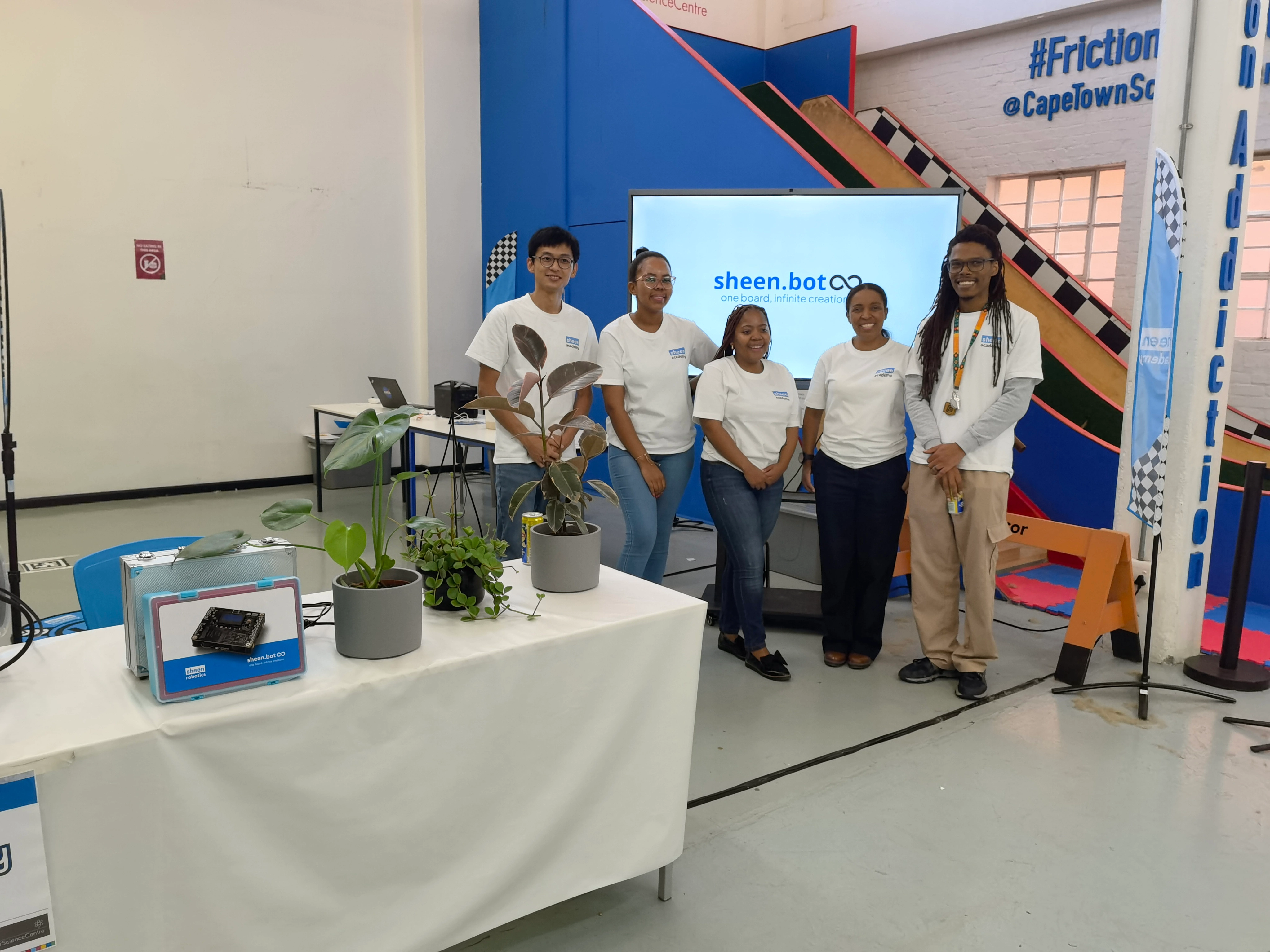
Two weeks after the academy opened, we published the first sheenbot together with a smart home kit — the moment Sheen stopped being a company that taught with other people's hardware and became one that makes its own.
On 29 March 2025 we published the first sheenbot, bundled with a smart home kit. It is the shortest entry in this timeline to describe and the one that changed the company most.
Why build hardware at all
Sheen started by teaching with kit made by other people, and teaching with someone else's hardware teaches you exactly where it hurts. Three problems came up in almost every session:
- Time disappears into wiring. A forty-minute lesson can lose fifteen minutes to connectors, jumper leads and the question "is it plugged in the right way round?" — none of which is the thing we are trying to teach.
- Errors discourage before they teach. Children rarely stop because the concept is too hard. They stop because a syntax error or a loose cable made them feel stupid three times in a row.
- Every new topic means new hardware. A smart-home lesson, a line-following lesson and a sensor lesson each arriving in a different box drives up cost and breaks continuity between them.
Our founder, Adam Lin, framed the goal simply: free students from hardware debugging and syntax correction so they can spend the hour thinking, experimenting and creating instead.
The smart home kit was the proof
Pairing the board with a smart home kit was a choice about what learners should build first. A smart home is a project a child already understands before the lesson starts — a light that should come on when it gets dark, a door that should know when someone is at it, a room that should react to how warm it is.
That means the programming has an obvious purpose from the first block. The learner is not making an abstract loop run; they are making a house behave. And because the kit brings sensors, actuators and a controller together in one bundle, the same hardware carries the learner from a first blinking light through to a project with several things happening at once.
Where it led
The first sheenbot was a starting point, not an end state. The design principle behind it — that educational technology should be truly plug and play — became the brief for everything that followed: sheenbot∞, the AI-native board with its ports designed so that a wrong connection is not possible; the block-and-Python canvas that lets a learner move from drag-and-drop to real code on the same hardware; and later the sheenIoT platform that puts those projects on a dashboard.
Every one of those came out of watching what happened in the ten minutes before a lesson actually started.
The current generation of boards and kits is in the sheen store, and the design story is on our about page.