MICTSETA 4IR Symposium & IoT Hackathon
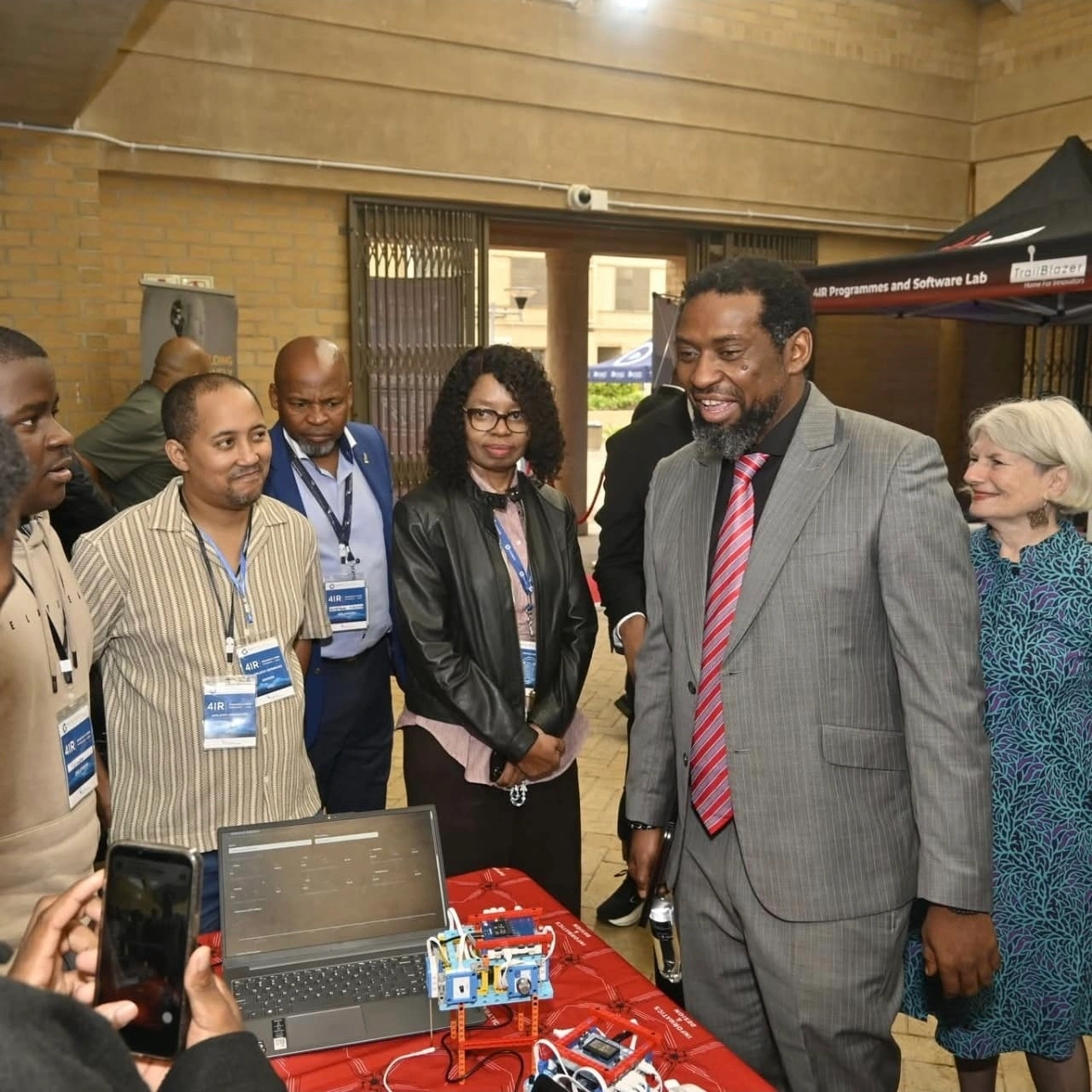
At the MICT SETA 4IR symposium and IoT hackathon in May 2026, students built a working smart-farm system on sheenbot hardware and presented it to South Africa's Minister of Higher Education — a laptop, a breadboard and a room of officials.
On 28 May 2026, at the MICT SETA 4IR symposium and IoT hackathon, students demonstrated a smart-farm solution built with sheenbot hardware to the South African Minister of Higher Education.
What they built
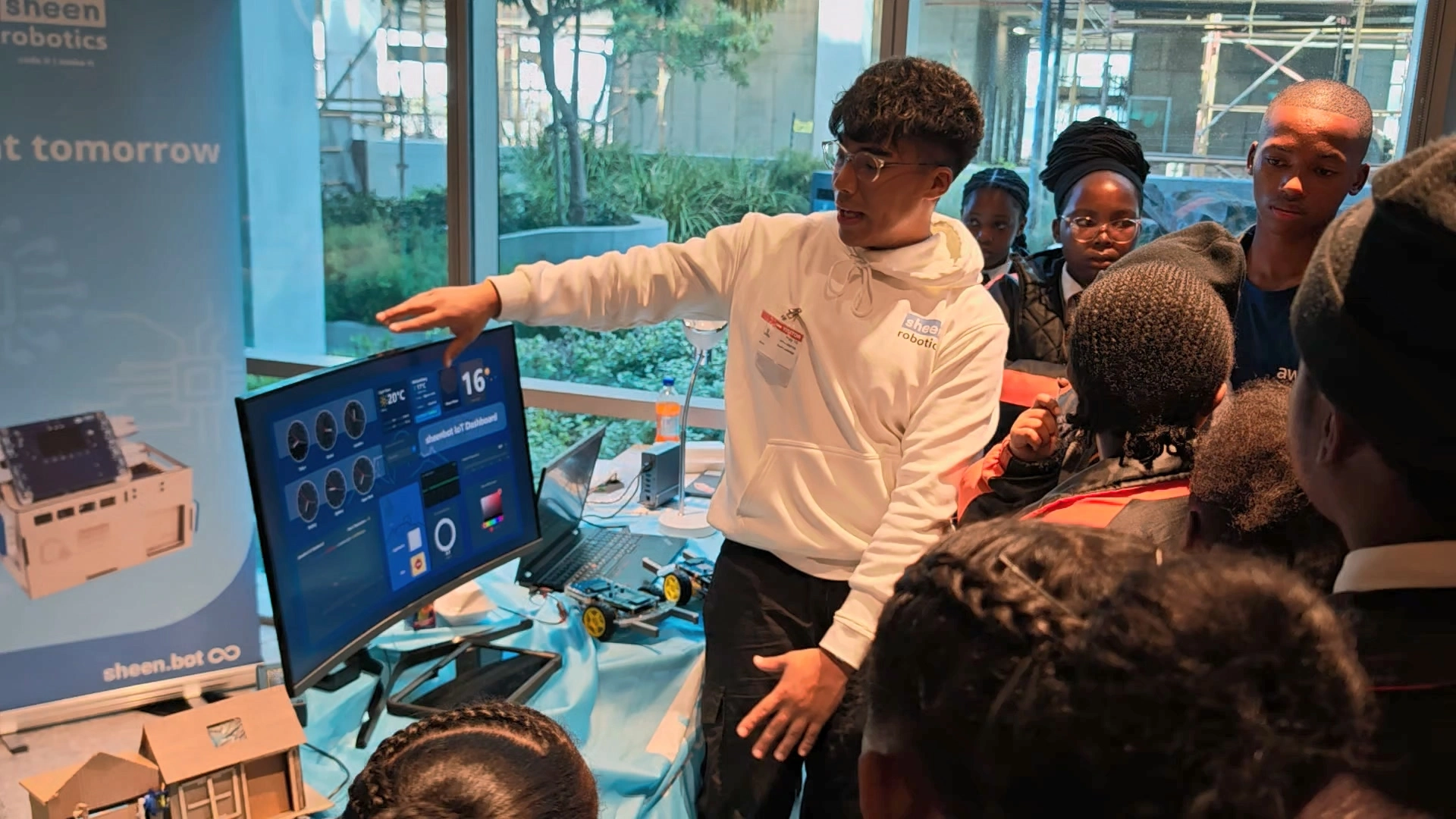
The system on the table was a working IoT smart farm: sensors reading the growing environment, a sheenbot controller applying rules to what they reported, and a dashboard on a laptop showing the state of it live. Not a poster of a system. The system, running, with a wire that could be pulled out to prove it.
That distinction is the point of a hackathon. Under time pressure, teams have to decide what to cut, and the things that survive are the things that had to work. A demonstration that survives contact with a live audience has been tested in a way a submitted document never is.
Why smart farming, again
The same reasoning that put smart farming into a primary school computer lab three weeks earlier applies at hackathon level, with the stakes raised.
Agriculture is a large, digitising sector in this country, and the technical problems in it are unglamorous and real: measuring accurately in a hostile environment, making decisions with imperfect data, keeping something running unattended, and doing it for a price a farm will actually pay. Those are the constraints professional IoT work runs into, and they are visible to a student team within an afternoon of building.
Presenting to a Minister
Explaining your project to the Minister of Higher Education is a particular kind of pressure, and it is worth more than the technical exercise on its own.
Students discover in about ninety seconds that a technically correct explanation is not the same as a clear one — that the question is never "which sensor did you use", it is "what problem does this solve and who for". Learning to answer that, standing up, to someone who does not share your context, is the skill that determines whether good technical work ever gets funded or deployed.
What MICT SETA does
MICT SETA is the Media, Information and Communication Technologies Sector Education and Training Authority — one of the statutory bodies responsible for skills development in South Africa's ICT sector. Its 4IR programming brings together universities, training providers, industry and government around the question of what skills the sector will need and how they get built.
A student demonstration at that kind of event does something a panel discussion cannot: it puts a concrete artefact in front of the people making skills policy. The gap between "4IR skills" as a phrase in a strategy document and a breadboard reading soil moisture on a table is exactly the gap worth closing.
The whole stack, in one demonstration
This is, as it happens, a fair summary of everything else on this timeline. The board and smart-home kit from March 2025. The sheenIoT platform launched in February 2026. The smart-farm curriculum. And students who were good enough with all three to hold a room.
Universities and training providers can read about our IoT hackathon programme, or get in touch about running one.