Why every classroom tool wants a subscription — and what happens when you stop paying
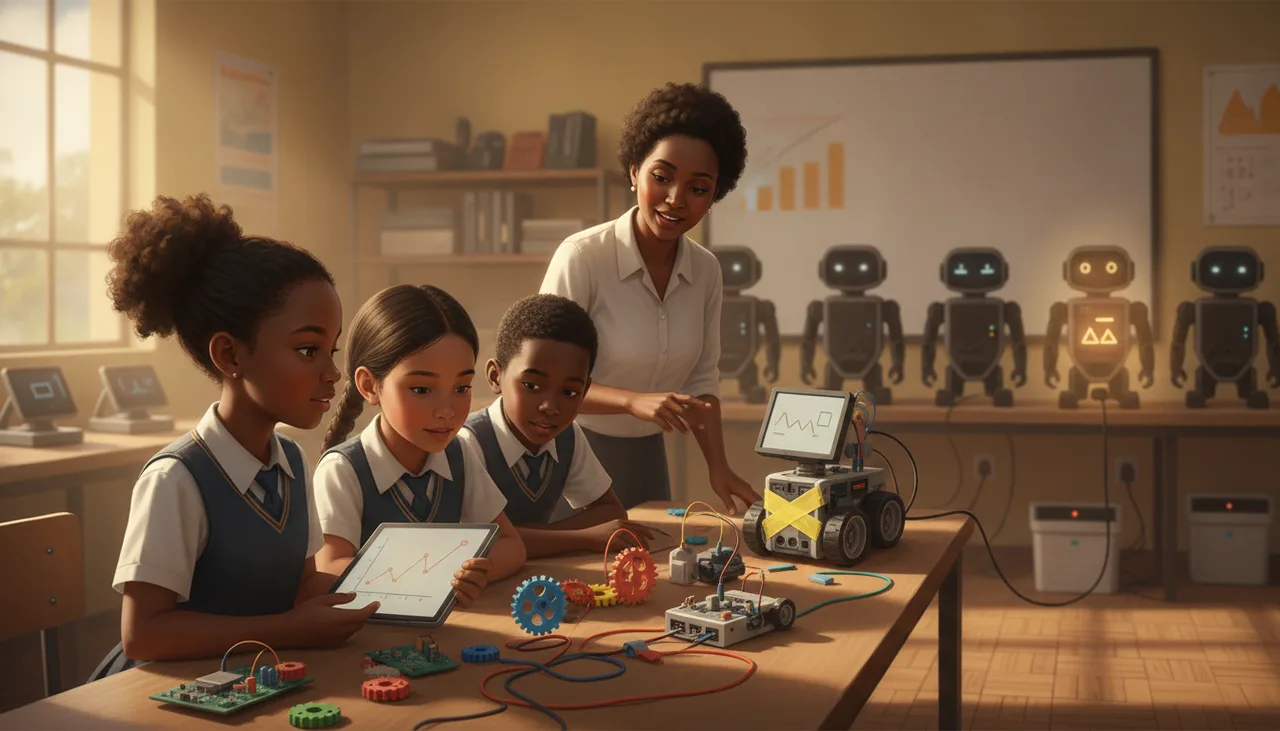
When school budgets freeze or cloud servers shut down, subscription-dependent classroom tools instantly turn into useless plastic. Here is how to audit your tech stack for survival.
The short answer is simple: hardware is expensive to build, but software subscriptions provide predictable, recurring revenue that venture capitalists demand. When you stop paying, or when the manufacturer decides the cloud servers are too expensive to maintain, your expensive classroom hardware instantly turns into useless plastic and silicon.
In South African schools, where budgets are hard-won and IT environments are notoriously fragile, this "subscription creep" is more than a line-item headache. It is an existential threat to the CAPS coding and robotics curriculum. If a lesson relies on a remote server to compile a simple block of code, that lesson is one power cut, one unpaid invoice, or one corporate acquisition away from cancellation.
The Economics of the "Smart" Trap
To understand why a simple programmable robot or IoT kit now requires a monthly login, you have to follow the money. Traditional hardware sales are transactional: a school buys 20 kits, the vendor makes a one-off profit, and the school uses those kits for five years. But maintaining the software apps that control these kits costs money every month. To solve this, developers shift to a "Hardware-as-a-Service" model, gating basic functionality behind a paywall.
We see this play out constantly in the consumer space, which serves as a warning for education. For example, the smart-gardening company Gardyn gates its automated features behind a $39 per month subscription. Without it, users are left with an expensive, manual light stand. Similarly, the pioneer of automated indoor gardens, AeroGarden, has suffered from severe app decay, leaving users unable to connect to their devices when servers falter or apps go un-updated. Even tech giants pull the plug: Belkin has announced the complete termination of its Wemo cloud services on 31 January 2026, rendering older smart devices obsolete. As one commentator on Hacker News noted:
"This is why any piece of automation that comes into my home is required to function without internet or an app."
In a school environment, this vulnerability is multiplied by forty learners trying to log in at the same time.
The South African Classroom Failure Modes
When a school imports subscription-based educational tools, they are not just buying a product; they are importing foreign infrastructure dependencies. Here is how those dependencies break down in a local classroom:
- The Exchange Rate Tax: A subscription priced at $5 per user per month might seem trivial in Silicon Valley. In South African Rands, fluctuating against the Dollar, that same fee can quickly swallow an entire school's annual IT budget.
- WPA2-Enterprise WiFi: Most school networks use enterprise-grade security. Many cheap, consumer-grade IoT and robotics kits cannot negotiate these networks, requiring teachers to set up insecure mobile hotspots just to get a kit to register its subscription.
- Load-Shedding and Backhaul Failures: Even if your school has a generator or solar backup to keep the lights and computers on, the local cell tower or fibre node down the street might not. If your robotics tool requires a cloud compiler to run, the lesson stops the moment the internet connection drops.
- Teacher Tool Fatigue: According to research by the RAND Corporation, approximately 30% of teachers state that there are simply too many digital tools to manage. Forcing teachers to manage student accounts, passwords, and expiring annual licences for physical hardware only worsens this fatigue.
The Golden Rule of Classroom Procurement
To protect your school from stranded assets, your procurement policy must adapt. The rule is simple: anything essential to a lesson must run offline and outlive the vendor.
Before signing off on any new coding, robotics, or IoT hardware, ask the vendor these three questions:
| The Question | The Red Flag Answer | The Safe Answer |
|---|---|---|
| Where does the code compile? | "In our secure cloud platform." (If the internet dies, the lesson dies.) | "Locally on the computer, via USB." (Works completely offline.) |
| What happens if the company closes? | "Our cloud services will be discontinued." (Your hardware becomes trash.) | "The hardware uses standard open-source protocols." (You can use third-party software.) |
| Are there recurring fees? | "An annual seat licence is required to use the software." (A budget freeze bricks your lab.) | "None. The software is free and open-source." (You pay once for the physical tool.) |
Building a Resilient Lab
This is not an argument against modern technology; it is an argument for sustainable engineering. Schools cannot afford to treat educational hardware as disposable consumer electronics. If a learner cannot plug a micro-controller into a laptop and program it using a local, offline interface, that tool does not belong in a South African classroom.
This philosophy is why we built our own ecosystem differently. Our Sheen Canvas platform (/canvas) is designed to run entirely in the browser using local WebUSB compilation, meaning it requires zero internet connection to program your hardware once loaded. Likewise, our Infinity system (/infinity) is engineered to use open standards that ensure your hardware remains fully programmable and functional even if we, or any other vendor, were to disappear tomorrow.
When you audit your classroom tools this year, look closely at the ones that demand a login. If a tool cannot survive a term without an internet connection or a credit card, it is not a teaching tool — it is a liability.