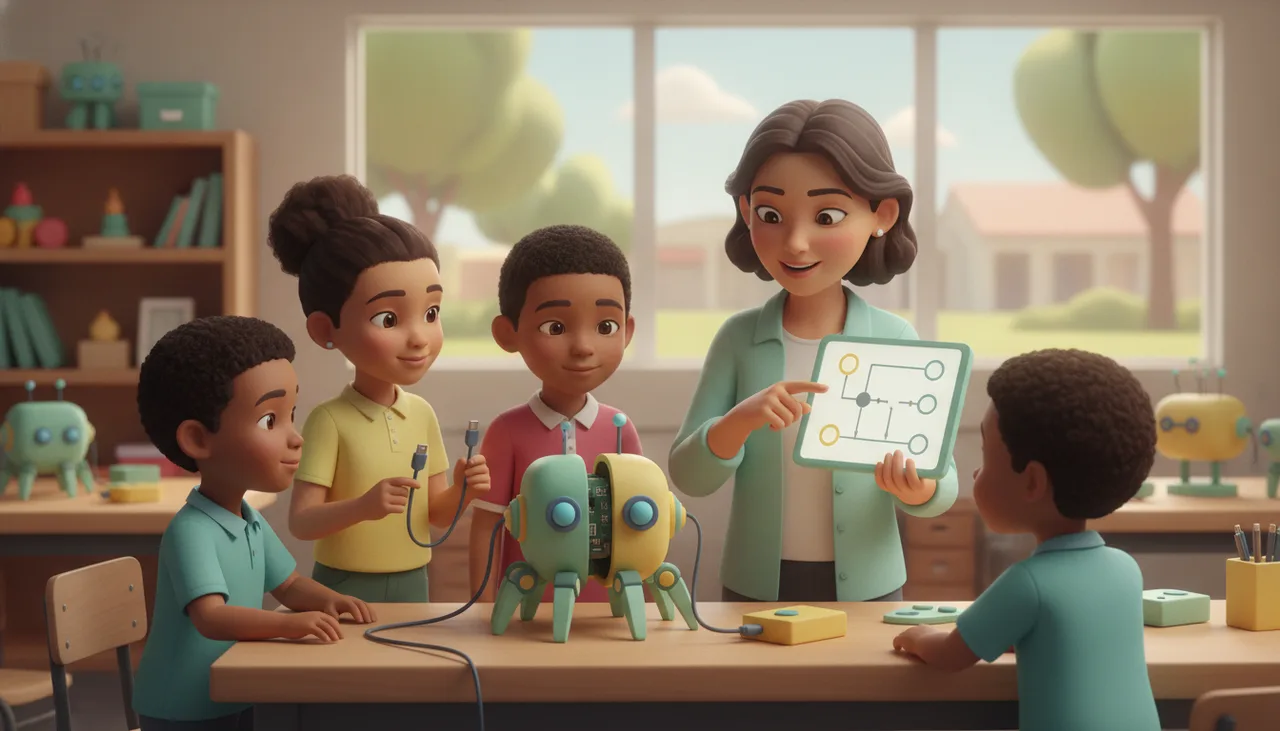
Teacher training for coding and robotics: what actually helps
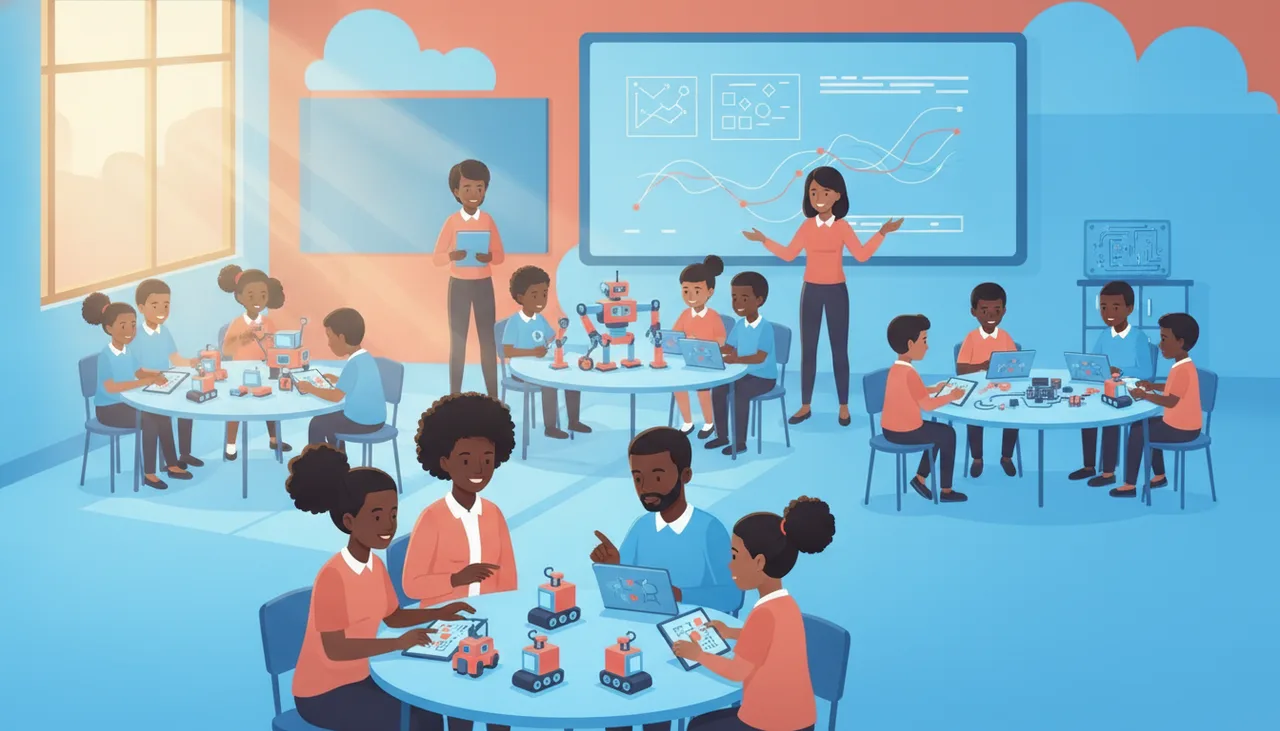
One-off robotics workshops fade fast. What actually helps teachers is a cohort learning together, practice embedded in real lessons, and office hours after the workshop ends.
With a fresh school year just underway, plenty of schools are booking coding and robotics training for their teachers, so it is worth knowing which kind pays off. The most common format, a single full-day workshop run once in the holidays, is also the least durable. Teachers leave energised, term starts, the kit stays in the cupboard, and by mid-term the confidence has quietly drained away. The training that actually changes classroom practice is smaller and slower: a cohort of teachers learning together, practice built into real lessons, and someone to ask when a lesson goes wrong.
Why the one-off workshop fades
A day of training can cover the mechanics of a board or an app. It cannot rehearse the part teachers find hardest: running twenty-five learners, several of whom have a flat battery or a loose wire, while the lesson clock keeps ticking. Managing a class around hardware is a separate skill from understanding the hardware, and it is only learned in front of a class.
Timing does the rest of the damage. A skill that is not used within a week or two decays fast. If the gap between the workshop and the first real lesson is a whole term, most of the day is forgotten before it is ever tried. The problem is rarely the content of the workshop. It is the shape of it.
The three things that make training stick
Across schools that successfully embed the subject, three ingredients show up again and again.
A cohort, not a lone hero. One trained teacher in a school is fragile. They get sick, they move on, and the programme leaves with them. Train two or three together and they cover for each other, swap lesson plans, and make the subject normal in the staffroom. A cohort also lowers the social cost of looking unsure in front of colleagues, which is a bigger barrier than most training budgets admit.
Practice embedded in real lessons. The strongest professional development is scheduled against a teacher's own timetable. They teach a lesson from the curriculum they will actually deliver, with a facilitator co-teaching or observing, and then debrief. This beats any number of demo activities, because the real friction surfaces: the timing, the transitions, the one instruction that confuses the whole room.
Office hours after the workshop. The highest-value add-on sounds dull: a standing slot, weekly or fortnightly, where teachers bring a broken lesson or a bricked board and get unstuck. It is the difference between abandoning a project after one failure and fixing it, then teaching it again the following week.
Rehearse before you stand in front of a class
Preparation should not depend on a full class set being charged and working. A browser-based simulator lets a teacher build a lesson at home, break it on purpose, and predict where learners will get stuck, all without a single battery. A sensible on-ramp is to run a new lesson once in a simulator, then once with a handful of real kits, then with the full class. Each pass removes surprises before the stakes get higher.
How to evaluate a vendor's PD offer
Most vendors will sell you a workshop. Fewer will sell you the follow-through that makes it work. Before committing budget, ask what is actually included:
- Follow-up, not just a day. Is there any contact after the workshop, or does support end when everyone goes home?
- Cohort pricing. Can you send two or three teachers rather than one, without paying three separate full prices?
- Curriculum-aligned material. Do the lessons map to what you already teach and to CAPS, or is it a generic activity pack you will have to rewrite?
- Classroom time, not just theory. Does the training include co-teaching or observation in a real class, or is it all in a training room?
- Repair and spares. When a board fails mid-term, who fixes it, and how long does it take? Budget roughly 10 to 15 percent of kit cost for spares regardless.
- A simulator or offline option. Can teachers and learners practise when the hardware, or the power, is not available?
If a provider cannot answer the first two, treat the price as the cost of one energising day and nothing more.
How we approach it at sheen
We run teacher training as a cohort model rather than a single event. The holiday workshops at our Cape Town academy are hands-on and deliberately small, and they are paired with follow-up rather than treated as the whole offer. Teachers practise on the same sheenbot∞ board their learners will use, and can rehearse lessons in the block simulator before a class set is even unboxed. For schools rolling the subject out across grades, our school service covers curriculum, kit and ongoing support together, so a single trained teacher is never the only thing holding the programme up. None of this is unique to us, and the checklist above applies to any provider you consider.
Takeaway
Judge coding and robotics training by what happens after the workshop, not during it. A cohort of teachers, practice inside their own lessons, and a reliable place to get unstuck will outperform the best single day you can book. When you compare vendors, weigh the follow-through more heavily than the polish of the demo.
Common questions
How long before a teacher is comfortable teaching robotics?
With embedded practice and office hours, most teachers are comfortable running lessons within a term. Without follow-up, many never get there, regardless of how good the initial workshop was.
Do teachers need a coding background?
No. Block-based tools and a good curriculum let a confident generalist teacher start without prior coding experience. What they need is time to rehearse and permission to not know every answer in front of learners.
What if we can only release one teacher for training?
Send one, but treat it as a risk to manage rather than a solved problem. Ask the provider for follow-up support, document lessons as you go, and aim to train a second teacher the following term so the programme does not rest on one person.