How to Start an FTC Team When You Aren't an Engineer

Starting an FTC team without an engineering background is entirely feasible if you focus on a simple 'push-bot' design, use standard pre-built kits, and act as a project facilitator rather than a technical expert.
You do not need an engineering degree, a background in software development, or a workshop full of industrial machine tools to start a successful FIRST Tech Challenge (FTC) team. In fact, some of the most resilient rookie teams are led by teachers, parents, and community organisers who cannot tell a hex driver from a Torx key when they first sign up.
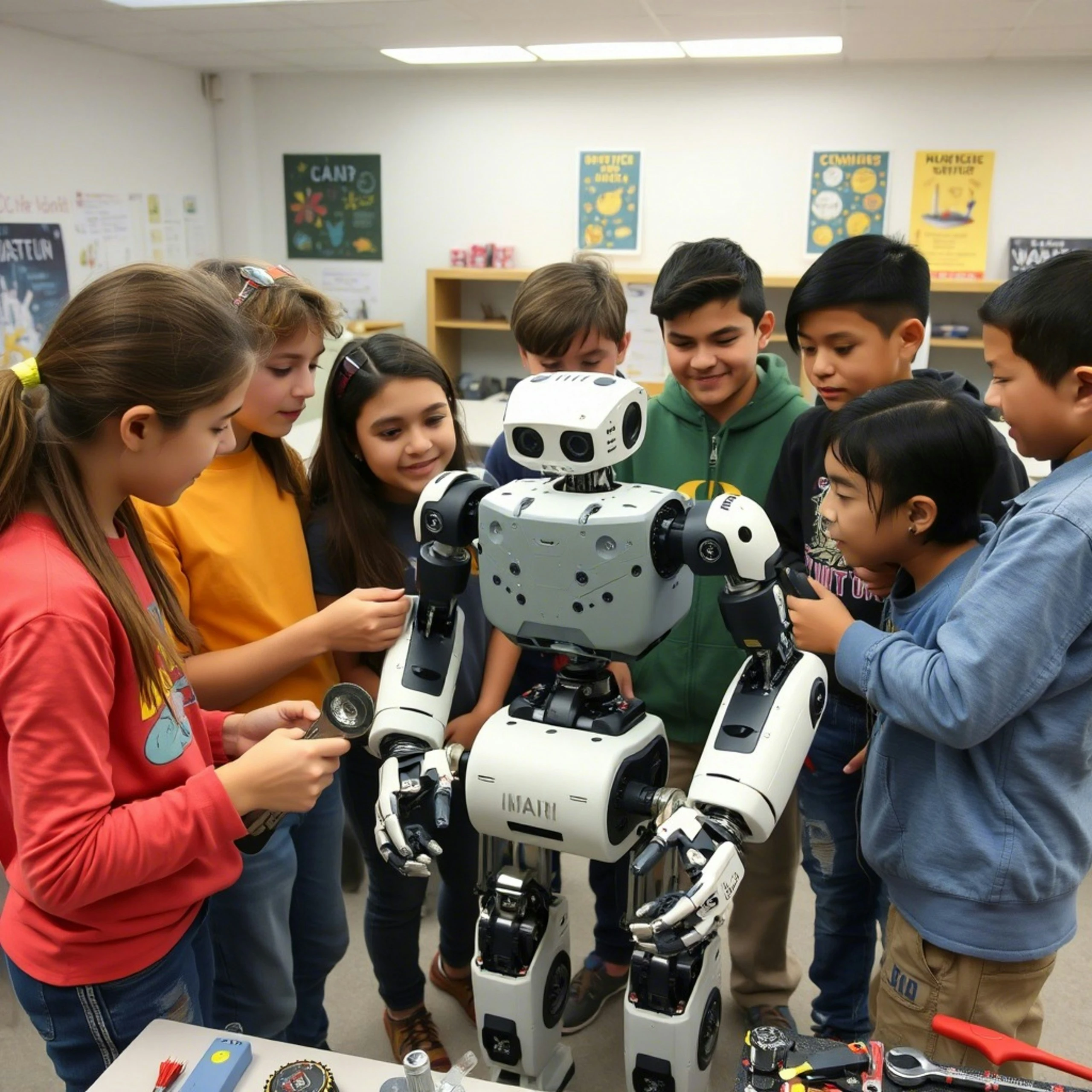
Your role as a coach is not to design the robot; your role is to manage the logistics, enforce safety, and facilitate a space where students can learn through trial and error. If you try to act as the chief engineer, you will burn out, and your students will miss out on the core value of the competition.
Here is your realistic, step-by-step survival guide to navigating your first FTC season in South Africa, from your first team meeting to the tournament floor.
The Rookie Reality Check (Embrace the Cluelessness)
If you feel completely out of your depth, you are in good company. On the global FTC forums, posts like
"Guys our team is completely clueless and we have absolutely no idea what we're doing"and
"We are a new team without a coach that knows coding well"are incredibly common. Every season, hundreds of teams start from exactly this position and still manage to field a working robot.
The secret to surviving your first year is simple: drastically limit your scope. Rookie teams often fail because they look at veteran robots on YouTube and try to build complex, multi-stage lifts, active intake rollers, and custom-machined chassis.
In your first season, your goal is not to win the national championship; it is to build a reliable "push-bot" or a basic claw-bot. A robot that can drive reliably, park in the designated zones, and push a single game element will score points. More importantly, it will pass inspection. A complex, non-functional robot sitting in the pits scoring zero points is a recipe for student heartbreak.
The First Month: Setting Boundaries and Sourcing Kits
Before you open a single box of parts, you must establish the golden rule of FTC: the students do the work. If a student asks you how to fix a mechanical issue, your answer should be, "What does the manual say?" or "Have you researched how other teams solved this?" If you pick up the tools, you rob them of the learning experience and violate the spirit of the competition.
In South Africa, sourcing hardware is your first major hurdle. Importing kits directly from the US can lead to weeks of customs delays and unpredictable import duties. To compete, you need a standard, grid-based build system. We highly recommend starting with a structured kit from goBILDA (such as the Strafer Chassis) or REV Robotics. These systems use pre-drilled channels and standard metric hardware, meaning students do not need access to a lathe or a drill press to assemble them.
To bypass the logistical headache of international shipping and customs clearance, you can procure official kits and get local technical guidance through the Sheen Robotics FTC support hub.
The Minimum Viable Robot: Hardware and Code
To compete rather than merely attend, your robot must meet the following baseline requirements:
| Component | Rookie Standard (Do This) | Avoid in Year One (Skip This) |
|---|---|---|
| Drivetrain | 4-motor mechanical drive (standard or Mecanum wheels) using a pre-built chassis kit. | Custom-cut plate chassis, custom gearboxes, or swerve drive. |
| Mechanism | A simple, single-jointed arm with a basic servo-powered claw or a passive plow. | Multi-stage linear cascades, high-speed flywheels, or complex intake rollers. |
| Programming | FTC Blocks (visual, drag-and-drop programming environment). | Complex Java, custom PID controllers, or computer vision (OpenCV). |
Do not let anyone shame you into avoiding Blocks programming. It is fully supported, highly reliable, and allows students to understand programming logic without getting tripped up by missing semicolons or syntax errors. If your team has no coding experience, Blocks is your superpower.
Navigating South African Infrastructure Constraints
Running an FTC team in South Africa introduces specific operational challenges that international guides rarely mention:
- Load-Shedding: Your workshop sessions will inevitably be interrupted by power cuts. You cannot charge robot batteries or laptops during load-shedding. Invest in a decent multi-plug surge protector, charge all batteries (both the 12V robot batteries and your driver station controller phones) at home the night before, and keep your laptops fully charged.
- School Wi-Fi: Most South African schools use WPA2-Enterprise Wi-Fi networks, which require individual user logins. The FTC control system relies on a direct Wi-Fi connection between the Driver Station phone/controller and the Robot Control Hub. School networks often block this peer-to-peer connection. You must run your robot network completely offline, or use a cheap, standalone travel router in your classroom to create a local, non-internet-connected network for your team.
How to Run a Build Session Without Being an Expert
When your team meets, do not stand at the front of the room lecturing. Instead, run the session like an agile project manager:
- The Stand-up: Start each session with a 5-minute meeting. Ask each sub-team: What did you do last time? What are you doing today? What is blocking you?
- The "Three-Before-Me" Rule: If a student has a technical question, they must consult three sources before asking you: the official game manuals, the FTC Discord/Reddit community, and a teammate. Only then can they bring the problem to you—and your job is to help them search for the answer, not to provide it.
- Document Everything: The Engineering Portfolio is a mandatory part of FTC judging. It is worth just as much as the robot's on-field performance. Assign at least two students to document every session with photos, sketches, and written explanations of what failed and how they fixed it. A team with a mediocre robot and an exceptional portfolio can easily win major awards.
If you find that your students need a structured, step-by-step curriculum to learn the basics of electronics, coding, and mechanical design before they start building, you can enrol them in the Sheen Robotics Academy courses to build their foundational skills offline.
The Cost of Entry
To set realistic expectations with your school governing body or parent group, here is a rough breakdown of the financial commitment for a rookie South African team (estimated in ZAR, subject to exchange rate fluctuations):
- Starter Robot Kit (Motors, structural parts, wheels): R18,000 – R25,000
- Control System (Control Hub, Driver Hub, sensors, controllers): R12,000 – R15,000
- Tools and Consumables (Allen keys, zip ties, tape, basic hand tools): R2,000
- National Registration and Event Fees: R3,000 – R5,000 (dependent on local affiliate pricing)
While this initial outlay of roughly R35,000 to R47,000 may seem steep, remember that 80% of these parts are reusable year after year. Your second-season costs will be a fraction of this amount.
You do not need to be an engineer to give your students this opportunity. You just need to be willing to sit in the discomfort of not knowing the answer, and guide them as they find it themselves.