What is computational thinking? A plain-language guide for parents
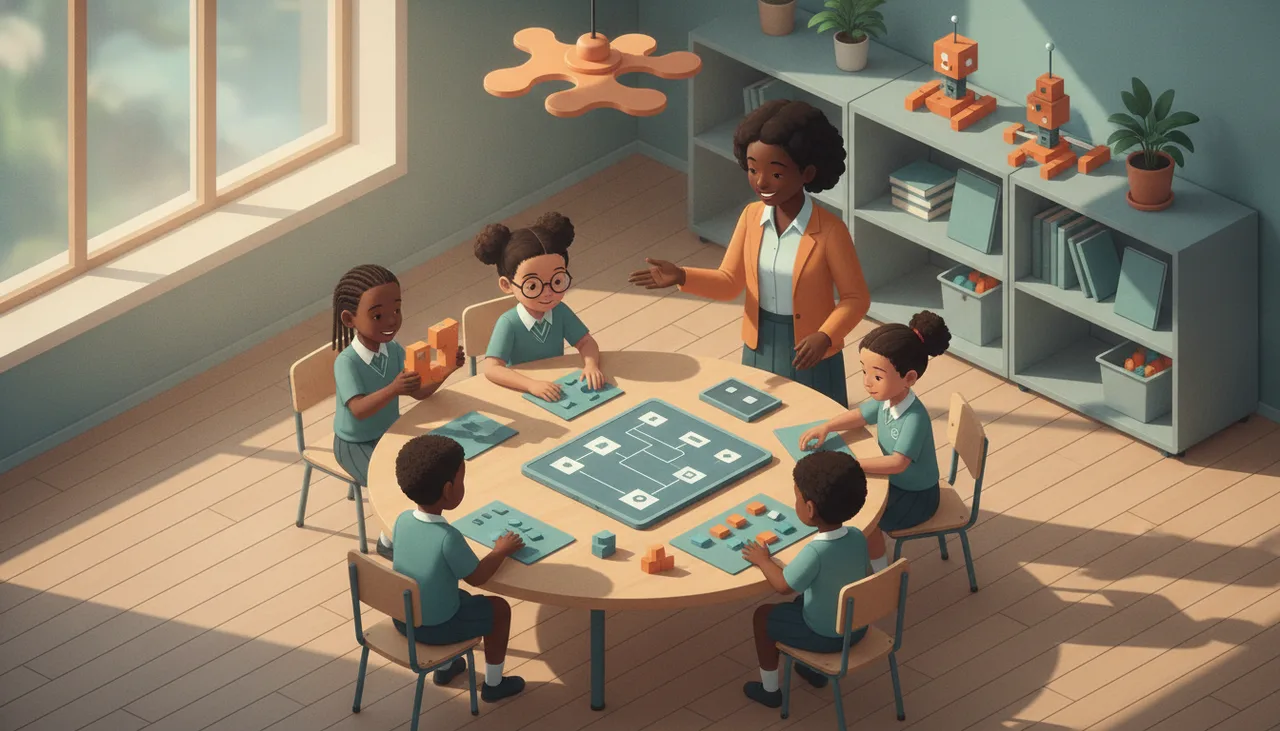
Computational thinking is problem-solving in four habits: break it down, spot patterns, strip out detail, write clear steps. It is not the same as coding.
Computational thinking is a way of solving problems: you break a big task into smaller parts, look for patterns, ignore the detail that does not matter, and write out a clear set of steps anyone could follow. It is a thinking skill, not a typing skill, and it works whether or not a computer is in the room. If your child has ever sorted washing by colour or planned the fastest walk to school, they have already started.
Problem-solving first, screens second
The phrase sounds technical, but the idea is old. Long before computers, engineers, cooks and mechanics used the same moves to get from a messy problem to a reliable result. What computers added was a demand for precision: a machine does exactly what you tell it, in the exact order you tell it, so sloppy instructions fail loudly. That is why the skill outlives any one language or tool. The Python or block-based canvas your child uses this year will look different in ten years. The habit of thinking clearly about a problem will not.
The four habits, at the kitchen table
You can practise all four with nothing but a pencil or a packed lunch. Try naming them out loud so your child hears the vocabulary.
- Decomposition — breaking a job into parts. Making a school lunch is really four smaller jobs: choose the food, prepare it, wrap it, pack the bag. Big problems feel less scary once they are a short list.
- Pattern recognition — spotting what repeats. A load shedding schedule, the seven and eight times tables, the way a favourite recipe doubles. Once you see the pattern, you can predict the next step instead of working it out from scratch each time.
- Abstraction — ignoring the detail that does not matter for the task at hand. A map leaves out every tree and pothole and still gets you home, because it keeps only what you need. Deciding what to leave out is a real skill.
- Algorithms — a clear, ordered set of steps. A recipe is an algorithm. So is the morning routine on the fridge. Good ones are precise enough that someone else could follow them and get the same result.
Computational thinking vs coding
This is the question most parents actually want answered, so let us be plain: they are not the same thing. Computational thinking is the reasoning. Coding is one way to write that reasoning down so a machine can run it. A child can plan a perfectly good algorithm on paper and then hit a bug the first time they type it, and nine times out of ten the bug is a thinking gap, not a spelling mistake in the code.
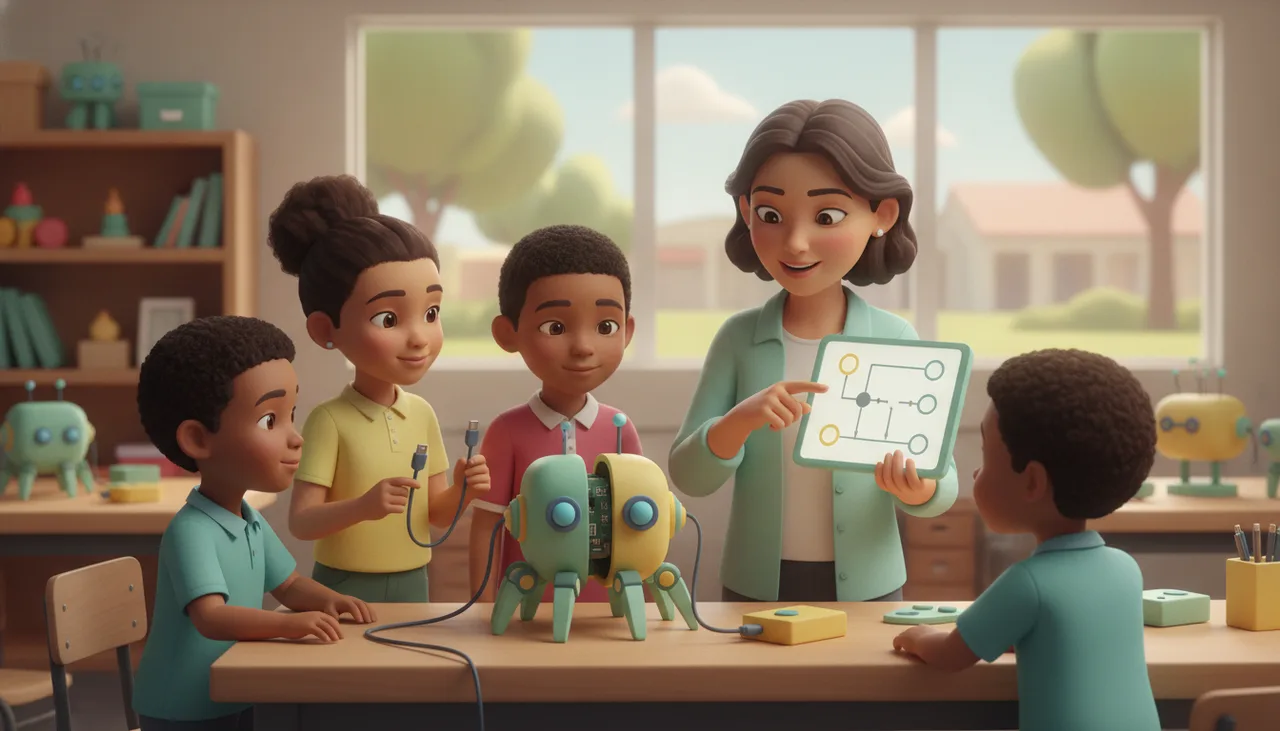
That order matters for how you help. When we teach beginners, we work the thinking out first, often on a block-based canvas where steps snap together like puzzle pieces and there are no semicolons to trip over. A physical board such as the sheenbot infinity then gives the algorithm something real to control, so a mistake in the logic shows up as a robot that turns the wrong way rather than as a red error message. Coding syntax comes later, once the thinking is steady.
How to build it at home
None of this needs a device or a subscription. A few small habits over a term do more than one intense weekend.
- When your child explains something, ask them to explain it as if to someone who has never done it before. That forces decomposition.
- Pick one chore this week and write it as numbered steps together, then follow the steps exactly, mistakes and all.
- Hunt for one pattern a week: bus times, sports fixtures, the way prices scale when you buy in bulk.
- When instructions fail, let them debug. Fix the steps together instead of quietly taking over. Debugging is where most of the learning lives.
- Keep some days screen-free. The four habits are strongest when they are not tied to a particular app.
Where it goes next
If your child enjoys this kind of thinking, a structured course gives it somewhere to grow, moving from puzzles on paper to building real projects step by step. Our Cape Town academy is built around these four habits rather than around any single language, and a free trial lesson is the easiest way to see whether it clicks for your child before you commit to anything. Either way, the goal is the same: a young person who can look at a hard, messy problem and calmly break it into steps they can solve.