When the Cloud Dies: What Actually Happens to Your Smart Hardware
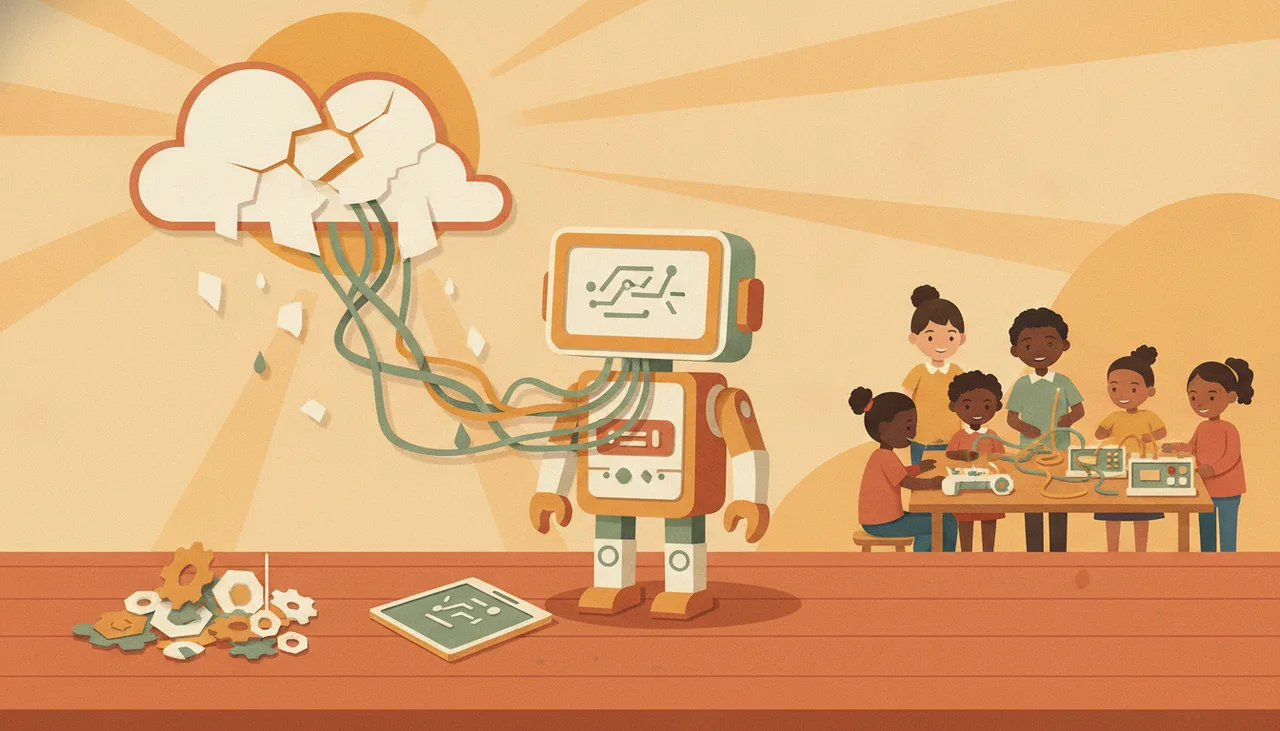
When a smart device vendor shuts down its cloud servers, your expensive hardware often becomes a useless plastic brick. Here is what real-world shutdowns teach us about the rule of local-first ownership.
When a vendor decides to turn off the cloud servers powering your smart device, what you actually own is revealed. In most cases, it is not a functional piece of technology, but a highly engineered plastic brick. Without those remote servers to process commands, handle schedules, or authorise logins, the physical device in your home or classroom ceases to work, regardless of how much you paid for it.
This is not a theoretical risk. It is an active reality for millions of consumers globally. If a device cannot complete its core function with the internet cable unplugged, you do not own it; you are merely renting it until the manufacturer's balance sheet or strategic priorities change.
The Anatomy of a Cloud Shutdown
Over the last few years, several high-profile smart home ecosystems have begun to dismantle their cloud infrastructures. These are not obscure startups; they are major household brands:
- Belkin Wemo (Termination: 31 January 2026): Belkin has announced it will officially terminate its legacy Wemo cloud services on 31 January 2026. For users who rely on these smart plugs and switches, this means the loss of remote control, rules, schedules, and third-party integrations. Unless these devices are bridged to a local controller via HomeKit or Thread, they will become manual switches.
- AeroGarden (App Decay through 2025): Following corporate restructuring, AeroGarden's app infrastructure has decayed through 2025. Users have reported an inability to log in, lost schedules, and hydroponic units that can no longer automate their light and watering cycles because the app cannot communicate with the defunct backend servers.
- Gardyn (Subscription Gating): Gardyn offers high-end indoor growing towers. However, if you do not pay their monthly subscription, or if their cloud servers experience downtime, the device restricts basic scheduling and camera-based plant analysis. A premium piece of hardware is reduced to a dumb light and pump without constant cloud validation.
This pattern of decay demonstrates why relying on a remote server for local automation is a structural design flaw. As a user on Hacker News noted in July 2025:
"any piece of automation that comes into my home is required to function without internet or an app."
The South African Context: Why Cloud-Dependence is Double Trouble
In South Africa, cloud-dependent hardware faces even steeper hurdles. Our infrastructure introduces daily points of failure that overseas product designers rarely anticipate:
- Load-Shedding and Battery Decay: When the power cuts, your fibre ONT or LTE tower may go offline. If your smart security camera or automated gate controller requires a cloud handshake to function, it will fail to operate even if you have a local inverter powering the device itself.
- WPA2-Enterprise and School WiFi: Many schools attempting to implement coding, robotics, or IoT curricula find that commercial smart devices cannot connect to school networks. These networks require enterprise-grade authentication, which cheap, cloud-dependent IoT chips do not support.
- Data Costs and Latency: Routing a signal from a light switch in Cape Town, up to an AWS server in Ireland, and back to a relay in the same room is highly inefficient. It wastes precious bandwidth and introduces noticeable latency.
The Solution: Local-First Control
To avoid buying disposable hardware, you must demand "local-first" design. A local-first device processes its logic, schedules, and communication entirely within your local area network (LAN). If the fibre line is cut, or if the manufacturer goes bankrupt, the device continues to run exactly as it did before.
The table below compares the two paradigms across critical operational metrics:
| Feature | Cloud-Dependent IoT | Local-First IoT |
|---|---|---|
| Internet Outage | Device stops functioning or loses schedules. | Device functions normally on the local network. |
| Vendor Bankruptcy | Hardware becomes e-waste (bricked). | Hardware continues to work indefinitely. |
| Latency | High (100ms - 2000ms round-trip to cloud). | Near-zero (sub-10ms local network transit). |
| Data Privacy | Usage data is harvested and stored on third-party servers. | Data never leaves your local network. |
True local-first control is usually achieved through open protocols like MQTT, ESPHome, or local HTTP APIs. This is the foundation of our work at Sheen Robotics. When we design educational and industrial IoT solutions, we ensure they operate entirely on local networks without requiring external cloud handshakes. You can explore our open, local-first hardware platforms at Sheen IoT.
What You Give Up for Local-First Independence
While local-first control is objectively superior for longevity and reliability, it is important to acknowledge why cloud-dependent devices became popular in the first place. There are genuine trade-offs:
- Setup Complexity: Cloud devices are designed for "plug-and-play" simplicity. You scan a QR code, enter your WiFi password, and the vendor's server handles the rest. Local-first setups often require you to run a local broker or controller, such as Home Assistant, on a Raspberry Pi or local server.
- Remote Access Configuration: To control a local-first device when you are away from home, you cannot rely on a vendor's server to bridge the connection. You must set up a secure local VPN (like WireGuard) or a secure reverse proxy.
- Polished Out-of-the-Box Apps: Vendor apps are highly polished and tailored to a single product. Local-first interfaces are often built using generic dashboards which, while highly customisable, require time and effort to configure.
The Golden Rule of Smart Hardware
Before purchasing any smart device for your home, school, or business, ask this single question: "If I unplug my internet router, does this device still perform its core function?"
If the answer is no, do not buy it. You are paying full price for a rental agreement that the landlord can terminate at any time without your consent.