What 4IR actually means for South African learners' careers

Strip away the hype and 4IR means four learnable skills for SA learners: data, automation, embedded systems and directing AI, reached through subjects like Maths, Physical Sciences and IT.
The Fourth Industrial Revolution, or 4IR, is one of the most over-used phrases in South African education right now. Government, universities and tech companies all reach for it, which makes it hard to know what a learner should actually do about it. Underneath the marketing it means something concrete: routine tasks across every industry are being handled by software, sensors and machines, and the work that stays human is increasingly about directing, building and maintaining those systems. For a learner that narrows down to a short list of learnable skills and a few realistic routes from school.
4IR without the buzzword
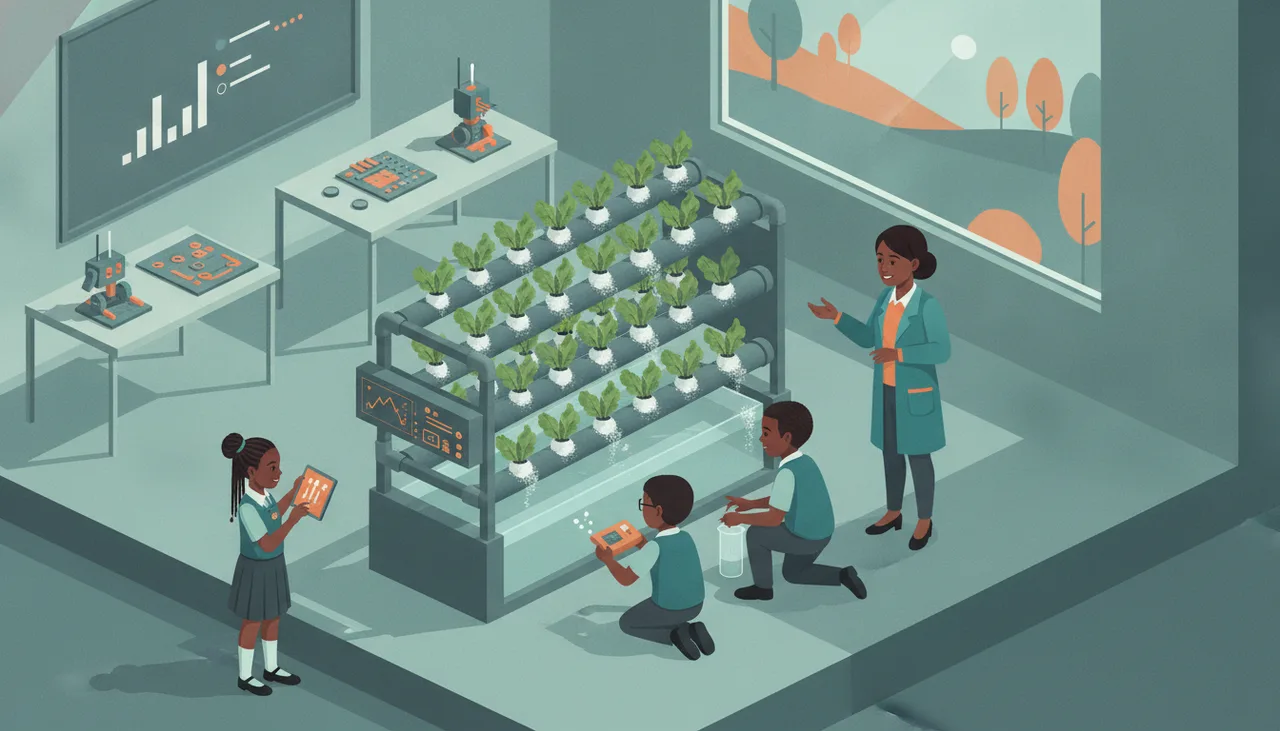
4IR is not a single event or one new technology. It is the name for what happens when cheap sensors, fast connectivity, cloud computing and machine learning get layered onto industries that already exist. In South Africa it rarely looks like the science-fiction version. It looks like a mine surveying a pit with a drone, a bank approving a loan with a scoring model, or a farm deciding when to irrigate from soil-moisture readings instead of a guess.
The practical takeaway for a learner is this: 4IR changes the tasks inside a job more than it deletes whole jobs overnight. The routine, repeatable parts get automated first. The parts that stay human are the ones that involve judgement, design and telling the machines what to do. Those are the parts worth training for.
The four skills that actually pay off
Behind the buzzword sit four skills that show up again and again in local job adverts. You do not need all four. Getting genuinely good at one, with a working knowledge of a second, is a strong position.
- Working with data. Reading, cleaning and interpreting numbers, then turning them into a decision or a chart someone can act on. This is the most transferable of the four.
- Automation. Getting software or machines to do a repeatable task without a human repeating it. That ranges from a spreadsheet macro to a script that files invoices to a controller running a production line.
- Embedded systems. The meeting point of hardware and code: microcontrollers, sensors and small devices that measure or control something in the physical world. This is where robotics and a lot of agriculture and energy work live.
- Directing AI. Using AI tools well and, more importantly, supervising them: writing a clear brief, checking the output and knowing when a confident answer is wrong. This is fast becoming a baseline skill rather than a specialism.
Which local industries are hiring for this
Skills only matter if someone nearby pays for them. Here is a rough map from each skill to the South African sectors most likely to use it, and what the day-to-day work tends to look like.
| Skill | SA industries | What the work looks like |
|---|---|---|
| Data | Banking, insurance, retail, telecoms | Cleaning messy records, building dashboards, spotting patterns for pricing or fraud |
| Automation | Manufacturing, logistics, mining, back-office | Scripting repetitive processes, controlling machinery, connecting systems that did not talk to each other |
| Embedded | Agriculture, energy, mining, manufacturing | Building and maintaining sensors and controllers that run in the field, often off-grid |
| Directing AI | Marketing, media, customer service, software | Drafting with AI, then editing, fact-checking and folding it into real work |
Two things stand out on that list. First, embedded and automation skills matter most in the industries South Africa already runs on, like mining, agriculture and energy, which is useful if you would rather build a career here than emigrate. Second, load shedding has quietly made local embedded and automation skills more valuable, because so many businesses now need people who can keep sensors, batteries and backup systems working through an outage.
From school subjects to a 4IR pathway
You do not choose "4IR" as a subject. You get there through ordinary CAPS subjects, chosen with a bit of intent.
- Mathematics (the full subject, not Mathematical Literacy) is the real gatekeeper for the data and AI routes and for most engineering degrees. If a learner is aiming at the technical side of 4IR, this is the one subject not to trade away.
- Physical Sciences underpins the embedded and engineering pathways, from electronics to robotics.
- Information Technology teaches actual programming and is the most direct school route into software and data work. Computer Applications Technology is more about digital literacy; useful, but not the same thing as learning to code.
- Engineering Graphics and Design suits learners drawn to how physical things are designed and built.
Subjects open doors, but on their own they are slow and theoretical. The learners who pull ahead are usually the ones building small projects on the side, long before matric.
Where to start without waiting for matric
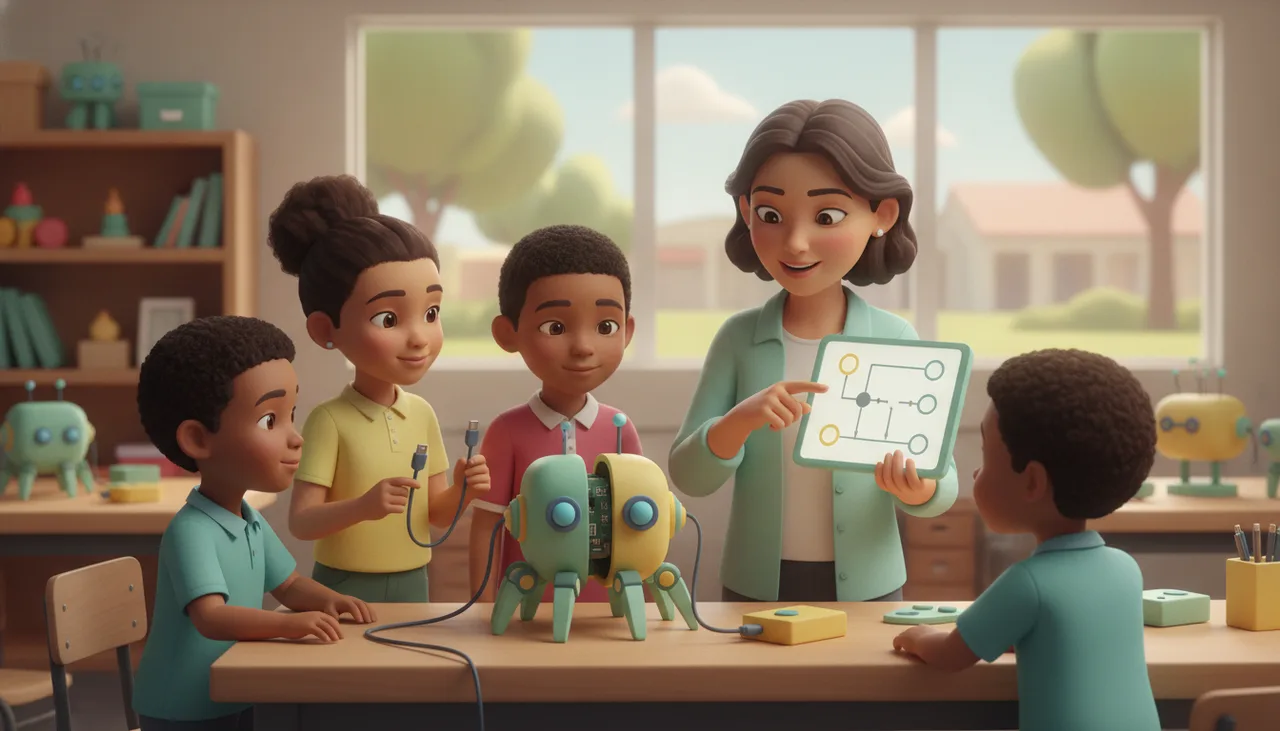
The fastest way to find out whether a learner enjoys this work is to let them make something that blinks, moves or measures. A short, practical starter plan:
- Pick one skill to sample first. Embedded systems is a good entry point because the results are physical and immediate.
- Get a single microcontroller board and a few sensors rather than an expensive kit. A board like the sheenbot∞ is designed for exactly this kind of first project.
- Build three tiny projects: something that reads a sensor, something that reacts to it, and something that reports a result. That covers the core loop of nearly all 4IR work.
- Join a structured class if self-teaching stalls. Our coding and robotics academy in Cape Town runs age-grouped classes, and a trial lesson is a low-commitment way to test the water before buying anything.
If you would rather assemble your own starting kit, the store has boards and components suited to beginners. None of this needs to be expensive; one modest board and a free afternoon reveal more about a learner's interest than any careers talk.
The takeaway
4IR is not a job title or a school subject. It is a shift in which tasks get automated and which human skills become scarce. For a South African learner that shift points at four concrete skills: data, automation, embedded systems and directing AI. Keep full Mathematics on the table, choose Physical Sciences or Information Technology where you can, and start building small projects early. The buzzword will fade. The habit of making things work will not.
Common questions
Does my child need to be a maths genius?
No, but the technical routes do assume comfort with the full Mathematics subject rather than Mathematical Literacy. Directing AI and some data-adjacent work are more forgiving, so a learner who struggles with maths still has real options.
Is coding the only 4IR skill worth having?
No. Coding helps almost everywhere, but automation, working with data and supervising AI tools each stand on their own. Plenty of well-paid 4IR-adjacent roles involve very little hand-written code.
Should a learner go to university or straight to work?
It depends on the skill. Data and engineering roles still tend to want a degree, while embedded tinkering, automation and AI-directing reward a strong portfolio of real projects, which a learner can start building while still at school.