Robotics for high schoolers: from toys to real engineering
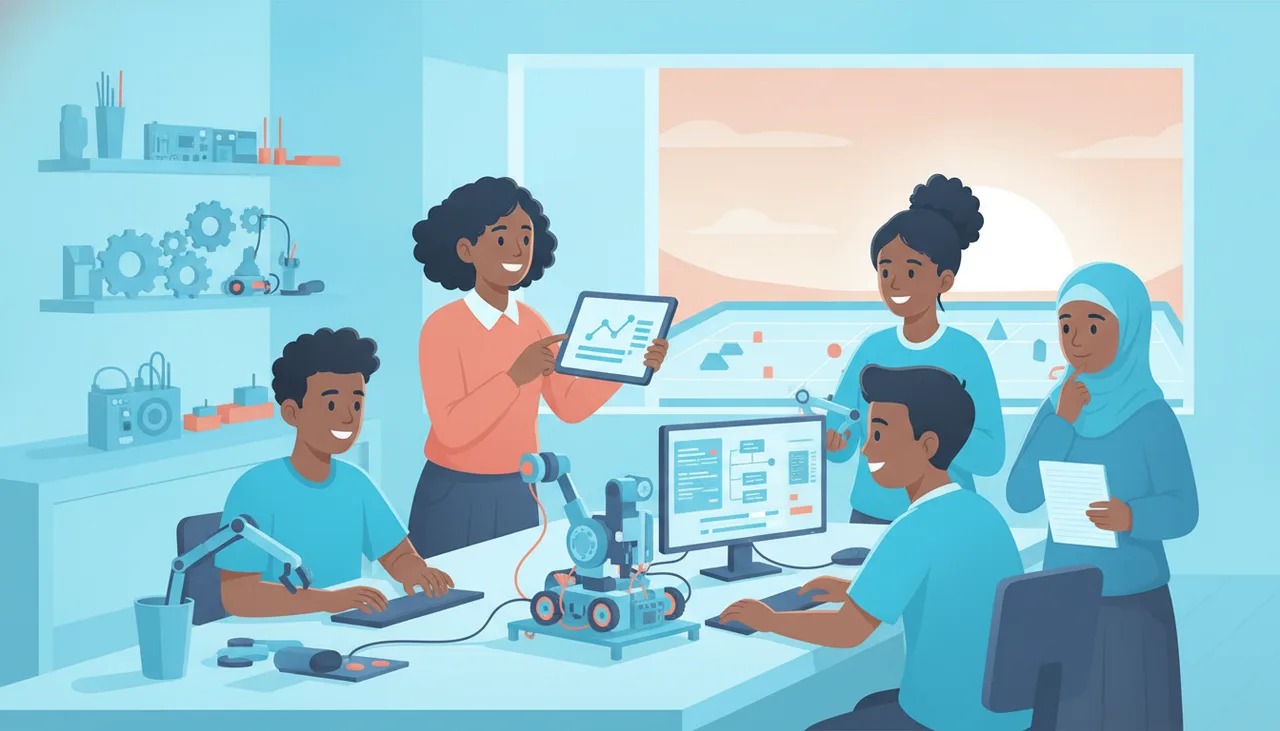
High-school robotics should move past toys to real engineering: text-based Python, competitions with real stakes, a documented portfolio, and habits like version control.
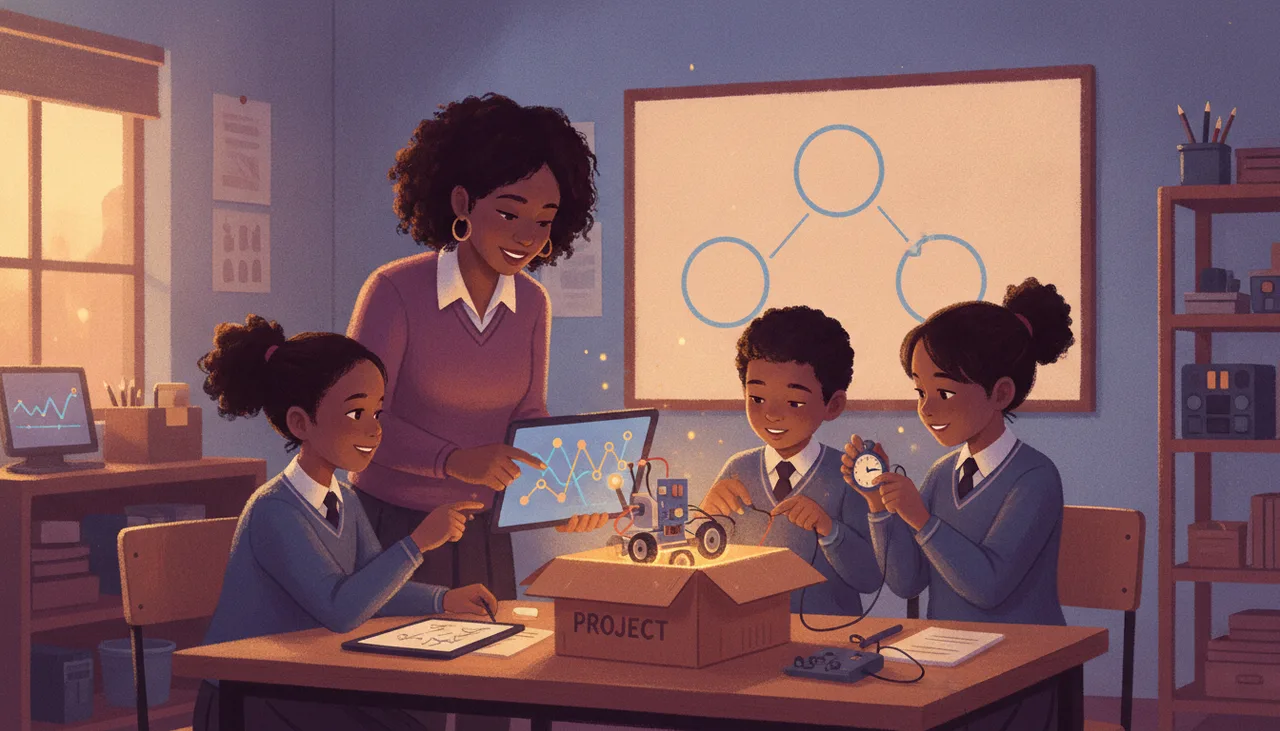
Somewhere around Grade 8 or 9, robotics changes character. In primary school it is mostly about making something light up or move on cue. For a high schooler, the interesting problems are open-ended: get a robot across an uneven floor, sort objects by colour, or finish a task before a competition buzzer. That shift, from following instructions to solving problems nobody has solved for you, is where robotics starts to look like real engineering.
If your teenager already enjoys building and wants more than a kit that does one trick, the goal now is depth: text-based code, real deadlines, professional habits, and a body of work they can show later. Here is what that looks like in practice.
What "real engineering" means for a teenager
Engineering is not a single skill. It is a loop: define a problem, design something, build it, watch it fail, and improve it. High schoolers are ready for the whole loop, not just the fun middle part. That means letting them wire something incorrectly and debug it, reading an error message instead of asking for the answer, and measuring whether version two is actually better than version one.
The hardware matters less than the mindset. A single microcontroller board, a few sensors and motors, and a genuine reason to iterate will teach more than an expensive kit used once. What you are buying is not the plastic; it is the number of times your teen gets to try, break, and fix something.
From blocks to real code
Block-based coding is a good on-ramp, but teenagers outgrow it. The natural next step is Python, and specifically MicroPython, a version of Python that runs directly on small microcontrollers. It looks almost identical to the Python used in data science and web development, so nothing is wasted: a student who writes MicroPython to read a distance sensor is writing real Python.
Boards like the sheenbot∞ run MicroPython, so a learner can start in blocks and switch to text on the same hardware when they are ready. The moment a teen types their first loop and watches a motor respond, the abstraction becomes concrete. From there the usual Python ideas, functions, lists, conditionals and timing, all have a physical reason to exist rather than being exercises in a textbook.
Competitions turn practice into stakes
Nothing sharpens engineering like a deadline and a judge. Robotics competitions give teenagers something a home project rarely does: a fixed problem, a hard cut-off, and other teams to measure against. Reliability suddenly matters. A robot that works nine times out of ten is a robot that will fail on the tenth run in front of the judges, and students quickly learn to design for that.
Competitions also teach the parts of engineering that are not code: dividing work across a team, keeping an engineering notebook, presenting a design to strangers, and handling the disappointment of a run that goes wrong. Those skills transfer to any workplace. Whether or not a team wins, a season leaves its members more capable than they started.
Build a portfolio, not a pile of kits
A finished robot on a shelf proves little a few months later. A portfolio proves a lot. Encourage your teen to document projects as they go: a short write-up of the problem, photos or a short clip of the build, the code itself, and an honest note on what they would change next time. Over two or three years this becomes a real body of evidence.
This matters beyond school. University applications, bursary interviews and first jobs increasingly ask to see what a young person has actually made. A teenager who can point to three documented projects, with working code and a clear account of the tradeoffs, stands out far more than one with a good mark and nothing to show for it.
Professional habits worth teaching early
The gap between a hobbyist and an engineer is mostly habits. High school is the right time to build them, while the projects are small enough that mistakes are cheap. A few that pay off quickly:
- Version control. Teach the basics of git: save working versions, write a short note on each change, and never overwrite the one thing that worked. Even used simply, it ends the "final_final_v3" chaos and mirrors how real software teams work.
- Readable code. Sensible names, short functions, and a comment that explains why rather than what. Code is read far more often than it is written.
- Testing one thing at a time. Change one variable, observe, then change the next. It feels slower and finishes faster.
- An engineering log. A running note of what was tried and what happened. It is the difference between learning and just fiddling.
- Reusing sensibly. Read a datasheet, borrow a library, and credit it. Knowing what not to build from scratch is itself an engineering skill.
Where robotics leads after school
Robotics is a wide doorway. The Python a teen writes to control a motor is the same language used in software, data and machine learning. The electronics point towards electrical and mechatronic engineering. The problem-solving and teamwork suit almost any technical career. Even students who never end up in engineering leave able to break a messy problem into steps, which is useful everywhere.
The point is not to decide a 15-year-old's career. It is to give them enough real experience to choose from evidence rather than a brochure. A teen who has debugged their own code late at night before a competition knows something about themselves that no aptitude test can tell them.
Getting started
You do not need a workshop of your own. A capable board, a few components and a real project are enough to begin, and a structured programme helps if self-direction is hard at this age. The sheen academy runs coding and robotics classes pitched at this level, and the winter school-holiday workshops running this July are a low-commitment way to test whether it clicks before committing to a term. If you would rather start at home, a single board and kit from the store is enough for a first serious project.
Takeaway
High-school robotics is worth doing properly. Push past the toy stage into real code in Python, competitions with genuine stakes, a documented portfolio, and the professional habits that separate an engineer from a tinkerer. Keep that up for two or three years and your teenager will not just have built robots. They will have built evidence of how they think.
Common questions
Does my teenager need to be good at maths first?
No. Basic arithmetic is enough to start, and robotics often improves maths by giving it a purpose, because angles, ratios and timing suddenly matter. The maths deepens alongside the projects rather than blocking them.
Is it too late to start in Grade 10 or 11?
Not at all. Older teens tend to move faster because they already read and reason well. What matters is starting with real projects and text code quickly, rather than spending a year on blocks. A short trial class or a holiday workshop is a sensible way to find out whether it suits them.