Robotics and the South African skills gap: where the jobs actually are
South Africa's real robotics jobs are not humanoid robots. They are automation maintenance, agritech, logistics and embedded work. Here is where the demand sits and how schools should respond.
The most durable robotics jobs in South Africa are not about building walking, talking machines. They are about keeping existing automation running, wiring sensors into farms and warehouses, and writing the embedded code that sits between a motor and a screen. That is the work employers keep telling us they cannot fill, and it is a long way from the humanoid robots that dominate the headlines.
If you are a parent, a teacher, or a Grade 10 learner trying to decide whether robotics is a real career or a fad, this is the honest version. The demand is real. It just does not look like the pictures.
The humanoid robot is a distraction
Coverage of robotics tends to show a machine that looks vaguely human doing a backflip or pouring a drink. That work exists, but it is a tiny, research-heavy corner of the field, and almost none of it happens here. Chasing it sets a learner up to feel like they missed out.
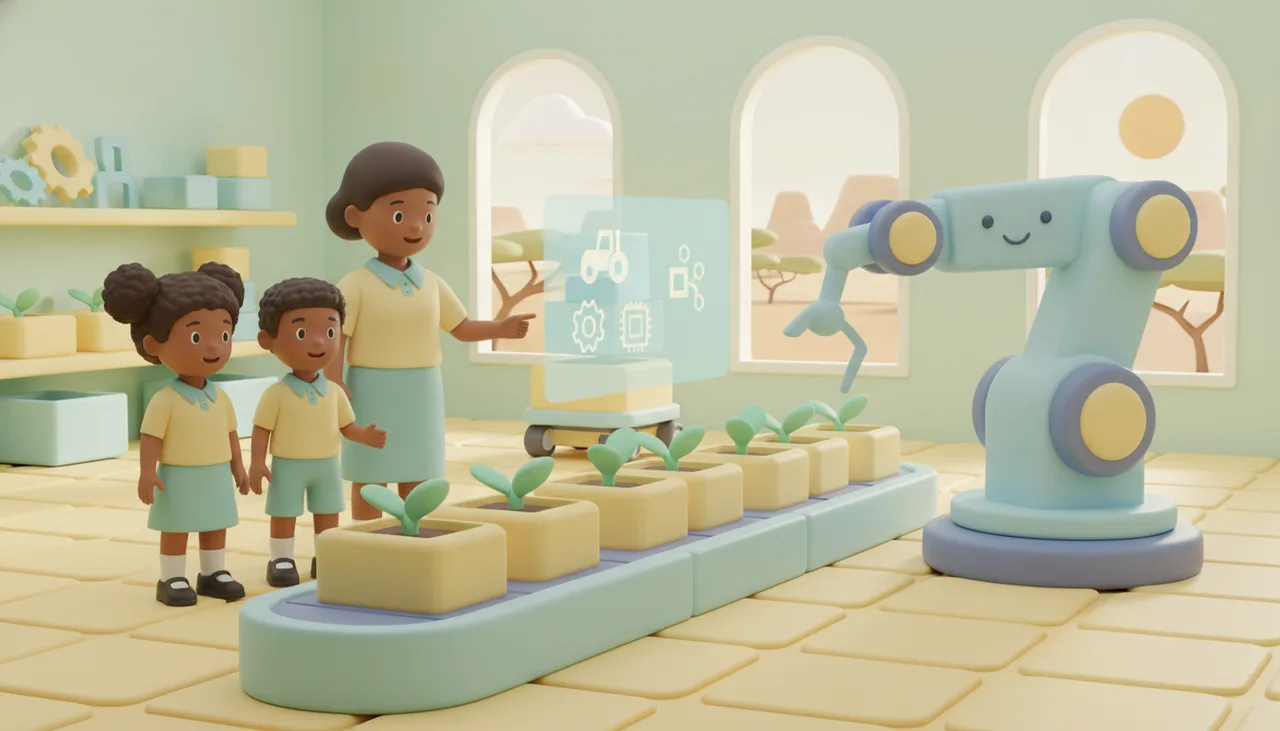
The robots that actually run the South African economy are unglamorous. They are the packaging line at a bottling plant, the pick-and-place arm in an electronics factory, the irrigation controller on a farm, and the sortation conveyor in a distribution centre. None of them look like a person. All of them break, need tuning, and need someone who understands both the electrical side and the software side to keep them productive.
Where the work actually is
When you strip out the hype, the demand clusters in four areas. A learner who aims at any of these is aiming at a job that already exists.
Automation maintenance and mechatronics
Every factory, mine, and processing plant already has automated equipment. Someone has to install it, commission it, diagnose faults when a line goes down, and modify it when the product changes. This is the single biggest bucket of steady work, and it rewards people who are comfortable with a multimeter in one hand and a laptop in the other. It also survives load shedding better than most desk jobs, because the machines still need attention when the power comes back.
Agritech
South African agriculture runs on tight margins and unpredictable weather, which makes automation attractive. Soil moisture sensors, automated irrigation, greenhouse climate control, and monitoring systems are spreading from large commercial farms down to smaller operations. The people who install and maintain these systems need the same core skills as a factory technician, plus some patience for dust, sun, and long drives.
Logistics and warehousing
The growth of online retail has pushed money into conveyor systems, barcode and scanning infrastructure, and semi-automated sortation. Distribution centres around Gauteng and the Cape need technicians who can keep this equipment moving during peak season. The work is practical and shift-based, and it is expanding rather than shrinking.
Embedded and IoT development
Behind every one of the sectors above sits a smaller, better-paid group of people who write the firmware and build the boards. Embedded developers work close to the hardware, in C or MicroPython, on microcontrollers with very little memory. This is the corner where a strong software learner and a strong electronics learner meet, and local demand consistently outstrips supply.
What employers say they cannot hire
The gap is rarely about degrees. Employers tell a consistent story about the person they struggle to find. They want someone who can stand in front of a machine that has stopped, read a wiring diagram, check a signal, and reason their way to the fault without waiting for a supplier's engineer to fly in.
Three shortages come up again and again. First, people who can bridge hardware and software rather than knowing only one. Second, people who are comfortable troubleshooting a live system, not just a textbook example. Third, people with the habits that make them safe and useful on day one: reading a datasheet, labelling wires, testing an assumption before replacing a part. None of that requires expensive equipment to learn. It requires early, repeated, hands-on practice.
How school programmes should respond
A school does not need an industrial robot to prepare a learner for this work. It needs to build the right instincts early. The following checklist is what to look for, or to build, in a robotics programme.
- Real hardware, not only simulation. Learners should wire a circuit, watch it fail, and fix it. A screen cannot teach the smell of a wrong connection.
- Sensors and actuators, not just screens. The employable skill is making the physical world respond. Motors, lights, and sensors matter more than another game.
- Debugging as a first-class skill. The most valuable habit is calm, structured fault-finding. A good programme makes things break on purpose and lets learners solve them.
- Text code alongside blocks. Blocks lower the entry barrier, but embedded work is written. Learners should see the same logic in both, and grow into the text.
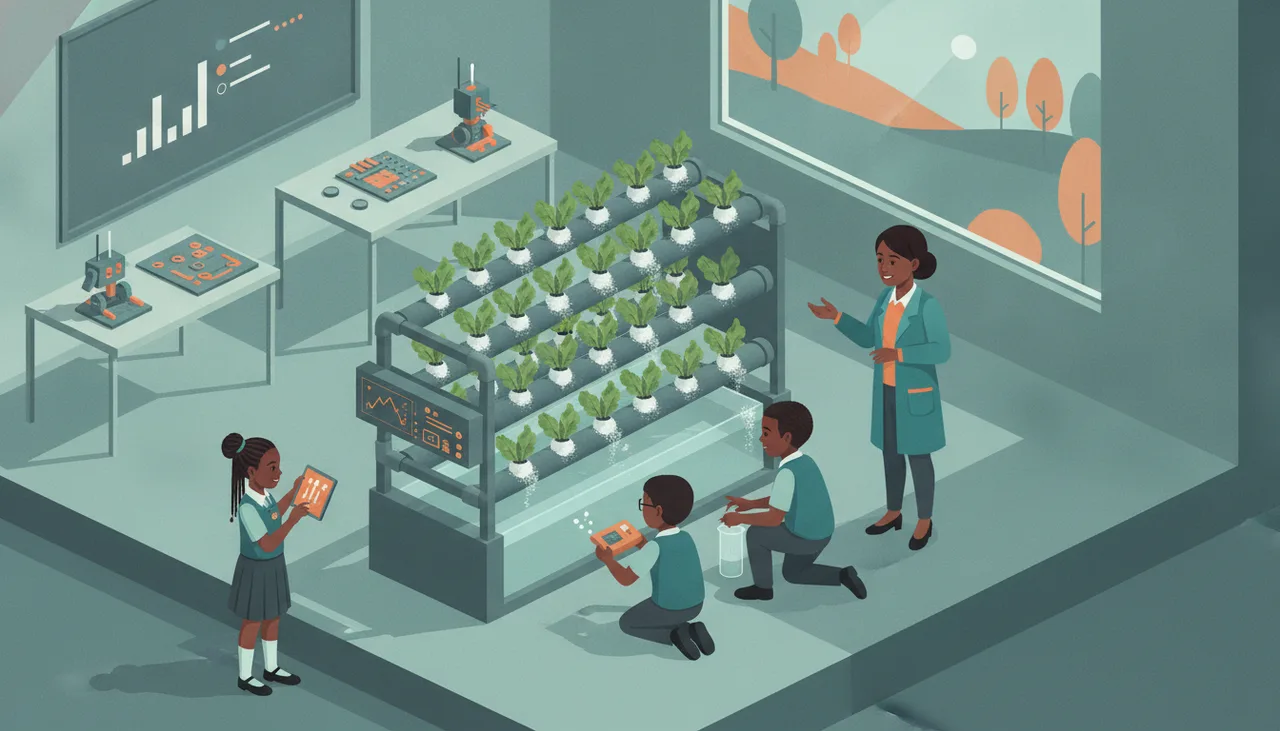
- Projects that mirror real sectors. An automated plant watering rig or a small conveyor teaches more than an abstract exercise, because it maps onto agritech and logistics.
- Progression, not one workshop. Skill comes from returning to hardware over months. A single taster is a start, not a pathway.
Building the pipeline early
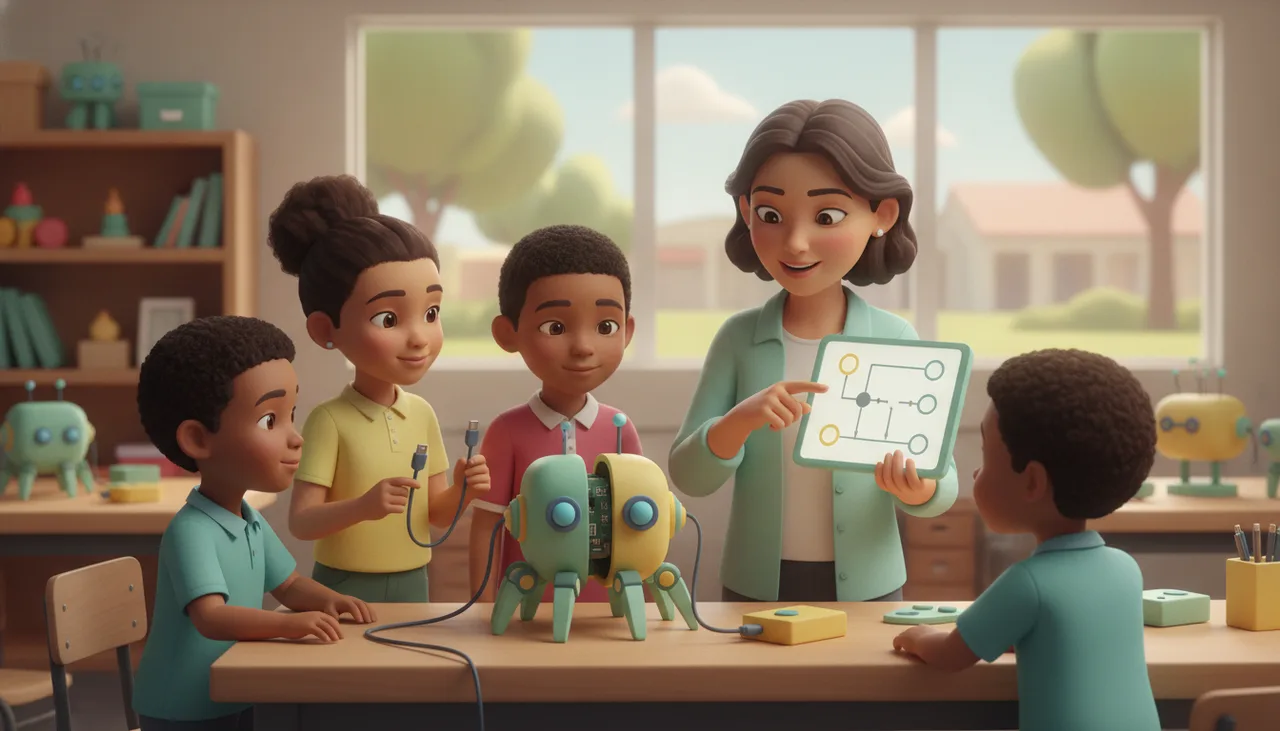
This is the thinking behind how we run our own robotics academy in Cape Town. Learners work with real boards from the first session, wire real sensors, and spend as much time fixing things as building them. The sheenbot∞ board was designed for exactly this: enough onboard sensors and outputs to build something that behaves like a small automation system, programmed in blocks to start and MicroPython as learners grow.
If you want to see whether it clicks for a particular learner before committing, a single trial session is the low-risk way in, and the school-holiday workshops pack a lot of hands-on time into a week. None of this is unique to us. The point is the shape of the practice, not the brand of the kit. A learner who has spent a year making physical systems work, and fixing them when they do not, is walking towards jobs that South Africa is actively trying to fill.
Takeaway
Robotics is a real career here, but not the one on the poster. The money and the shortage sit in automation maintenance, agritech, logistics, and embedded development. All four reward the same foundation: comfort with hardware, calm debugging, and the ability to move between the electrical and the software sides. Schools that build those instincts early, on real equipment, are pointing learners at work that exists today.