Inside a robotics academy: what a term actually looks like
A good robotics term runs on a rhythm: onboarding, a core-skills block, a multi-week build, then a showcase. Here is what each stage looks like and what to check by week 4 and week 10.
Sign your child up for a term of robotics and you are buying a rhythm, not a set of one-off lessons. A well-planned program runs to a shape you can predict: a couple of weeks to settle in, a block of core skills, a longer build, and a showcase to close. Once you know that arc, it is easy to tell whether a class is drifting or actually taking your child somewhere. Here is what a full term looks like from the inside, and the two moments where you should check in.
The shape of a good term
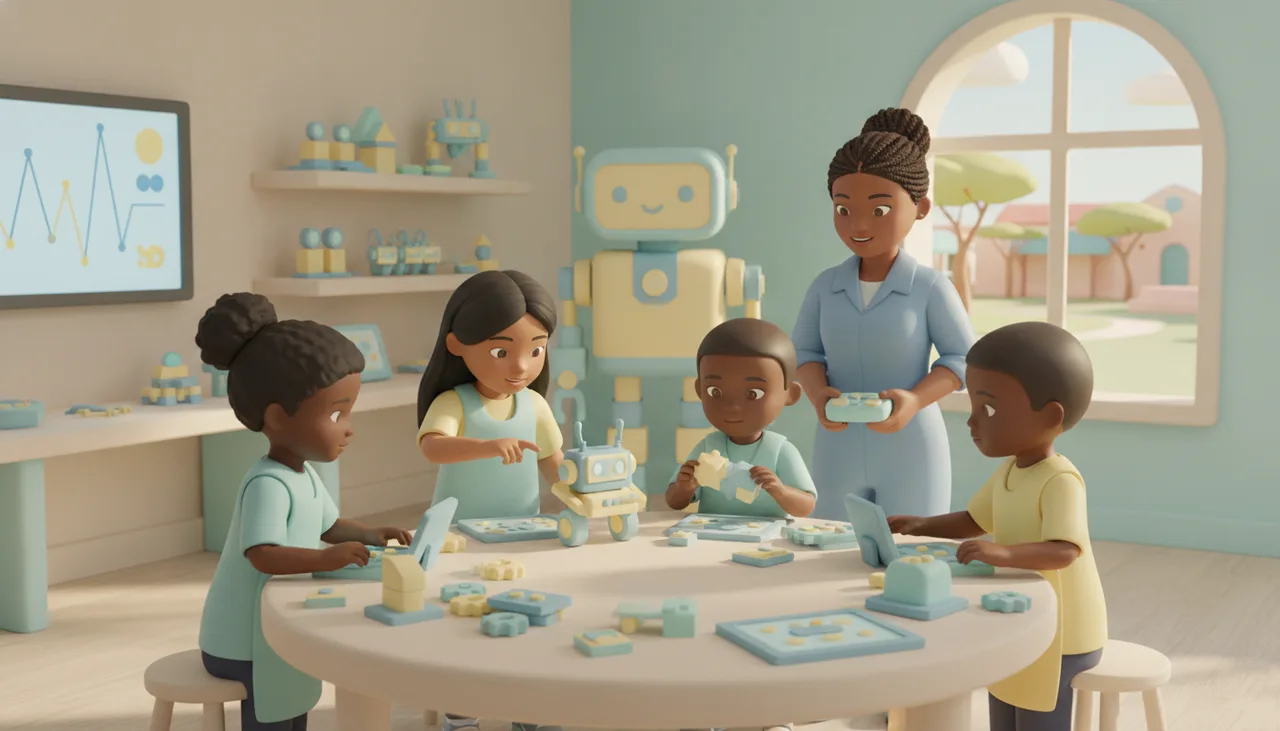
A South African school term runs about ten weeks. An after-school academy usually maps onto that, one lesson a week, roughly an hour each. Across those ten sessions a good term moves through four phases: onboarding, skill blocks, a project arc, and a showcase. The early weeks are broad and forgiving. The later weeks narrow toward one thing each child builds and can explain. The aim is not to cover the most features. It is to leave every learner with a finished project and the vocabulary to talk about how it works.
Weeks 1 to 2: onboarding and baseline
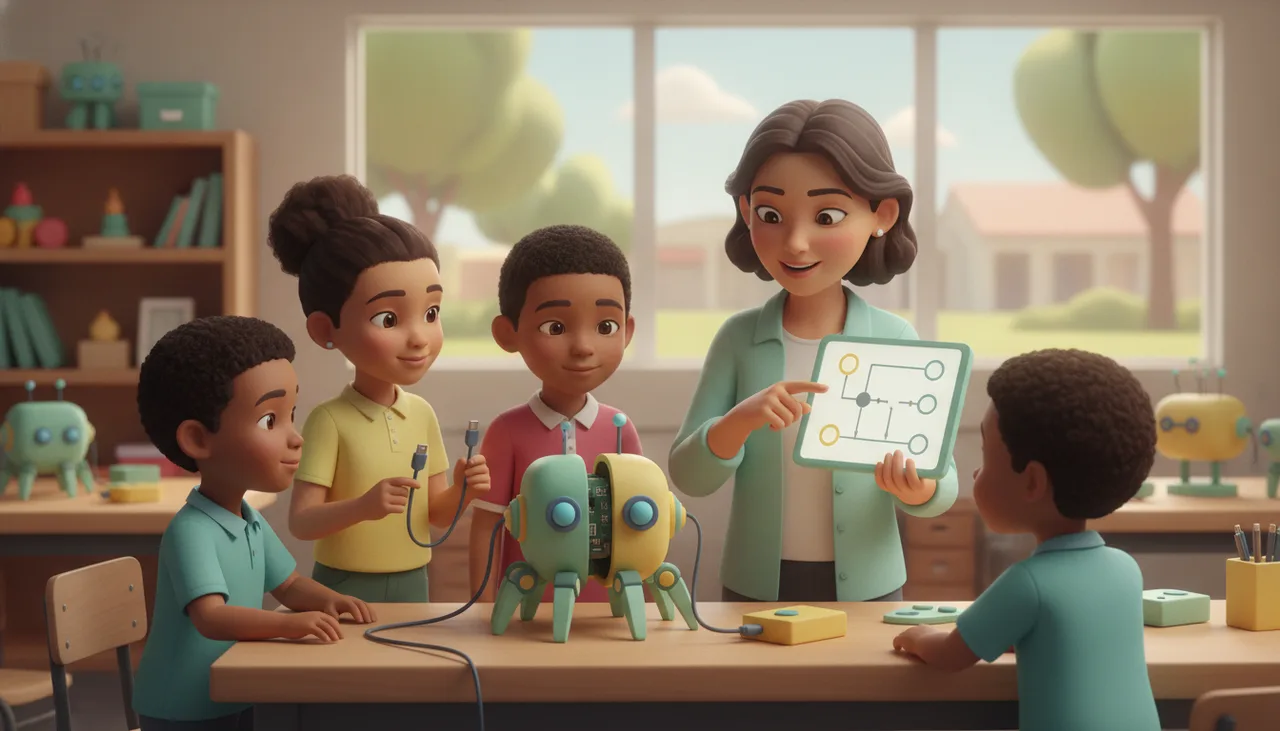
The first two weeks are about people and habits, not hard content. A good instructor spends them learning where each child actually is: who has coded before, who is meeting a robot for the first time, who needs to be paired carefully. Lessons are short and win early. Plug in a board, make a light blink, drive a motor, read a button. Nobody should leave the first session without having made something move.
If your child has never touched this before, a single trial class is the low-stakes way to see how they take to it before you commit to a term. Onboarding done well means week three does not lose the nervous ones.
Weeks 3 to 6: skill blocks
The middle of the term is where the real teaching happens. These weeks are organised as skill blocks, each one a self-contained idea with a small build attached. A typical run: inputs and outputs, then loops, then variables and conditions, then sensors. Each block ends with something that works, so the learning is anchored to a result rather than a worksheet.
Hardware matters here only in that it should get out of the way. A board like the sheenbot infinity, which a child can program with drag-and-drop blocks and later with text, lets the same kit carry a beginner and a returning learner through very different lessons. Good academies keep a class set so no one sits idle waiting for a device.
Weeks 6 to 9: the project arc
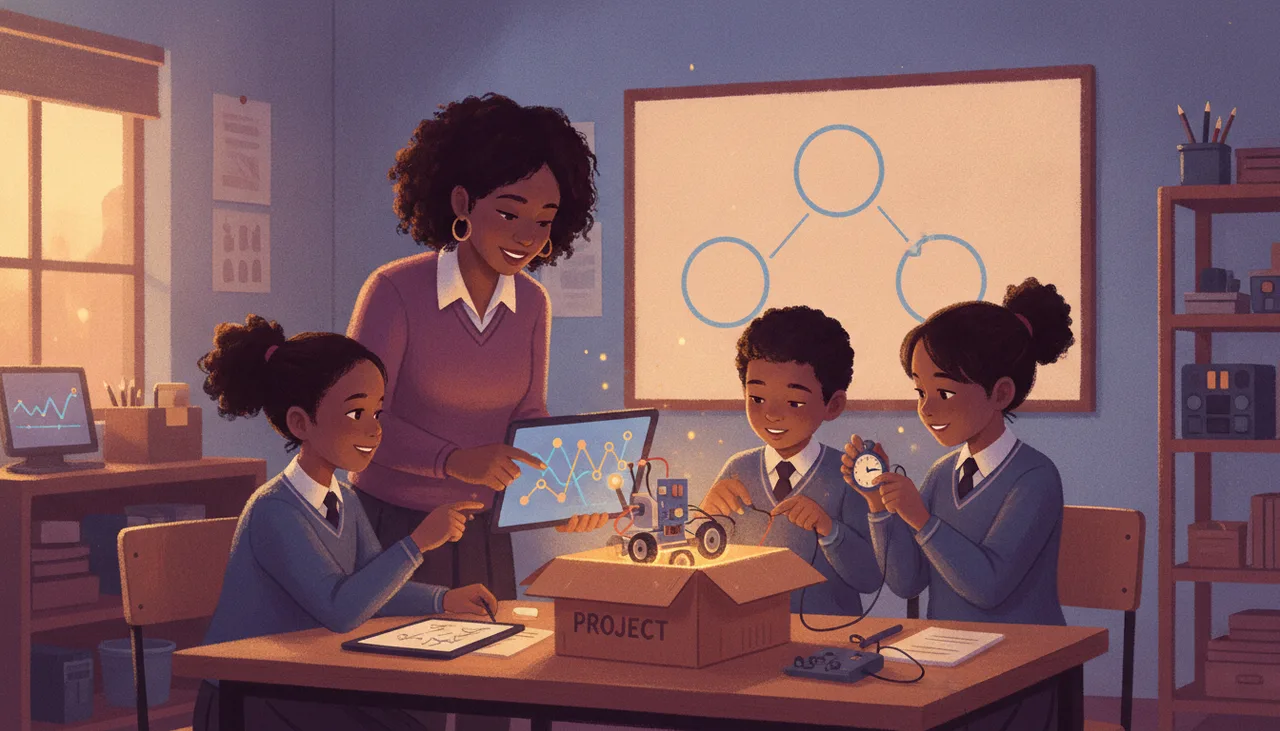
Somewhere around week six the term turns. Instead of a new topic each week, learners pick or are given a project and spend several sessions on it: a reaction-timer game, a distance alarm, a small line-following rover, a weather display. This is the part parents underrate. Stringing skills together into one working thing is harder and more valuable than any single lesson, and it is where children hit real bugs and learn to debug calmly. Expect some weeks to look messy. A project that comes together too easily was probably too small.
Week 10: the showcase
The term should end with a showcase, not a test. Each child demonstrates what they built and says a few sentences about how it works and what went wrong along the way. It does not need an audience of hundreds. A room of parents and the other class is plenty. The showcase is where the term's learning becomes visible, and it gives every learner a clear finish line to aim at from week six onward.
What to check at week 4 and week 10
You do not need to understand the code to know whether a term is working. Two check-ins tell you most of it. By week 4, your child should be able to show you something small that runs and explain, in their own words, one thing they made it do. If four weeks in they cannot point to anything they built, the class is moving too slowly or losing them. By week 10, they should have one finished project they are a little proud of and can talk through without the instructor prompting every step.
- Week 4: a working mini-build and a sentence about how it works.
- Week 4: they can name at least one idea they learned, such as a loop, a sensor, or a variable.
- Week 10: one completed project, demonstrated by the child, not the teacher.
- Week 10: they can describe a bug they hit and how they fixed it.
- Throughout: they come home talking about it more than they complain about it.
Where a term fits in the year
Four terms make a year, and a good academy plans them to build on each other rather than repeat. The first term lays down blocks and basic electronics. Later terms add sensors, more ambitious projects, and text-based code for those ready to move on. If your family cannot commit to a full weekly term yet, a school-holiday workshop is a shorter on-ramp that still ends in a finished build; our holiday workshops run over the summer and winter breaks. The full weekly program lives on the academy page.
Takeaway
A robotics term is not ten unrelated lessons. It is one arc from settling in to showing off: onboarding, skill blocks, a project, a showcase. Check in at week four for a small working build, and at week ten for a finished one your child can explain. If both are there, the term did its job, whatever badge or brand is on the box.