Holiday coding camps: how to pick a good one

A good holiday coding camp sends your child home with something they built and can explain. Here are the red flags, the green flags, and the questions to email before you pay.
A good holiday coding camp sends your child home able to show you something they built and explain how it works. The hard part is telling that kind of camp apart from a week of expensive screen time in a hired hall. With the first-term break coming up, and the July winter holidays not far behind, here is what a good one looks like, the warning signs to walk away from, and the questions worth emailing an organiser before you pay.
What "good" actually looks like
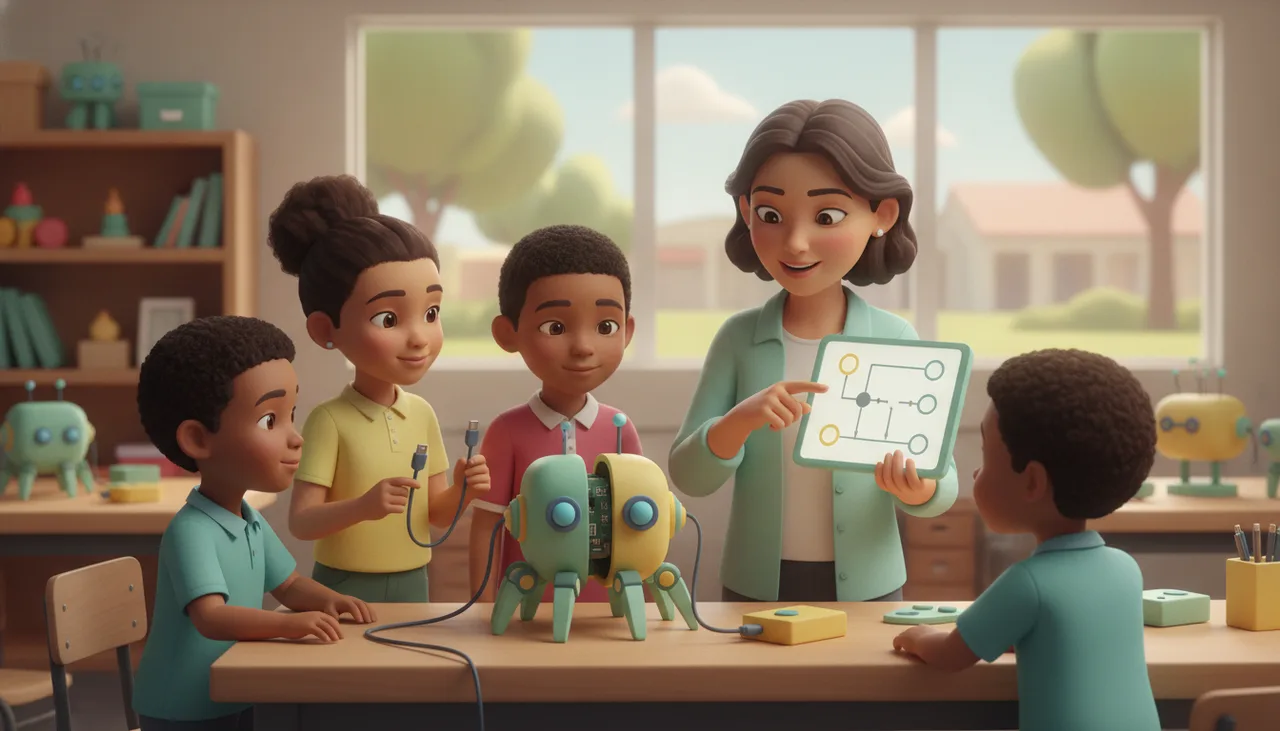
Forget the marketing photos of children in matching t-shirts. A camp earns its money when children make things, get stuck, and get unstuck with a bit of help. The best sign of a decent holiday programme is boringly simple: your child comes home with an artefact. That might be a small robot they assembled, a game they coded, or a circuit that does something. If they can put it on the kitchen table and talk you through it, the week did its job.
The second sign is progression. A child at their first camp and a child on their third should not be doing the identical worksheet. Ask how a returning child is stretched, and how a nervous first-timer is brought along. If the answer is the same activity for everyone, the camp is designed around the timetable, not the children.
Red flags to walk away from
Two patterns account for most disappointing camps. The first is screen-parking: every child on a device, headphones on, working through video tutorials with an adult only there to keep order. There is nothing wrong with a screen as a tool, but if the whole day is a child copying steps from a video, you could buy that at home for far less. Robotics that never leaves the screen is a particular warning sign, because the point of robotics is the messy physical part.
The second is the one-size-fits-all camp. Watch for a single project stretched across ages seven to fourteen, or a syllabus that ignores whether a child has coded before. Other things that should give you pause:
- No physical thing to bring home, and no saved project to open again later.
- Very large groups with a single instructor and no assistants.
- A vague daily schedule, or an organiser who cannot describe a typical day.
- Marketing that leans on brand names and buzzwords but never says what a child will actually make.
- No plan for load shedding, in a country where the power will go off at some point during a week-long camp.
Green flags worth paying for
The good camps tend to share a handful of traits. Ratios come first. Hands-on robotics with young children falls apart above roughly one instructor to six or eight, and younger groups need smaller numbers than that. A camp that is proud of its ratios will tell you the figure without being asked.
Next, look for real circulation. Good instructors move around the room, ask questions, and nudge children towards their own answers instead of fixing everything for them. That approach is slower and it looks less tidy, but it is how a child learns to debug rather than to wait for rescue. Finally, expect a mix of screen and unplugged work: building, drawing out a plan, testing, and yes, coding, rather than six hours of the same posture.
One more quiet green flag is what happens when the power goes. A camp that has thought about load shedding will have unplugged puzzles, paper-based logic games, or battery-run kits ready, so a two-hour slot is not simply lost.
Questions to email before you book
You can sort most camps with a short email. Organisers who run a solid programme answer these quickly and specifically; the ones who go quiet or reply in slogans are telling you something too.
- What will my child physically take home at the end of the week?
- What is your instructor-to-child ratio, and are there assistants?
- How do you group children by age and by experience?
- Can you walk me through a typical day, hour by hour?
- How much of the day is on a screen versus building and testing?
- What happens during load shedding?
- My child is a complete beginner (or has done this before) — how will the week suit them specifically?
If you have a shy or first-time child, one low-cost way to test interest before committing to a full week is to let them try the building side at home first. A free browser simulator lets a child snap blocks together and see a virtual robot respond, with no kit to buy, so you learn whether the spark is there before you book anything.
How sheen runs its holiday workshops
Since we started running holiday workshops in 2025 at our Cape Town base, we have kept to a simple rule: every child leaves with something they built and can explain. Sessions are grouped by age and experience, run on the sheenbot infinity board and real kits rather than videos to copy, and are staffed so instructors can actually get around the room. You can see the current schedule and how groups are arranged on the holiday workshops page, and the wider programme sits under the academy.
If you are not sure a full week is right yet, a single trial class is the honest way to find out whether your child enjoys it before you commit. And to test the water at home for nothing, children can build and run a virtual robot in our free coding simulator first. None of this is required to use the advice above — a good camp anywhere should pass the same checks.
The bottom line
Pick a holiday camp the way you would judge any week your child spends away from you: by what they can do at the end that they could not do at the start. Push past the photos and ask about artefacts, ratios, progression, and the plan for when the lights go out. A camp that answers those plainly is usually a camp worth the fee, whatever the logo on the door.
Common questions
What age should a child start a coding camp?
Many children are ready for a gentle, building-led camp from around age seven, as long as the activities are physical and the groups are small. The number on the flyer matters less than whether the camp adjusts for a younger or first-time child, so ask that directly.
How long should a holiday camp run?
A few consecutive mornings is usually better than one long day. Robotics is tiring and fiddly, and a child learns more from three focused half-days than from one marathon session. If a camp offers a full week, ask how the days build on each other rather than repeat.