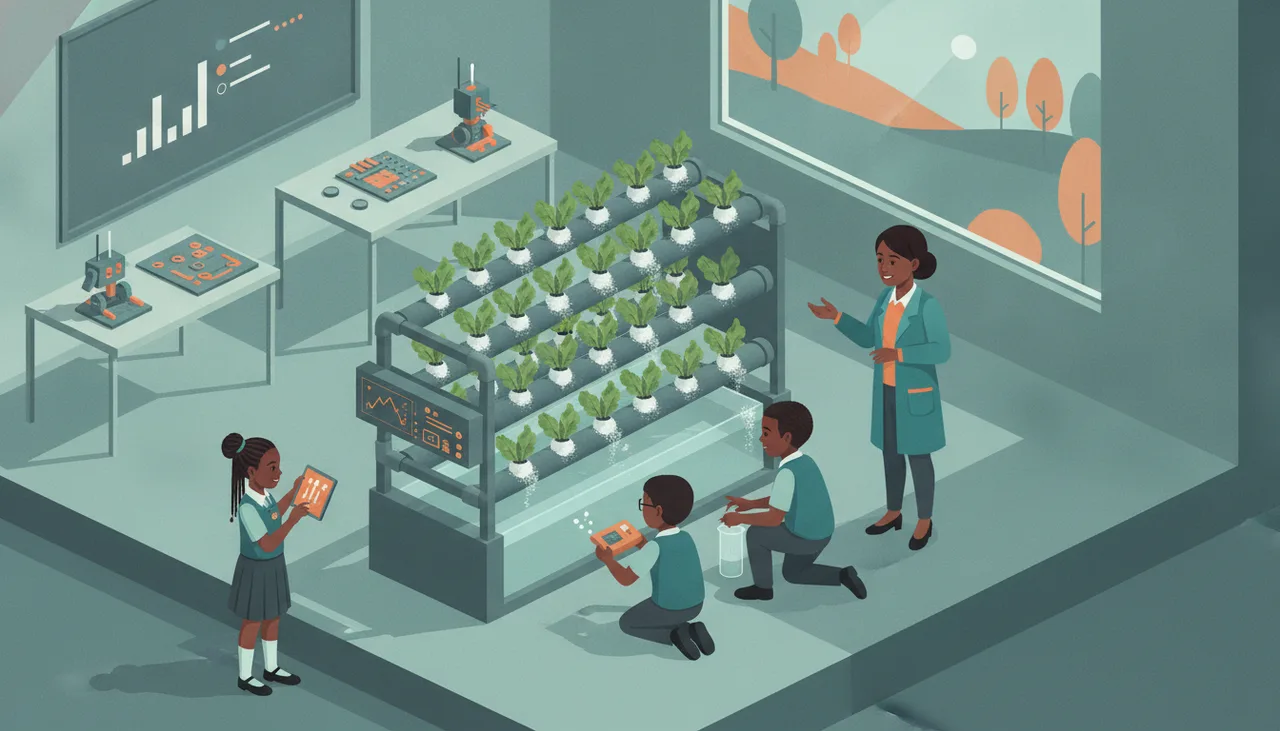
ESP-NOW vs WiFi vs LoRa: picking a radio for your project
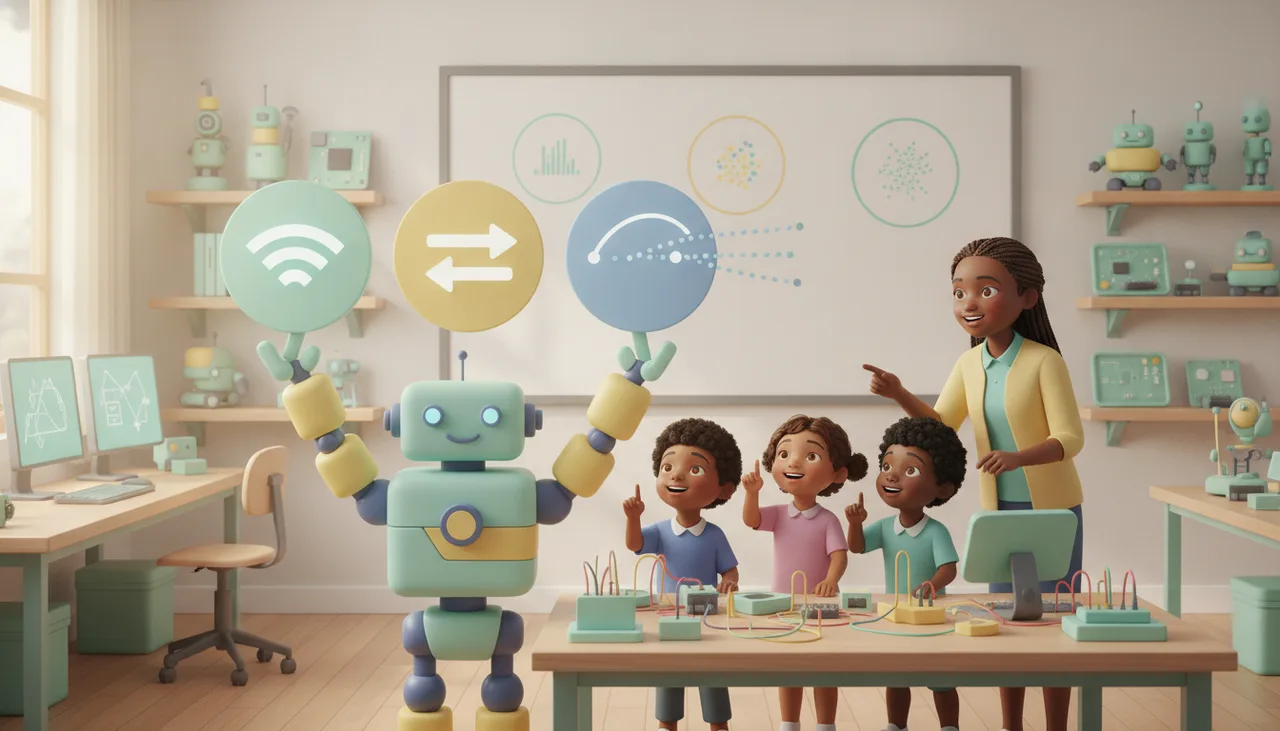
Use WiFi for internet and dashboards, ESP-NOW for cheap board-to-board messaging, and LoRa when sensors sit far away. Here is how to choose, and how to mix all three.
Three radios show up again and again in classroom and hobby IoT projects: ESP-NOW, plain WiFi, and LoRa. The short version is simple. Use WiFi when a device needs the internet or a phone app. Use ESP-NOW when two or more boards just need to talk to each other cheaply and quickly. Use LoRa when the sensor sits hundreds of metres or kilometres from anything. The rest of this piece is about the tradeoffs behind that one-line answer, and what to do when no single radio fits.
WiFi: when you need the internet
WiFi is the radio most people already know. It joins a router or hotspot, gets an IP address, and can then reach the wider internet: a cloud dashboard, an MQTT broker, a REST API, or a phone app on the same network. The sheenbot∞ board that students use in class speaks WiFi out of the box, which is why a first "real" IoT lesson usually means pushing a sensor reading up to a screen somewhere.
The costs are power and infrastructure. WiFi draws more current than the other two, so it is a poor fit for something meant to run for weeks on a small battery. It also depends on a router being up. In South Africa that matters: during load shedding the router can be dark for two hours at a stretch, and a WiFi-only sensor simply goes silent until the power returns. Range is modest too, roughly the span of a classroom or a house, less through concrete walls.
ESP-NOW: boards talking to boards
ESP-NOW is a lightweight, connectionless protocol built into the same ESP32 chips that do WiFi. It skips the router entirely. One board can send a short message straight to another board's MAC address, with very low latency and no IP stack to set up. Payloads are small, around 250 bytes per packet, which is plenty for a temperature reading, a button press, or a motor command.
Because there is no access point in the middle, ESP-NOW keeps working when the WiFi network is down, and it uses noticeably less power than a full WiFi connection, especially if the board sleeps between sends. Range is broadly similar to WiFi indoors and better outdoors with line of sight. The catch is that ESP-NOW gives you a private mesh of your own devices, not a path to the internet. If the data needs to leave that little cluster, something else has to carry it.
LoRa: when the sensor is far away
LoRa trades data rate for distance. On the sub-gigahertz band used in South Africa (868 MHz), a LoRa link can reach across a farm or a suburb, sometimes several kilometres with a clear path, while sipping very little power. That makes it the natural choice for a soil-moisture probe at the far end of a field or a water-tank level sensor on a hill.
The price you pay is bandwidth and hardware. LoRa moves small, infrequent messages, not video or fast telemetry, and it is not built into a standard ESP32, so you add a LoRa module. Point-to-point LoRa needs a matching receiver; full LoRaWAN needs a gateway. For most school and small-farm builds, a single pair of LoRa radios or one gateway is enough to start.
The three radios side by side
| Radio | Rough range | Needs infrastructure? | Power | Best for |
|---|---|---|---|---|
| WiFi | Tens of metres | Router plus internet | Moderate to high | Dashboards, apps, cloud |
| ESP-NOW | Similar to WiFi, more outdoors | None | Low | Board-to-board messaging |
| LoRa | Hundreds of metres to kilometres | LoRa module, gateway for LoRaWAN | Very low | Remote, sparse sensors |
Matching the radio to the scene
In a classroom, WiFi and ESP-NOW cover almost everything. Use WiFi for the lesson where readings appear on a live dashboard, and ESP-NOW for the projects where a handful of boards pass messages between desks, like a relay game or a shared scoreboard, without fighting over the school network.
In a home, it depends on where the internet needs to go. A light or door sensor that feeds an app wants WiFi; a cluster of remotes and buttons that only talk to a local hub is happier and lower-power on ESP-NOW. This is the mix behind a typical home automation build.
On a farm, distance decides. Sensors spread across paddocks or greenhouse rows are usually too far apart for WiFi and too far from mains power to keep it charged, which is exactly where LoRa earns its place in a smart-farming setup. The readings still need somewhere to land, and that is where radios start to mix.
Mixing radios with a bridge node
Most serious projects use more than one radio, joined by a bridge node: a single device that speaks two radios and passes messages between them. A common pattern is field sensors on LoRa or ESP-NOW reporting to one bridge, which then holds the only WiFi connection and forwards everything to a broker or dashboard. You get long range or low power in the field and internet reach at one point, instead of demanding all three from every device.
One caveat worth knowing early: an ESP32 shares a single 2.4 GHz radio for both WiFi and ESP-NOW, and both have to sit on the same channel. If you connect WiFi first, ESP-NOW peers that expected a different channel can go quiet. On a bridge, plan the channel deliberately, or split the two jobs across two chips. Once the bridge is working, sending the collected data on to a platform like sheenIoT is the easy part.
A quick way to choose
- Needs the internet, a cloud dashboard, or a phone app? Use WiFi.
- Two or more of your own boards swapping small messages fast? Use ESP-NOW.
- Sensor more than a hundred metres from the nearest router or power? Use LoRa.
- Battery powered and meant to run for weeks? Lean toward ESP-NOW with sleep, or LoRa.
- Need several of these at once? Build a bridge node.
Takeaway
There is no single best radio, only a best fit for the range, power budget, and infrastructure you actually have. Start from the question of where the data has to go and how far it has to travel, and the choice usually makes itself. When one radio cannot do it all, a bridge node lets you combine their strengths rather than compromise on each.
Can one ESP32 run WiFi and ESP-NOW at the same time?
Yes, but with care. They share the same 2.4 GHz radio and must use the same channel, so a WiFi connection can pin the channel and cut off ESP-NOW peers that expected another. Fix the channel on purpose, or hand the two roles to separate chips on a bridge.
Do I need a LoRaWAN gateway to use LoRa?
Not always. Two LoRa radios can talk point to point with no gateway, which is fine for a single remote sensor. A gateway becomes worth it once you have many sensors or want them to reach a standard network, and it is a reasonable next step rather than a starting requirement.