Coding classes in Cape Town: how to compare providers

Compare Cape Town coding providers on five things: curriculum progression, class size, take-home artifacts, trial availability and price transparency. A framework and checklist.
Cape Town has more coding classes for kids than it did a year ago, and the marketing tends to look the same across all of them. The honest way to choose is to ignore the branding and check a handful of concrete things: how the curriculum builds over time, how many children share one tutor, what your child actually builds and takes home, whether you can try a class before paying, and whether the pricing is clear. This guide turns those into questions you can ask any provider.
Judge the curriculum by its progression, not one lesson
A single trial lesson can be fun anywhere. What separates a real programme from a holiday activity is what happens over months. Ask a provider what a child learns in the first month compared with the sixth. A good answer describes a ladder: block-based coding first, then typed code, then hardware and robotics, with each step building on the last. Be cautious when the reply is a list of unrelated fun projects with no order to them. Children stay engaged when they can feel themselves getting better at something specific, not when every week resets to a new gimmick.
Ask to see a scope and sequence, even a rough one. A provider that teaches deliberately can show you where a beginner starts and where an intermediate student is heading. If nobody can describe the path, there probably is not one.
Class size and who is standing in the room
Class size affects learning more than almost any other factor. In coding, children get stuck constantly, and a stuck child who waits twenty minutes for help usually gives up. Small groups let a tutor reach every child while the frustration is still fresh. Ask for the real ratio of children to instructors, not the maximum the venue can hold.
Then ask who teaches. Is it a trained instructor who knows both the content and how to explain it to a nine-year-old, or a rotating helper following a script? Ask what happens when a child finishes early, and what happens when one falls behind. The answers tell you whether the class is taught or merely supervised.
What your child builds and takes home
Coding is invisible until it produces something. The clearest sign of real learning is an artifact your child can show you: a game they can open at home, a saved project with their name on it, or a robot they wired and programmed themselves. Ask whether work is saved to an account the family can access, and whether anything physical goes home.
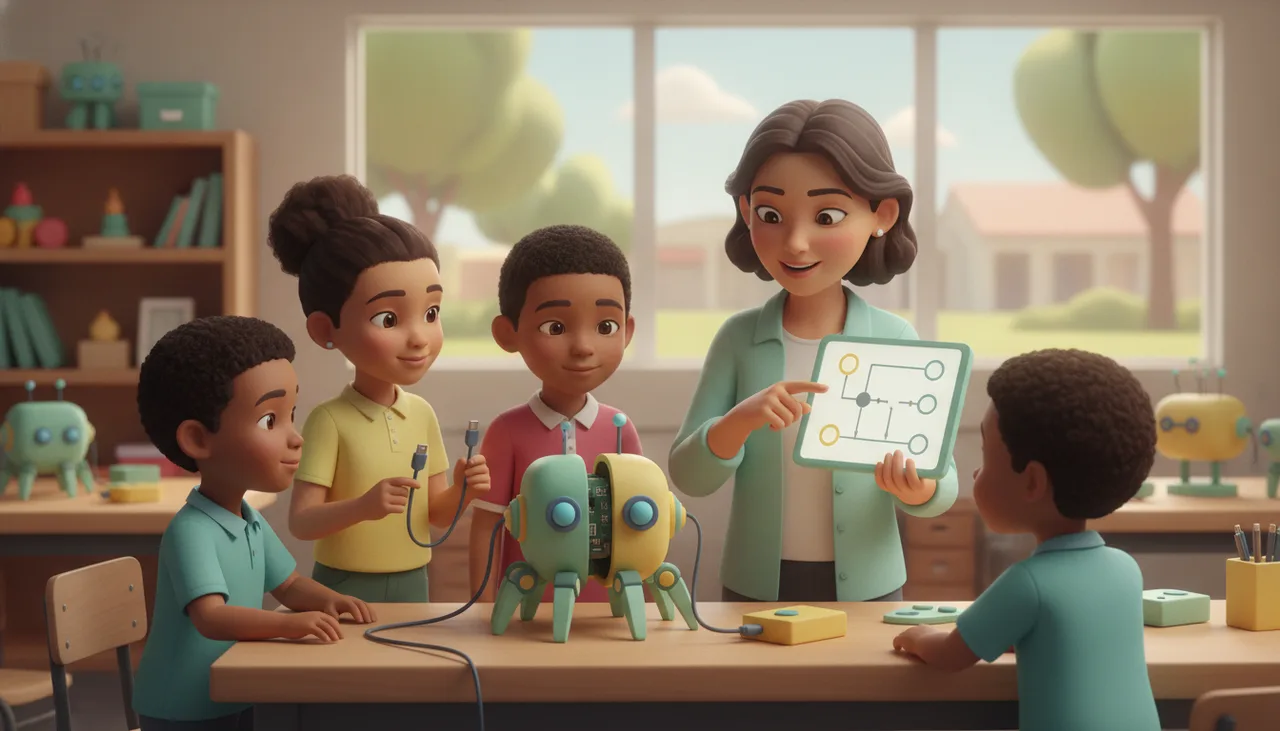
Robotics providers vary a lot here. Some hand out a kit that stays at the venue, while others build lessons around a board the child keeps and can code again at home. At our Cape Town academy, for example, students program the sheenbot∞ board, so the thing they learn on is also the thing they take home. Whatever the provider, a take-home artifact keeps the learning alive between lessons and gives a shy child something concrete to be proud of.
Insist on a trial, and on clear pricing
A provider that is confident in its teaching will let you sit in or book a single lesson before you commit to a term. Use it. Watch whether the tutor knows the children's names, whether quieter students get help, and whether your child leaves talking about what they made. You can book a trial lesson with us the same way you should be able to anywhere.
Pricing should be just as open. Ask what a term costs, whether it is billed monthly or upfront, and what is included. Does the fee cover the kit and materials, or are those extra? Is there a registration fee? What is the cancellation policy if the class is not a fit? A provider that answers these plainly respects your budget. One that is vague about money is often vague about teaching too.
A comparison checklist
Take this list to any two or three providers and compare the answers side by side.
- Progression: Can they describe what a child learns in month one versus month six?
- Sequence: Is there a written scope and sequence, or just weekly activities?
- Ratio: How many children share one instructor in a normal class?
- Teacher: Is the person in the room a trained instructor or a helper?
- Support: What happens when a child is stuck, bored, or absent?
- Artifacts: What does your child save or take home each term?
- Trial: Can you watch or attend a lesson before paying?
- Price: Is the full cost, including kit and any fees, written down?
The takeaway
Good coding classes are not hard to spot once you know what to ask. Look for a curriculum that climbs, small classes with real teachers, something your child builds and keeps, an open trial, and honest pricing. Marketing can imitate any of these in a brochure, but only a serious provider can answer all five in a five-minute conversation. Ask the questions, compare the answers, and trust what you see in a trial over what you read on a website.
Common questions
What age is right to start coding?
Most children can begin block-based coding around age seven or eight, once reading is comfortable. Younger children can enjoy screen-free logic and simple robotics. The right starting point depends more on the provider's ability to pitch a lesson to the age group than on a strict cut-off.
Do we need to buy a laptop or robot first?
Usually not to start. Most providers supply computers and kits in class, which is one reason a trial is useful before you buy anything. If you do want hardware for practice at home later, ask the provider what they use so it matches the class.
Are weekly classes or holiday workshops better?
They serve different goals. Weekly classes build skills steadily over a term, while a school-holiday workshop is a good low-commitment way to test whether your child enjoys it. Our winter holiday workshops run during the July break for exactly that reason. Many families start with a workshop and move to weekly classes if it clicks.