
US School Districts Weigh Blanket Screen Bans as Edtech Debate Shifts to Quality
As Los Angeles Unified and 17 US states advance restrictions on classroom screen time, education leaders warn that blanket bans threaten purposeful, active digital learning.
A growing policy push across the United States is targeting device usage in classrooms. The Los Angeles Unified School District recently voted unanimously to ban district-issued devices in early grades, impose screen-time caps across all grade levels, and audit every educational technology contract. Concurrently, at least 17 states are moving legislation to restrict screens in schools, with four states having already signed such measures into law following pressure from parent-led advocacy groups.
However, education leaders and updated guidance from the American Academy of Pediatrics (AAP) argue that arbitrary time limits misdiagnose the problem. Instead of fixed minute caps, the AAP advises evaluating digital media based on quality and developmental appropriateness. School administrators point out that edtech failures typically stem from poor implementation—such as deploying hardware without teacher professional development or clear instructional strategies—rather than screen exposure alone.
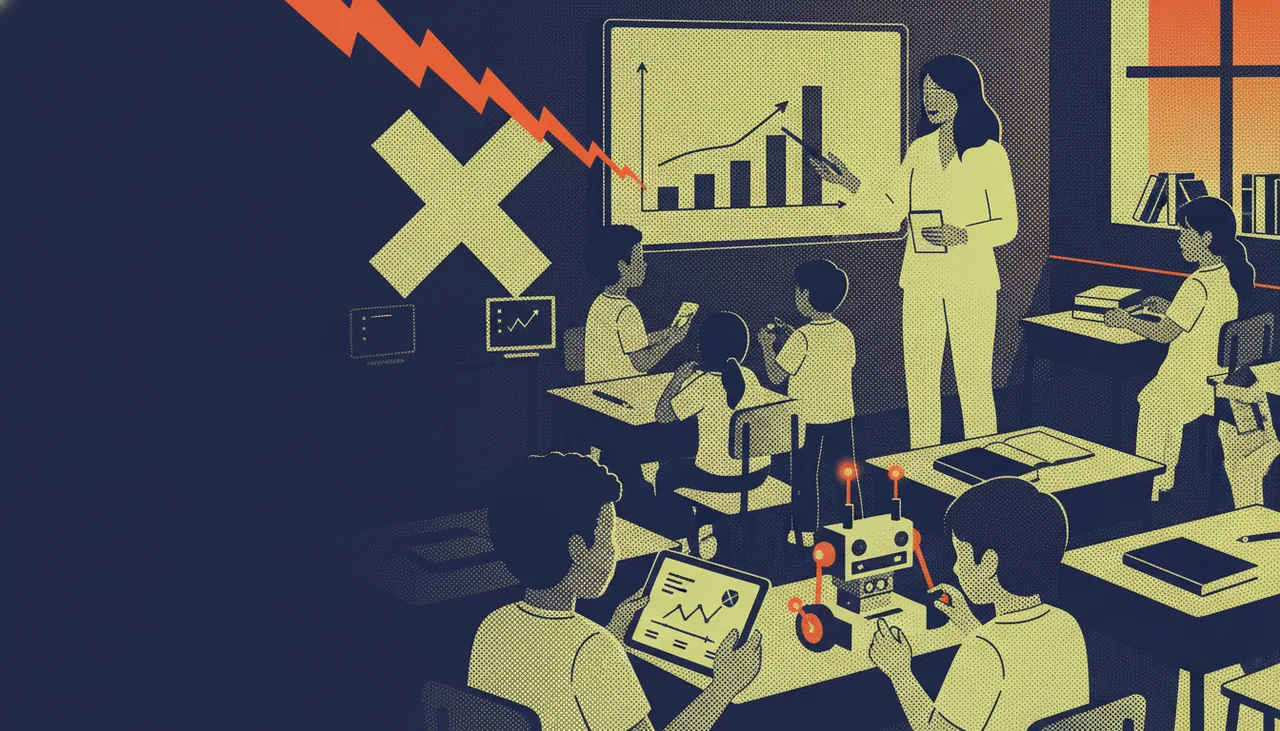
The central distinction lies in pedagogy: passive consumption, such as scrolling through media feeds, differs fundamentally from active digital tasks like running scientific simulations, engaging in adaptive learning platforms, or collaborating on digital projects. For schools implementing digital curricula and coding programmes, the policy debate underscores that effective technology integration depends on teacher-led instruction with clearly defined learning outcomes rather than blunt bans.
Source: eSchool News