 01 · Entry
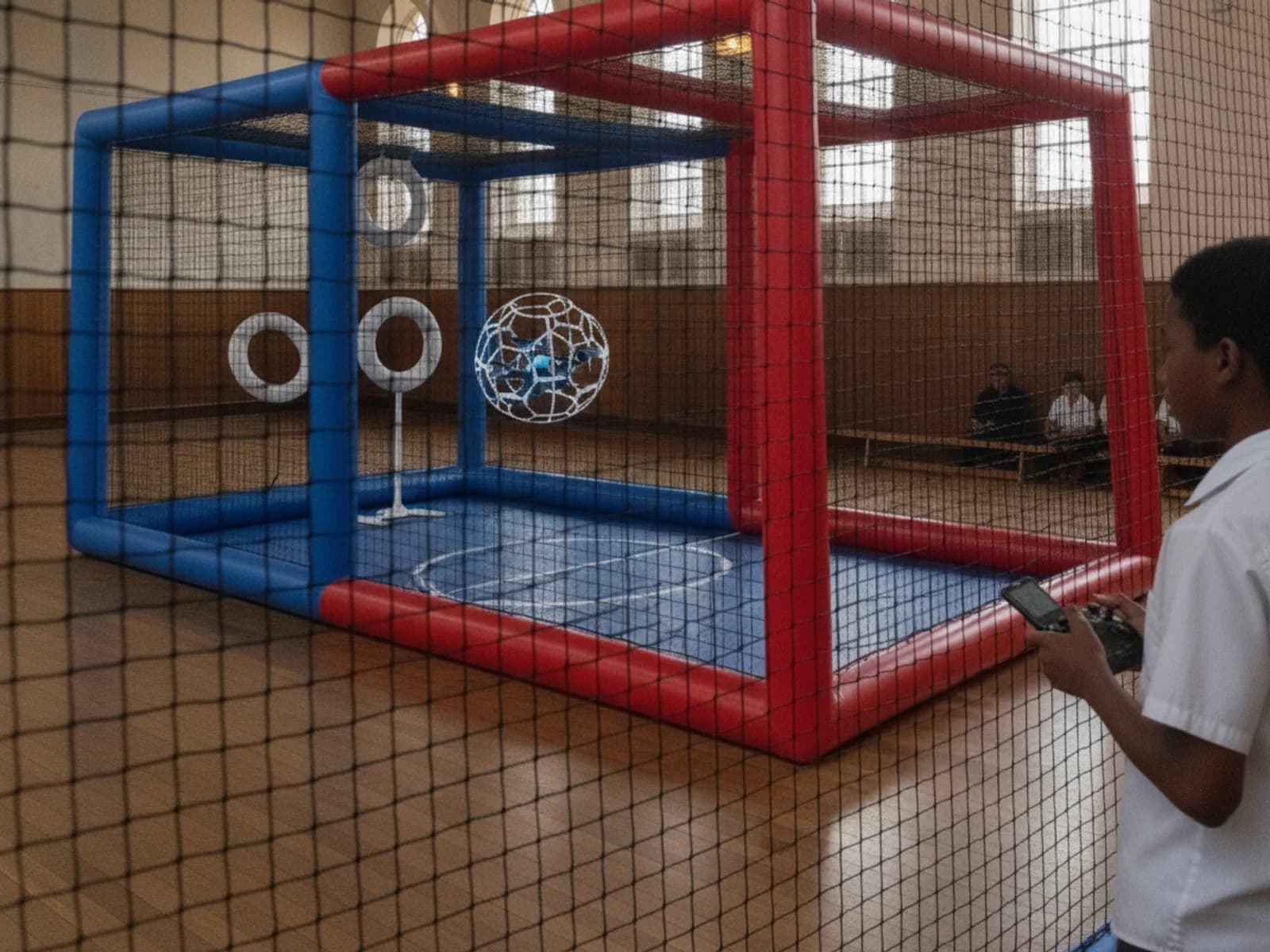
Hoop challenge
Judge the distance, height and direction to a hoop, then fly steadily through it. It looks simple, and it is where every pilot builds the basics.
Practises: Spatial judgement · hand–eye coordination · smooth control

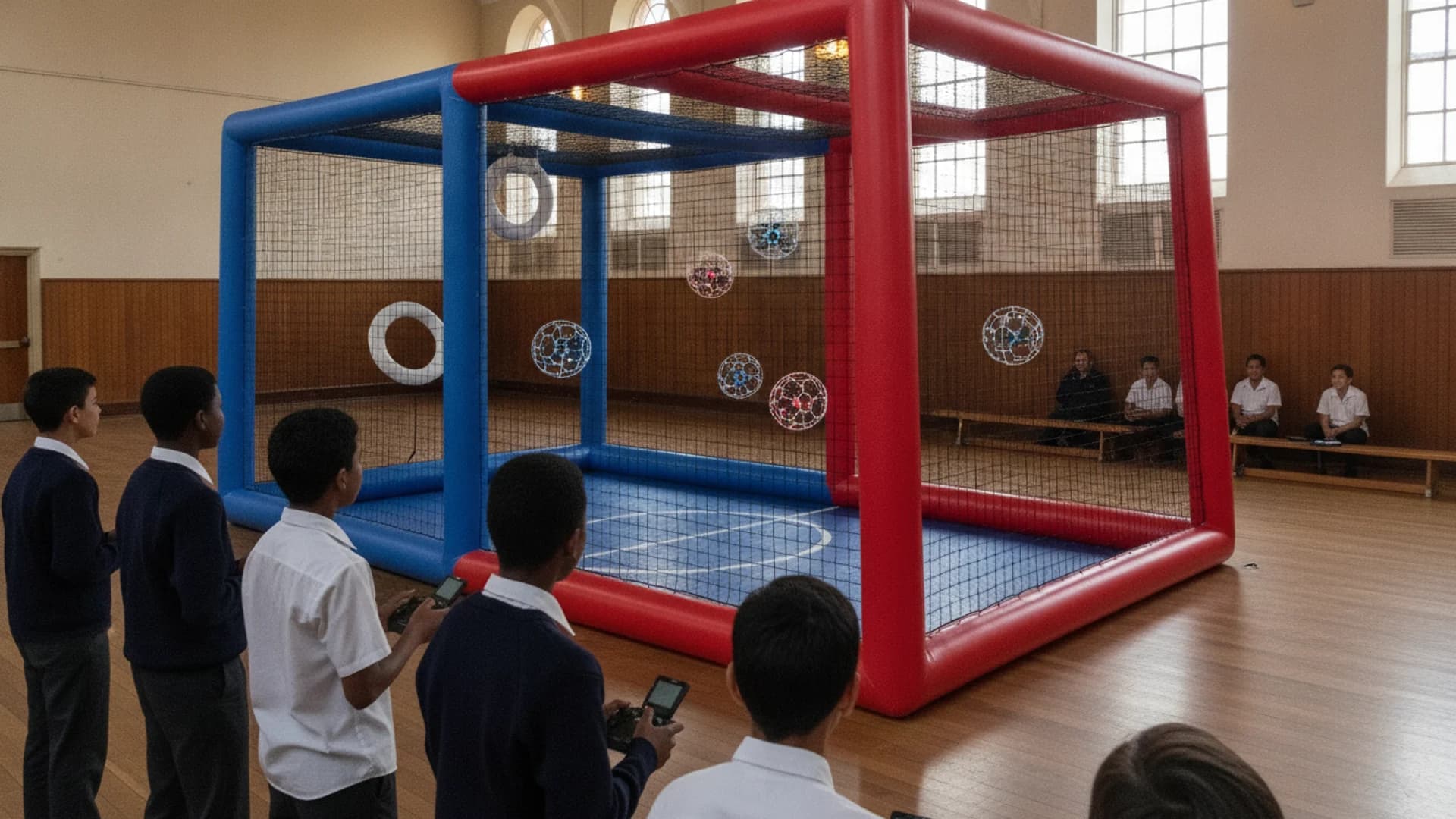
Caged drones, a netted arena, a league format and the training to run it — everything a school needs to turn flying into a team sport learners can play, referee and score.
In drone soccer the drone is the ball. Each one flies inside its own round cage, and pilots steer it through hoops, around a timed course and into the other team’s goal. It turns flying into a sport you can watch, referee and score — and because the propellers are enclosed and the pitch is netted, collisions are part of the game rather than the end of it.
A 20 cm ball cage encloses the propellers, so drones can bump, block and bounce off the net.
A goal is a hoop at each end of the pitch. Score by flying your drone cleanly through it.
Three pilots a side, each with a role: attack, block and cover.
Flight control, spatial judgement and tactics, practised against a clock and a scoreboard.
The same arena runs four kinds of play, so a school can start with first-time flyers and grow into fixtures between teams.
01 · EntryJudge the distance, height and direction to a hoop, then fly steadily through it. It looks simple, and it is where every pilot builds the basics.
Practises: Spatial judgement · hand–eye coordination · smooth control
 02 · Challenge
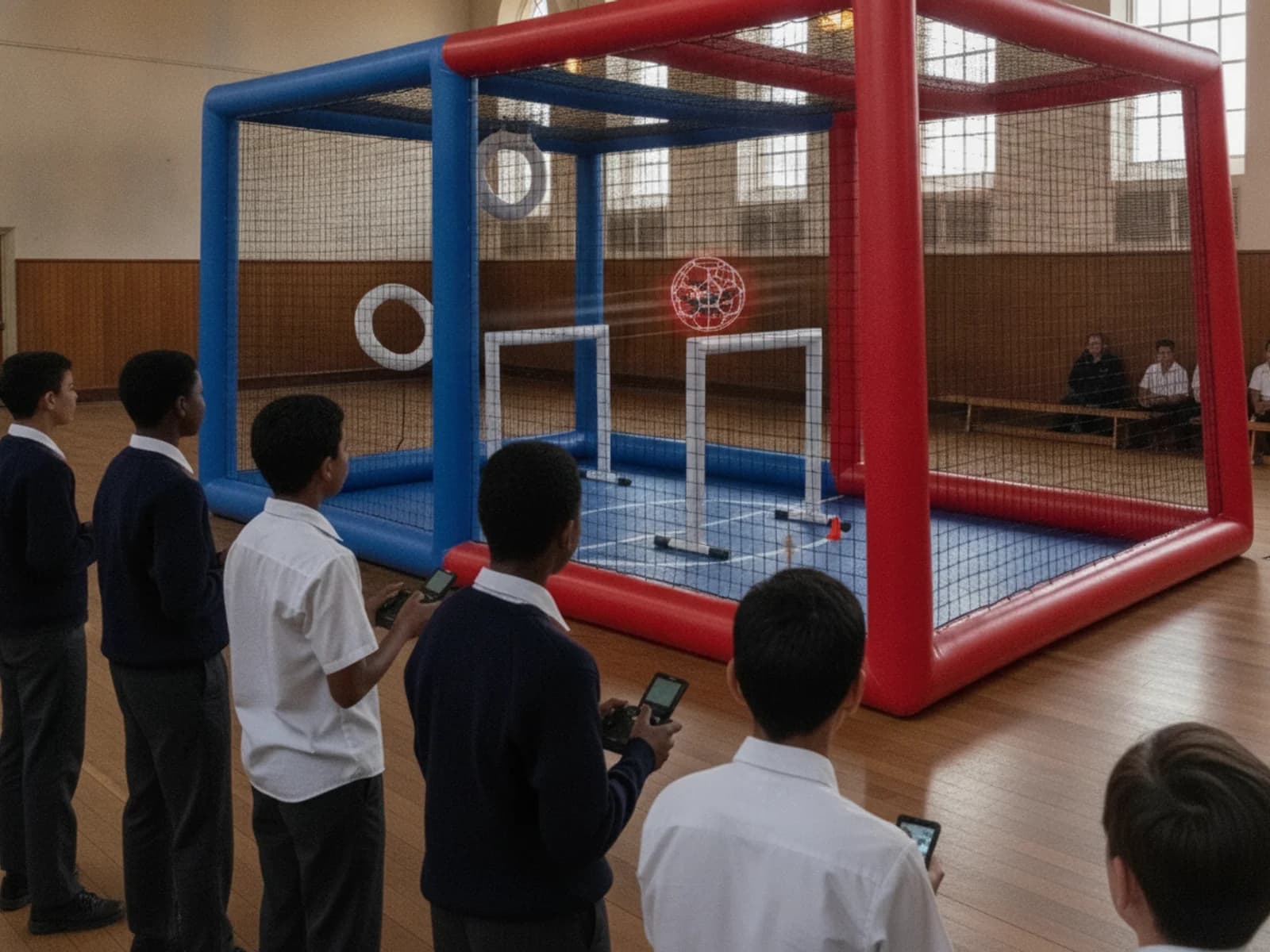
Gates and hoops are set out as a course and flown in order against the clock. Speed alone does not win: fewer collisions, a better line and steady flight do.
Practises: Route planning · precision under time · composure
 03 · Team
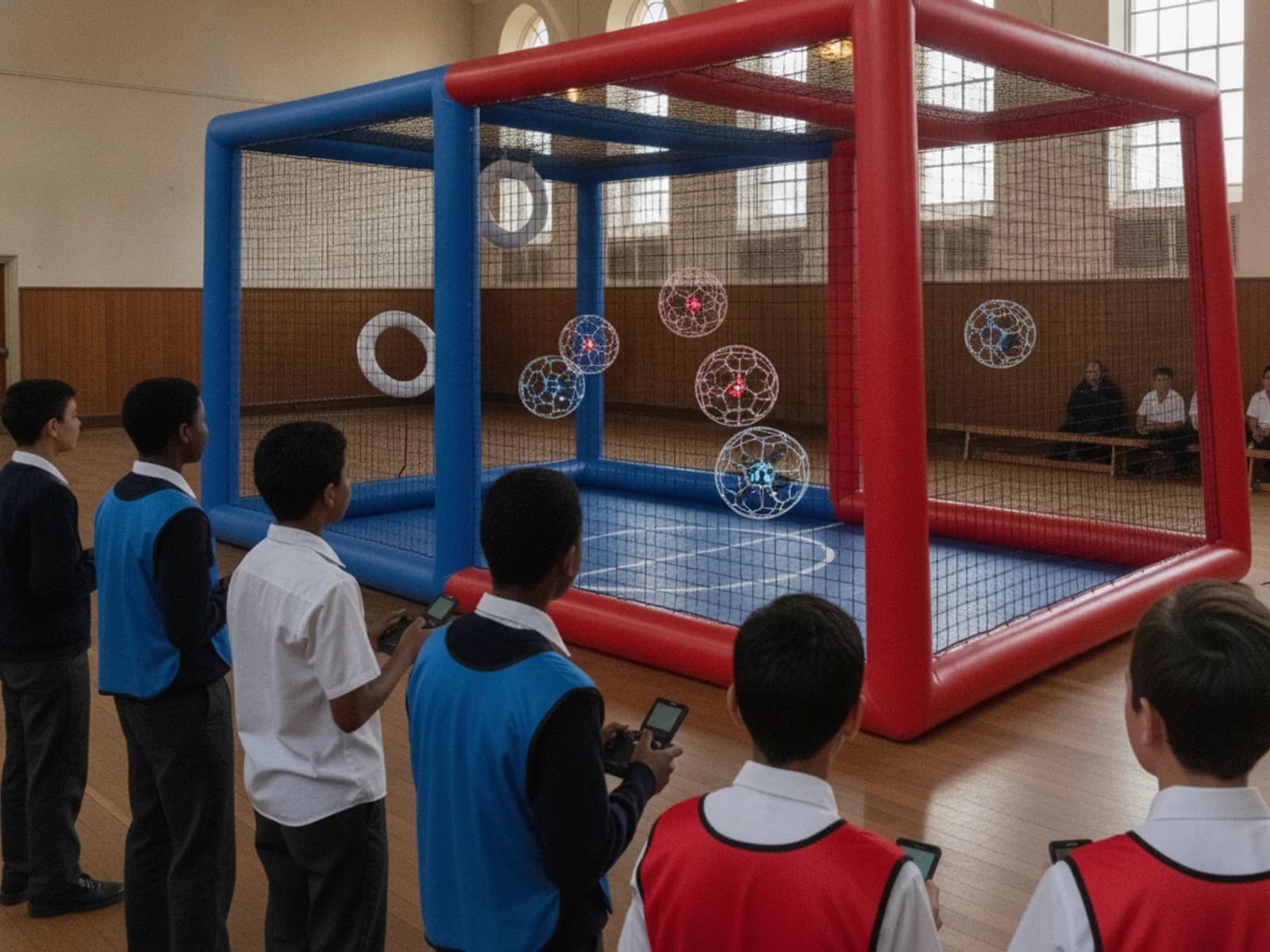
Two teams of 3 pilots attack, block and cover in short timed halves. Every pilot flies their own drone while watching team-mates and opponents, so the game is as much about roles and timing as about flying.
Practises: Teamwork · tactics · reading the game
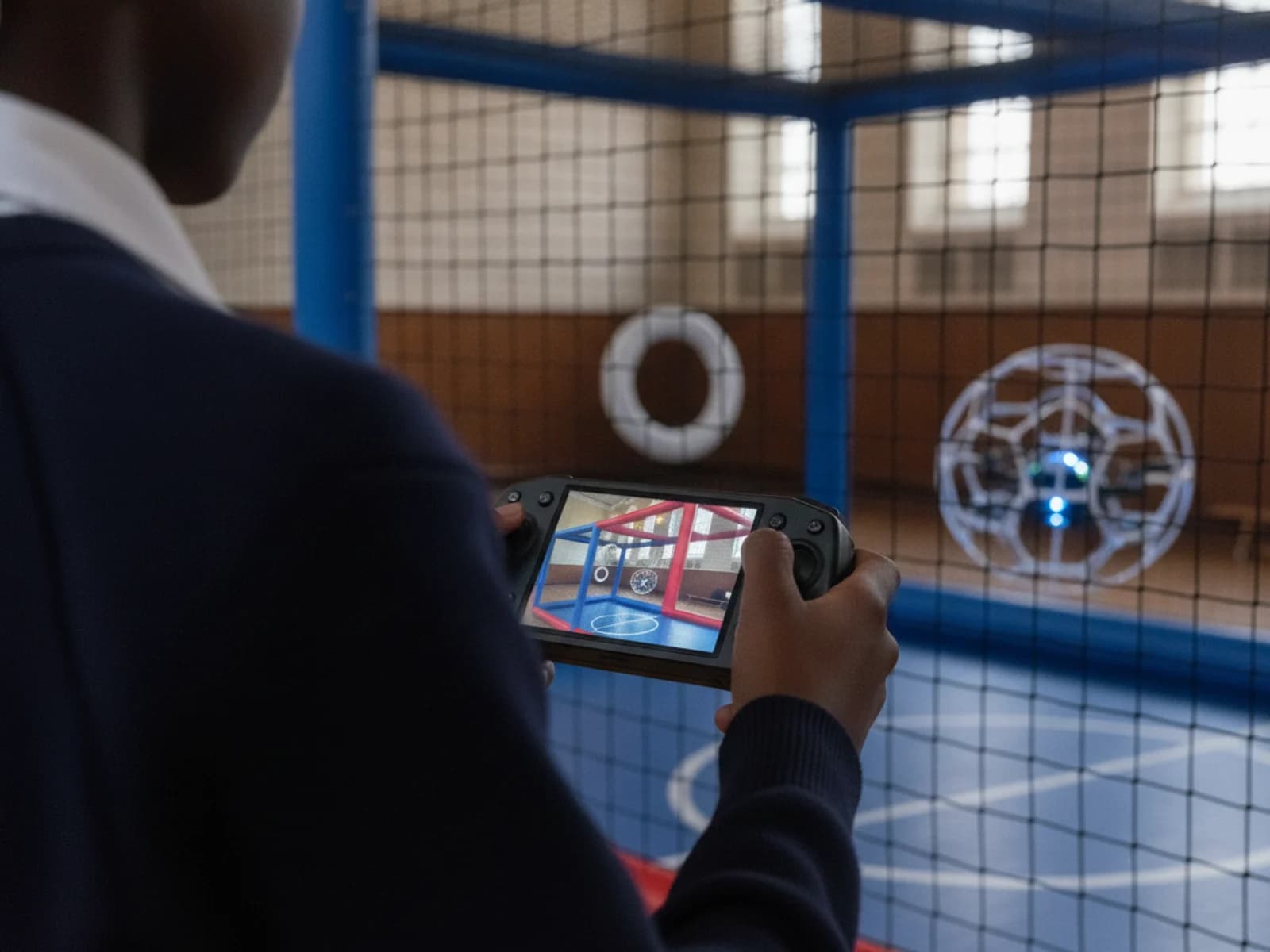 04 · Immersion
The controller has a 4.5-inch screen showing the drone’s live camera. Pilots fly a course from the drone’s point of view, judging direction, distance and the goal from the cockpit instead of from the side.
Practises: Perspective-taking · quick decisions · focus
Mix the formats into a taster session, a weekly club or a competition day. The hoop challenge is the usual first lesson; 3v3 is where teams are made.
Four parts, taken together or one at a time. A school can buy the kit and run it, or have us design and run the whole programme with its teachers.
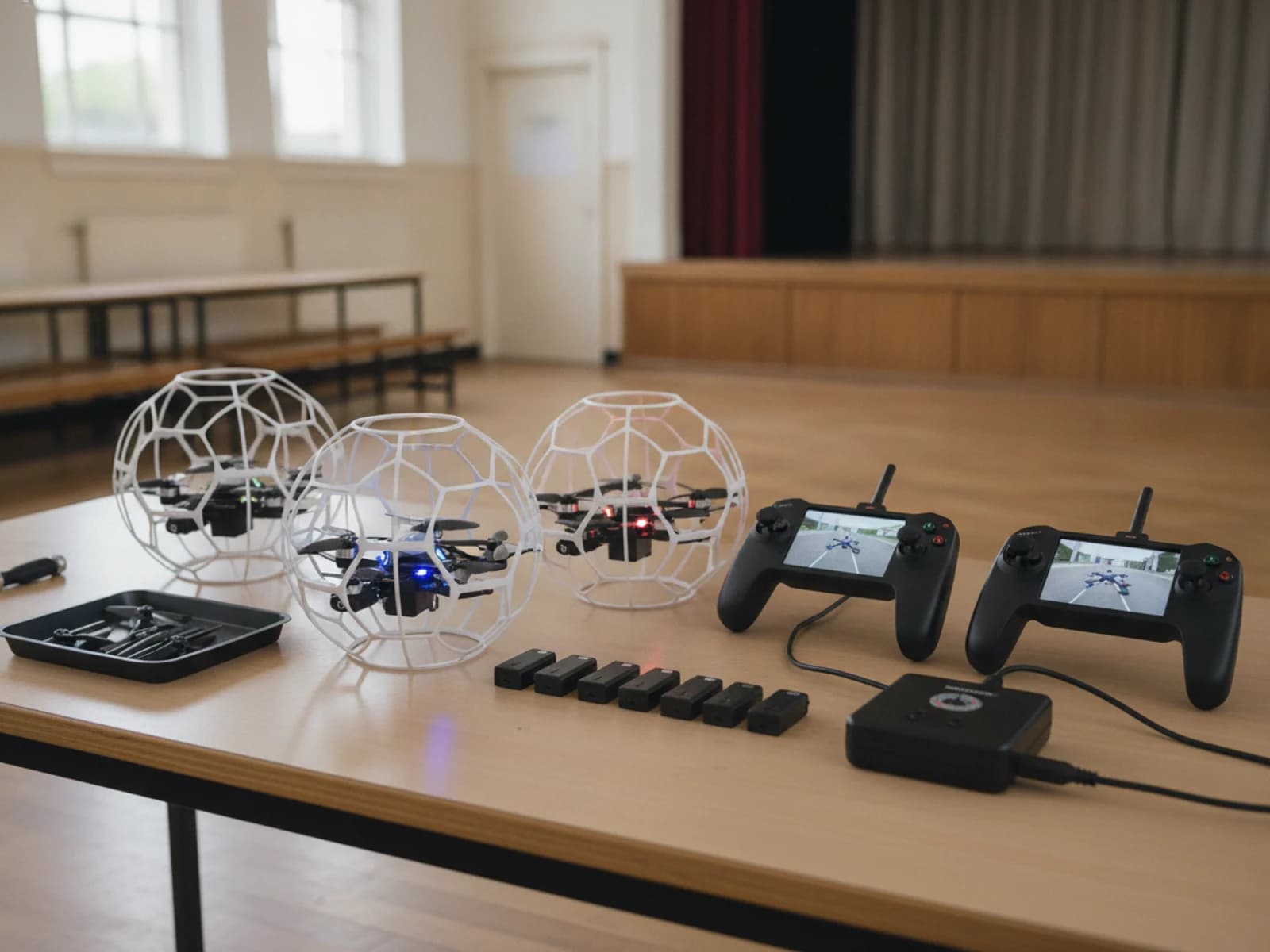
A 20 cm quadcopter inside a polypropylene ball cage, built to be collided with. A squad of 6 drones fields both teams of a 3v3 match.
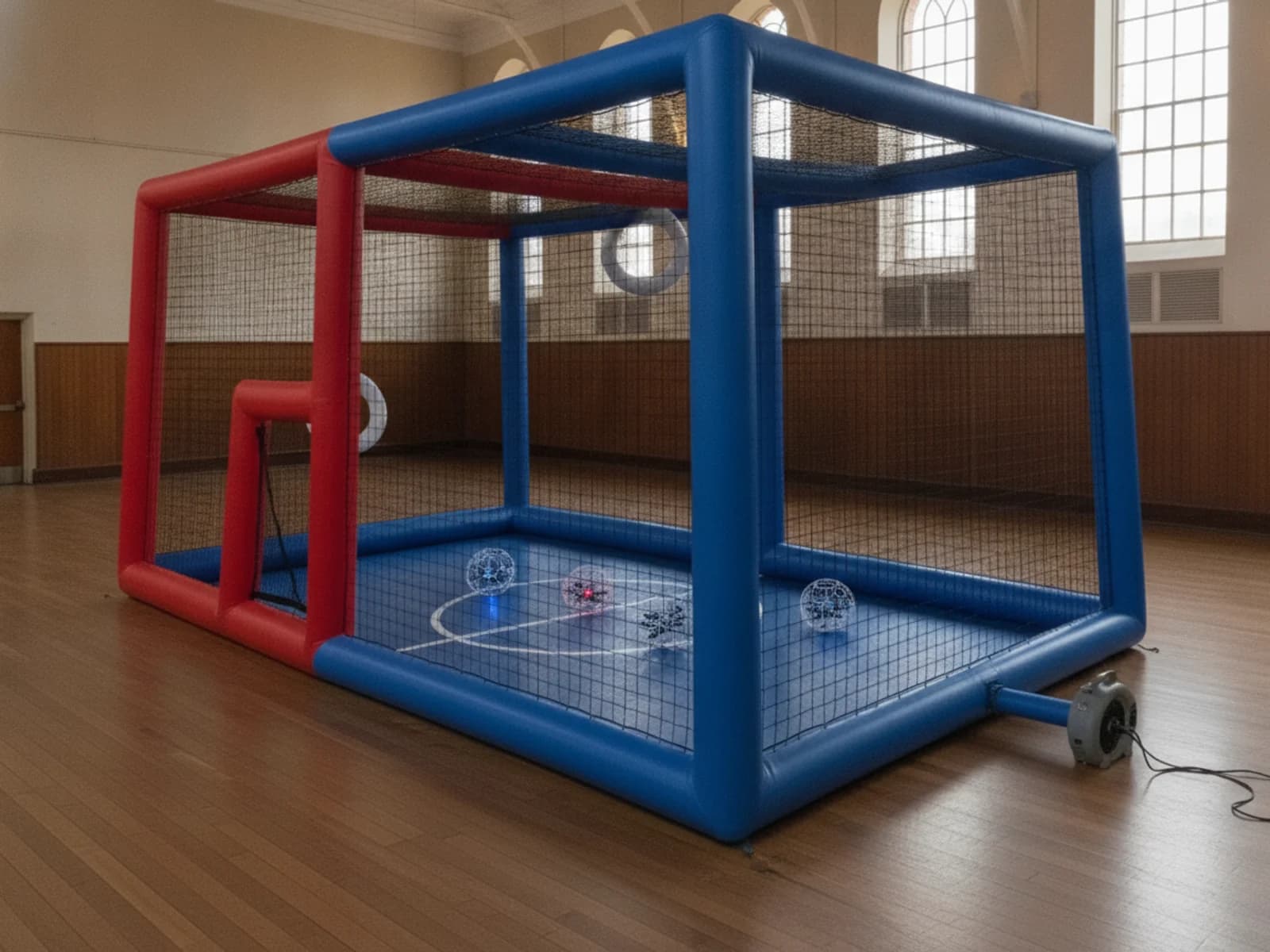
An inflatable 6 × 4 × 3 m arena with safety netting on every side and across the roof. It goes up and comes down in about 10 minutes with the electric blower supplied.
We help you decide what to run and how to score it — from an inter-house afternoon to a fixture list across a cluster of schools.
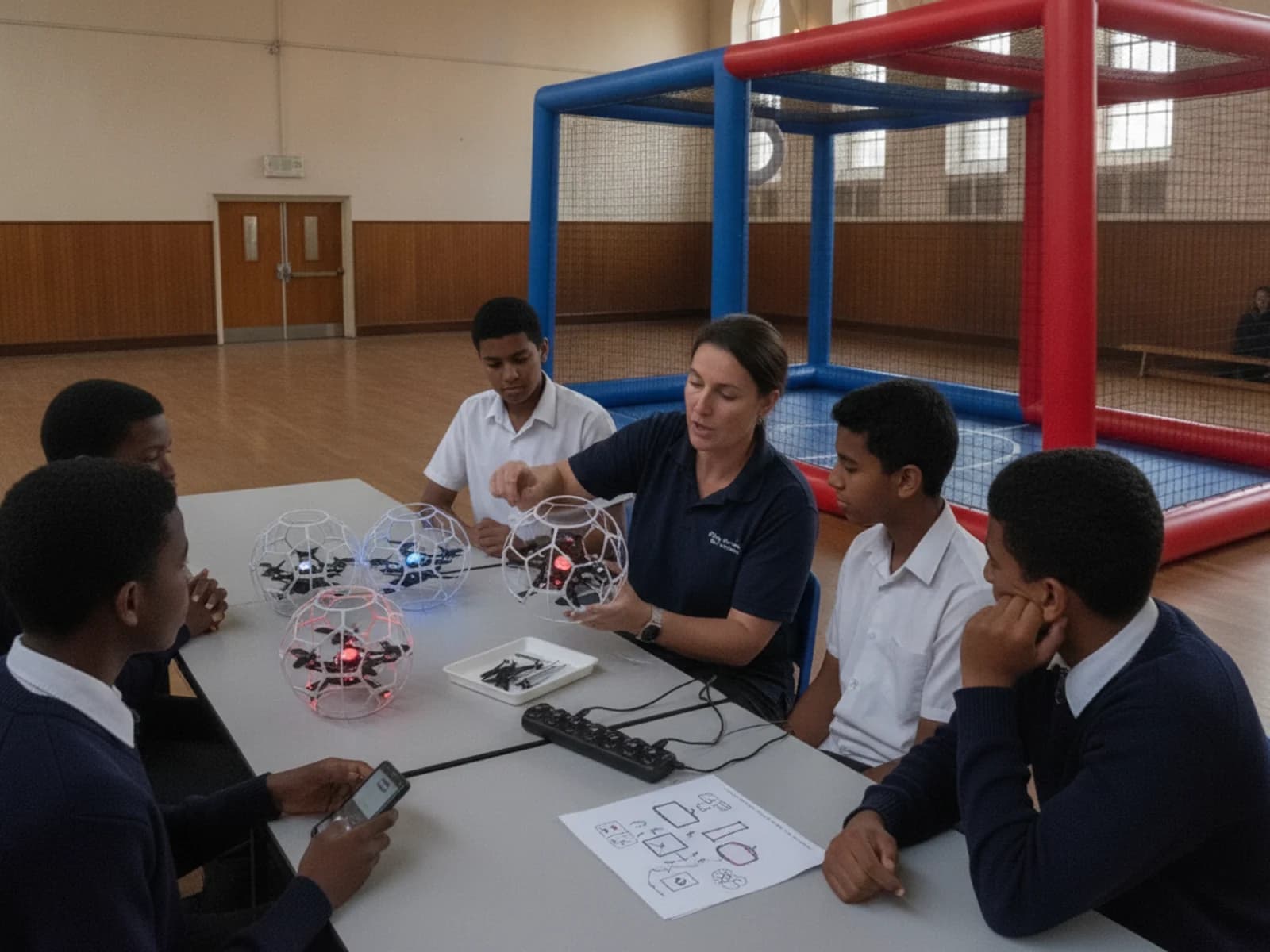
Training that takes a learner from first hover to match play, and a teacher from unboxing to running the club without us.
Your space, the grades you have in mind, and whether you want kit, a programme or a league.
We bring a drone and a hoop to a staff meeting, so the people deciding can fly it first.
The arena goes up in your hall, and your teachers learn to run it: set-up, batteries, safety.
Learners move from the hoop challenge to the speed course to their first 3v3 matches.
An inter-house or inter-school event, run to a format and a safety plan agreed in advance.
The arena is the only large item, and it packs into a bakkie. One arena can serve a cluster of schools on rotation, with school rounds feeding a cluster or district final — and indoor play means no fixture is lost to the weather.
Nothing in the format depends on a learner flying carefully.
The ball cage surrounds the rotors, so a drone can be caught by hand or hit the wall.
Pilots and spectators stand outside the netting; the drones stay inside it.
One button cuts the motors; another rights a drone that has landed upside down.
Our educators are police-cleared, and we carry public liability insurance.
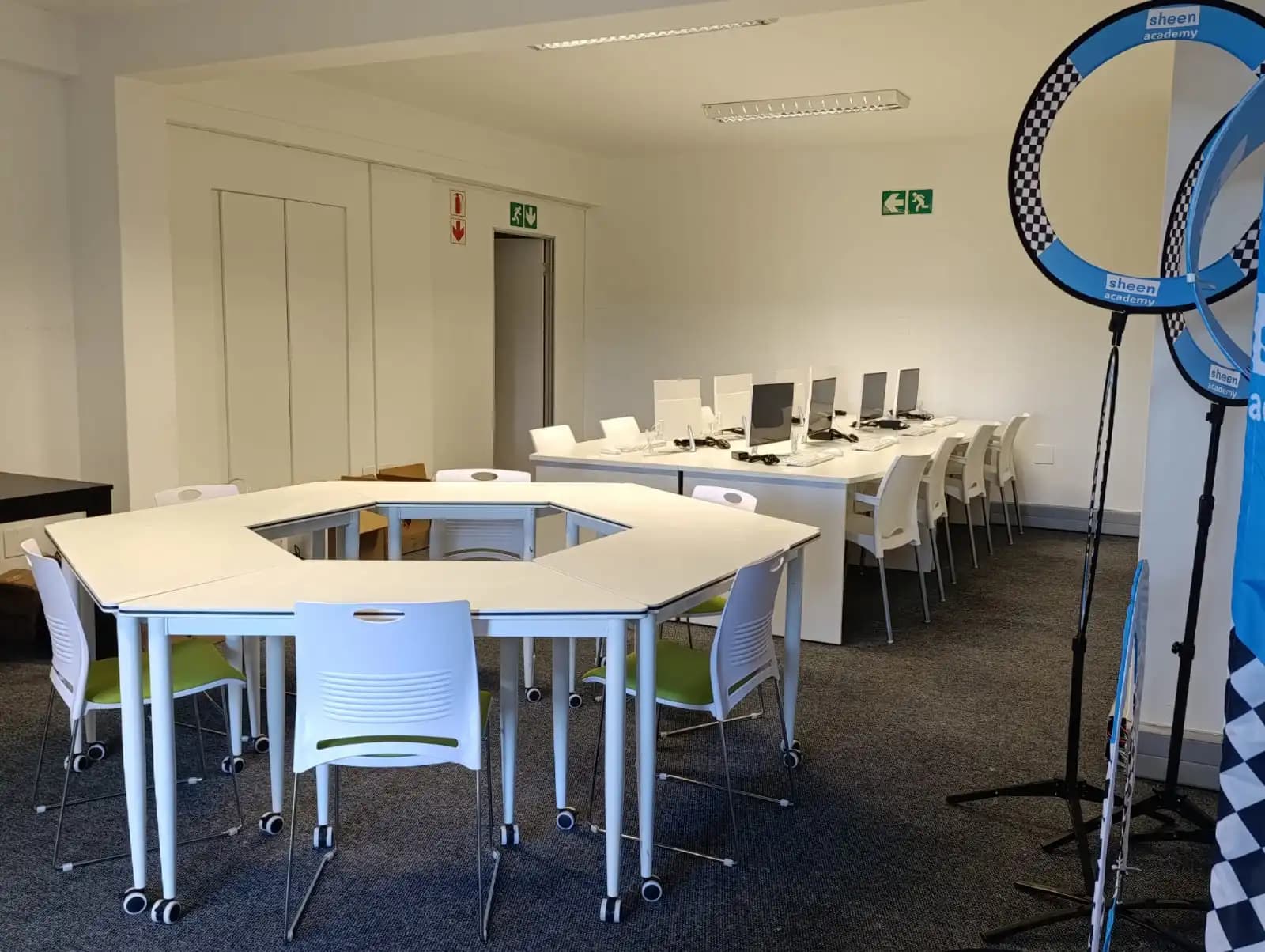
Our race gates stand in the AI Lab at sheen academy in Century City, and drones are part of what our learners do: the Sky Ops drone camp ran in July 2026 and ended in a tournament. Come and see the kit before you decide.
Book an academy visitThe arena is 6 m long, 4 m wide and 3 m high, so a school hall, gym or covered court works, with room around it for pilots and spectators. It needs a plug point for the blower.
The propellers are enclosed in a ball cage, everyone stands outside the net, and every controller has an emergency stop. We recommend it for ages 9 to 18, with an adult supervising every session.
No. The controller has its own 4.5-inch screen, so nothing depends on learner devices or the school’s Wi-Fi.
About 12 minutes of flight, and a charge takes 1–2 hours. The battery slides out in seconds, so a spare per drone keeps a team flying through a fixture.
No. Drone soccer has international federations with their own rules, drones and much larger arenas. Ours is a school-sized 3v3 format built on the same idea, and we are not affiliated with any federation.
Yes — that is how a league becomes affordable. The arena deflates in about 10 minutes and travels in carry bags, so a cluster of schools can rotate it between fixtures.
Every school starts in a different place, so we quote in writing after a scoping call, with VAT shown, for exactly the parts you want: drones, the arena, consulting, training, or all four.
Tell us about your hall and your learners. We will come back with a proposal for kit, a programme or a league — and bring a drone to your next staff meeting if you would like to fly one first.
academy@sheen.co.zaWhatsApp us · +27 69 643 0382+27 65 900 8570