Hydroponik oder Erde: Was ergibt das bessere Schulprojekt in Naturwissenschaften?

Erde ist billig und verzeiht viel, doch als Lehrinstrument ist Hydroponik weit überlegen – für schnelle Datenerhebung, Physical Computing und das unbeaufsichtigte Überstehen der Schulferien.
Wenn Sie für ein naturwissenschaftliches Schulprojekt zwischen einem Erdbeet und einem Hydroponik-Aufbau wählen, betrachten Sie beide nicht als landwirtschaftliche Werkzeuge. Betrachten Sie sie als Lehrinstrumente. Für schnelle, messbare Daten, die Einbindung von Physical Computing und das Überstehen der Schulferien ohne Betreuung gewinnt die Hydroponik haushoch. Für knappe Budgets, jüngere Klassenstufen und folgenlose Fehlschläge bleibt Erde die richtige Wahl.
Die Rückkopplungsschleife: messbare Variablen in einem einzigen Quartal
Die Schulquartale an südafrikanischen Schulen sind kurz, üblicherweise nur 10 bis 11 Wochen. Ein Pflanzenwachstumsversuch in Erde liefert notorisch langsam verwertbare Daten. Erde wirkt als gewaltiger natürlicher Puffer; sie widersetzt sich schnellen Änderungen von pH-Wert, Feuchtigkeit und Nährstoffgehalt. Gibt eine Lernende eine saure Lösung auf die Erde, um die Wirkung zu beobachten, verdeckt die natürliche Pufferkapazität den Effekt wochenlang. Bis eine messbare Veränderung eintritt, ist das Quartal vorbei und die Prüfungen haben begonnen.
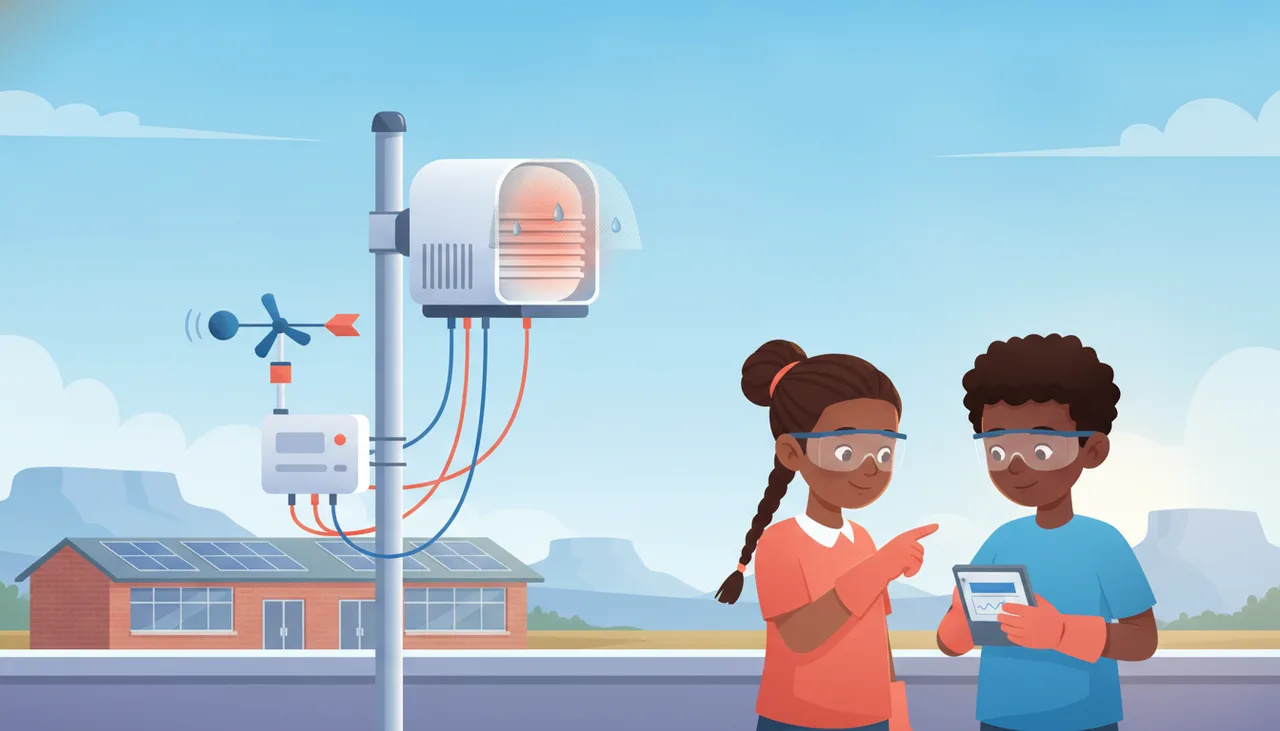
Hydroponik arbeitet dagegen in Echtzeit. Weil das Substrat inert ist – ob Kokosfaser, Blähton oder schlicht Wasser –, hängt die Pflanze vollständig an der Nährlösung, die Sie bereitstellen. Jede Änderung der Wasserchemie, der Nährstoffkonzentration oder der Temperatur schlägt sich binnen Tagen in sichtbaren, messbaren physiologischen Veränderungen der Pflanze nieder. Für Projekte in Physik und Biologie ist diese schnelle Rückkopplungsschleife unbezahlbar. Lernende können Variablen wie pH-Wert (Säuregrad), elektrische Leitfähigkeit (EC, ein Maß für die Nährstoffdichte) und Wassertemperatur täglich aktiv messen, grafisch darstellen und auswerten.
Das Ferien- und Load-Shedding-Dilemma
Die zwei größten betrieblichen Bedrohungen für jedes Schulprojekt in Südafrika sind die dreiwöchigen Ferien und das Load-Shedding. Ein gewöhnliches Erdbeet muss von Hand gegossen werden. Über die Ferien im Dezember und Januar kehrt Ihr Forschungsprojekt als Fläche aus trockenem Staub zurück – es sei denn, Ihre Schule hat einen eigenen Hausmeister oder eine teure automatische Bewässerung am Stadtwassernetz.
Hydroponik kommt mit Ferien erstaunlich gut zurecht, aber nur bei der richtigen Systemwahl. Ein aktives System wie ein Aufbau nach der Nutrient Film Technique (NFT) braucht eine dauerlaufende elektrische Pumpe, die Wasser über die Wurzeln rieseln lässt. Schlägt an einem heißen Sommertag vier Stunden Load-Shedding zu, steht die Pumpe, der dünne Wasserfilm trocknet aus, und der gesamte Bestand stirbt, bevor der Strom zurückkehrt. Das macht aktive Systeme hochgradig anfällig, sofern keine verlässliche Batteriepufferung dazukommt.
Passive Hydroponik – konkret die Kratky-Methode – ist dagegen gegen Load-Shedding wie gegen Schulferien vollständig immun. In einem Kratky-System hängen die Pflanzen in Netztöpfen über einem stehenden Reservoir mit Nährlösung. Während die Pflanze wächst, verbraucht sie das Wasser; es entsteht ein wachsender Luftspalt, in dem sich spezialisierte „Luftwurzeln“ entwickeln, während die unteren Wurzeln weitertrinken. Ein einfaches System aus einem 20-Liter-Eimer bringt einen Kopfsalat in sechs Wochen vom Sämling bis zur Ernte – ohne einen Tropfen Strom, ohne Pumpe und ohne jedes menschliche Zutun. Es kann drei Wochen Ferien lang in einem abgeschlossenen Klassenzimmer stehen und gedeiht dabei.
Die Kosten des Scheiterns
In Erde zu scheitern ist unglaublich billig. Wenn eine Viertklässlerin eine Bohnenpflanze im Plastikbecher zu stark gießt, kostet dieser Fehlschlag ein Saatkorn und eine Handvoll Erde – vielleicht R10. Sie kann am nächsten Tag neu beginnen, ohne das Klassenbudget zu sprengen.
Hydroponik hat eine höhere finanzielle Einstiegshürde, damit wiegt ein Fehlschlag schwerer. Ein einfacher hydroponischer Selbstbausatz beginnt bei etwa R500, ein automatisiertes, IoT-fähiges Mehrkanalsystem kann mehrere tausend Rand kosten. Verrechnet sich ein Lernender bei der Nährstoffdosierung und verbrennt die Wurzeln, oder ist ein pH-Sensor falsch kalibriert, kann ein ganzer Bestand über Nacht eingehen. Doch genau dieses Umfeld mit hohem Einsatz macht Hydroponik zu einem herausragenden Werkzeug, um älteren Lernenden Präzision, Verantwortung und die wissenschaftliche Methode zu vermitteln. Es zwingt sie, das Projekt mit der Strenge eines echten Labors zu behandeln.
Empfehlungen nach Klassenstufe
Um das Meiste aus Ihrem Budget zu holen, passen Sie das Anbauverfahren an das kognitive Niveau Ihrer Lernenden und an Ihre Lehrplanziele an.
| Phase / Klassenstufen | Empfohlenes System | Zentrale Lernergebnisse | Ungefähre Aufbaukosten |
|---|---|---|---|
| Foundation & Intermediate Phase (Klassen R–6) | Erdbeete / Töpfe | Grundlegende Lebenszyklen von Pflanzen, haptisches Beobachten, Samenkeimung. | Sehr niedrig (R50 – R200) |
| Senior Phase (Klassen 7–9) | Passive Hydroponik (Kratky) | Wasserchemie, pH-Messung, Nährstoffverhältnisse, Datenauswertung in Diagrammen. | Mittel (R200 – R800) |
| FET Phase & Robotik-AGs (Klassen 10–12) | Aktive/IoT-Hydroponik | Automatisierung, Sensorkalibrierung, Datenaufzeichnung, Regelkreis-Programmierung. | Hoch (ab R1.500) |
Für die Klassen R bis 6 ist Erde die natürliche Wahl. Das körperliche, haptische Erleben von Graben, Pflanzen und Gießen passt perfekt zu den Lehrplänen für Life Skills und Natural Sciences. Die geringen Kosten eines Fehlschlags halten den Unterricht stressfrei.
Für die Klassen 7 bis 9 führt passive Kratky-Hydroponik Chemie und quantitatives Messen ein, ohne den technischen Aufwand von Pumpen und Verrohrung. Lernende können Wasserverbrauch und pH-Schwankungen leicht verfolgen und sie den Wachstumsraten der Pflanzen gegenüberstellen.
Für die Klassen 10 bis 12, besonders im CAPS-Lehrplan Coding and Robotics, ist aktive Hydroponik der ultimative Spielplatz für Physical Computing. Sie erlaubt es Lernenden, geschlossene Regelkreise zu bauen. Sie können einen Mikrocontroller (etwa einen ESP32) so programmieren, dass er Wassertemperatur, pH-Wert und Füllstände ausliest und beim Überschreiten bestimmter Schwellen Relais schaltet, um Pumpen, Lüfter oder Nährstoffdosierer einzuschalten.
Wenn Sie diesen datengetriebenen High-Tech-Ansatz an Ihre Schule holen möchten: Unsere automatisierten Hydroponik-Sets für Schulen sind eigens dafür ausgelegt, dem südafrikanischen Klassenzimmeralltag standzuhalten, samt Optionen zur Batteriepufferung. Wenn Sie zunächst Ihr Kollegium darin schulen wollen, Physical Computing mit Biologie zu verbinden, bieten unsere Fortbildungen für Lehrkräfte an der sheen Academy praxisnahe berufliche Weiterbildung.