Part 1Lessons 1–4
Your Own Grow
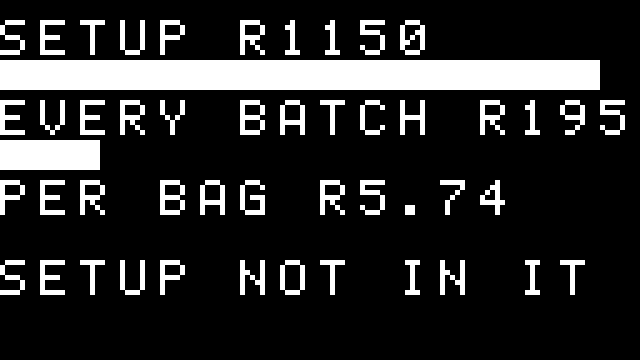
A till you can press. Then the split that decides everything: R1 150 of bench you keep, R195 of seed and nutrient you spend again. Only the second pile belongs in the price of these greens.
One bench · no network

Twelve lessons in which a class runs a real business — a hydroponic bench they cost, price and sell from. In week five they are R45 short with R281 of profit on the way, and they learn the thing that actually closes small businesses.
New pilot course · Now bookingEvery lesson carries exactly one business idea and one coding idea. Nothing is simulated on a worksheet — every cost, every price and every shortfall happens on hardware the students are holding.
A till you can press. Then the split that decides everything: R1 150 of bench you keep, R195 of seed and nutrient you spend again. Only the second pile belongs in the price of these greens.
One bench · no network
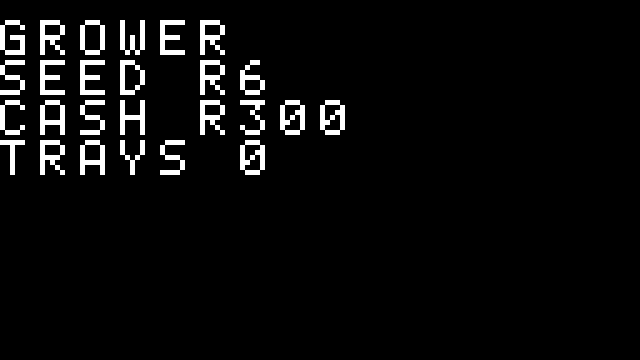
Benches buy from each other by radio. One becomes the supplier and quotes a price; the rest order stock, take thirty days to pay, and watch a pump die during load shedding.
Board-to-board radio · still offline
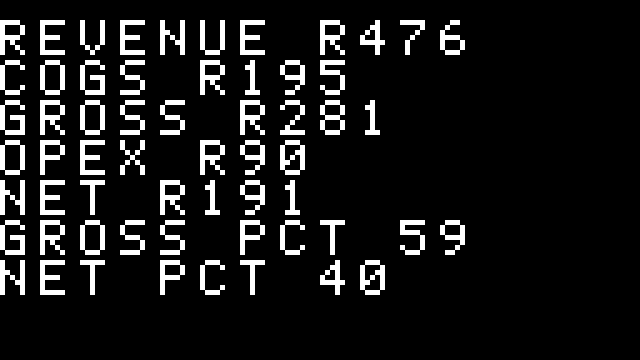
The benches join WiFi and subscribe to a demand feed the teacher controls. Gross margin against net, payback on a second bench — then twenty-five stalls trade the same market day.
WiFi · live feed · dashboard
The capstone is not scored on how much you sell. It is scored on net profit — with one rule above it: run out of cash and there is no score at all. These are the real figures from one eight-cycle season.
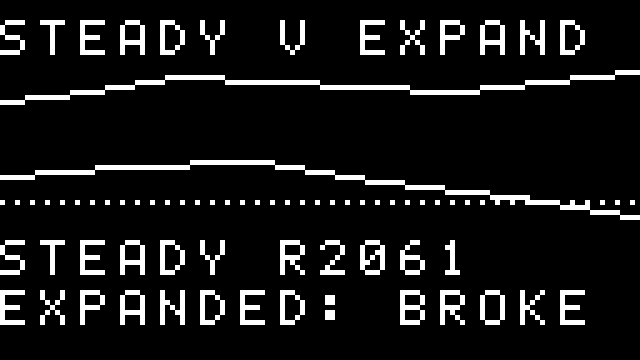
| Stayed at one | Bought a second | |
|---|---|---|
| Cycles survived | 8 | 6 |
| Bags sold | 198 | 147 |
| Lowest cash | R1 500 | −R225.55 |
| Finished on | R2 061.30 | −R225.55 |
| Score | +R561.30 | No score |
The stall that expanded doubled its seed bill immediately, then three rainy market days arrived and there was nobody to sell the extra bags to. It closed in cycle six having sold fewer bags than the stall that stayed small.
Students have 34 bags that cost R195 to grow and a stall that costs R90 whatever happens. They write their pricing rule on paper before they write a single block. Then the market opens.
The feed opens. Every stall subscribes, and the first price and buyer count land on all twenty-five boards at the same instant.
Rain. The teacher presses one key and the buyers halve. Greens do not keep, so every stall has to decide: cut the price to clear the stock, or hold it and lose it.
Load shedding. The pump heartbeat stops. Water levels still read perfectly normal, and the benches that built the watchdog in lesson 8 are the only ones that notice.
School fair. A crowd arrives and they will pay more — but you can only sell what you grew, and the stall that undercut on the rainy day has nothing left.
The market closes. Any stall that went below zero shows NO SCORE. Scores are read out on net profit, and the stall that sold the most is usually not the winner.
We run the first Market Day with your teacher, supply the boards, and leave the course in your LMS. Parts 1 and 2 need no internet at all — a room, the boards, and one teacher willing to make it rain on purpose.
Download the one-page flyer (PDF)