
What does good teamwork
actually look like?
Is it just — nobody argues, and everyone does exactly the same amount?
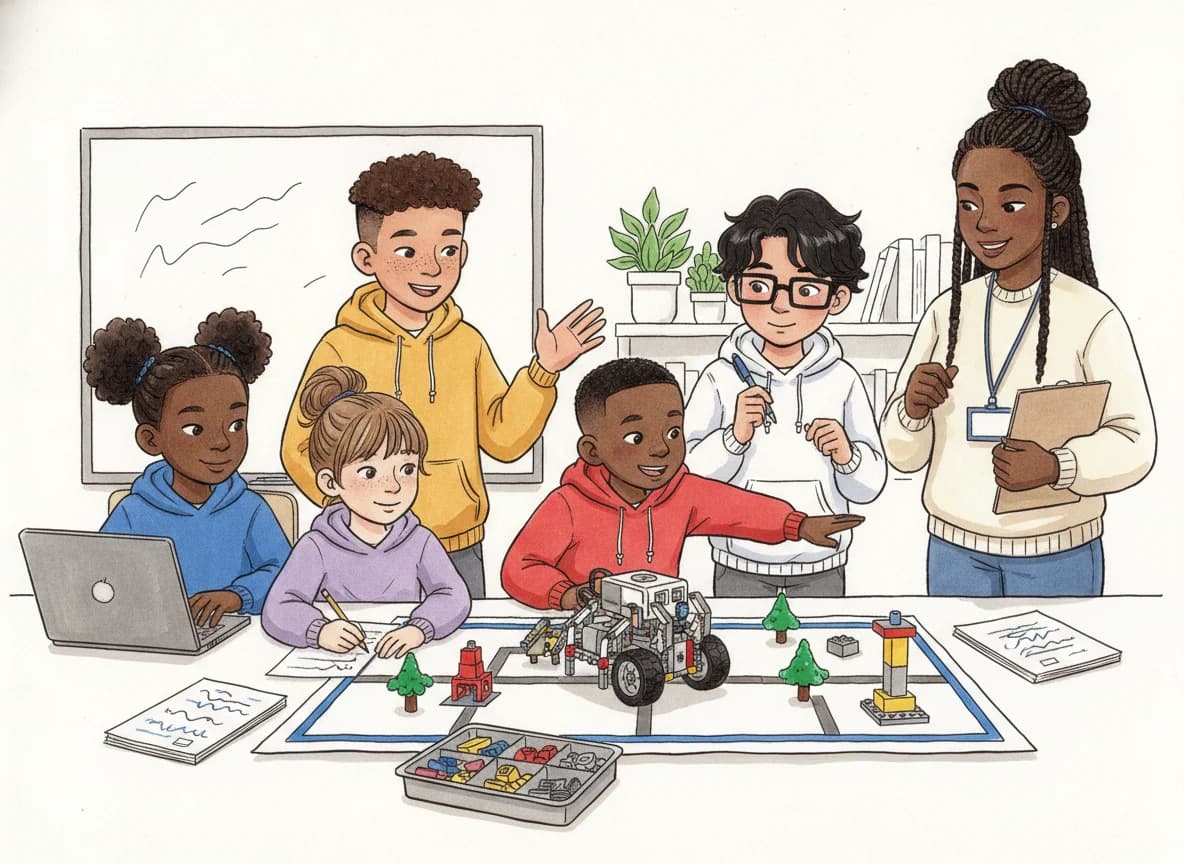
Teamwork is not the same as everyone agreeing
A FIRST® LEGO® League season looks like it is about robots. Most of what a child takes out of it is about people: keeping a promise, asking for help early, arguing with evidence instead of volume, and leaving room for someone else. Here is what that looks like on an ordinary Tuesday afternoon at Sheen Academy.
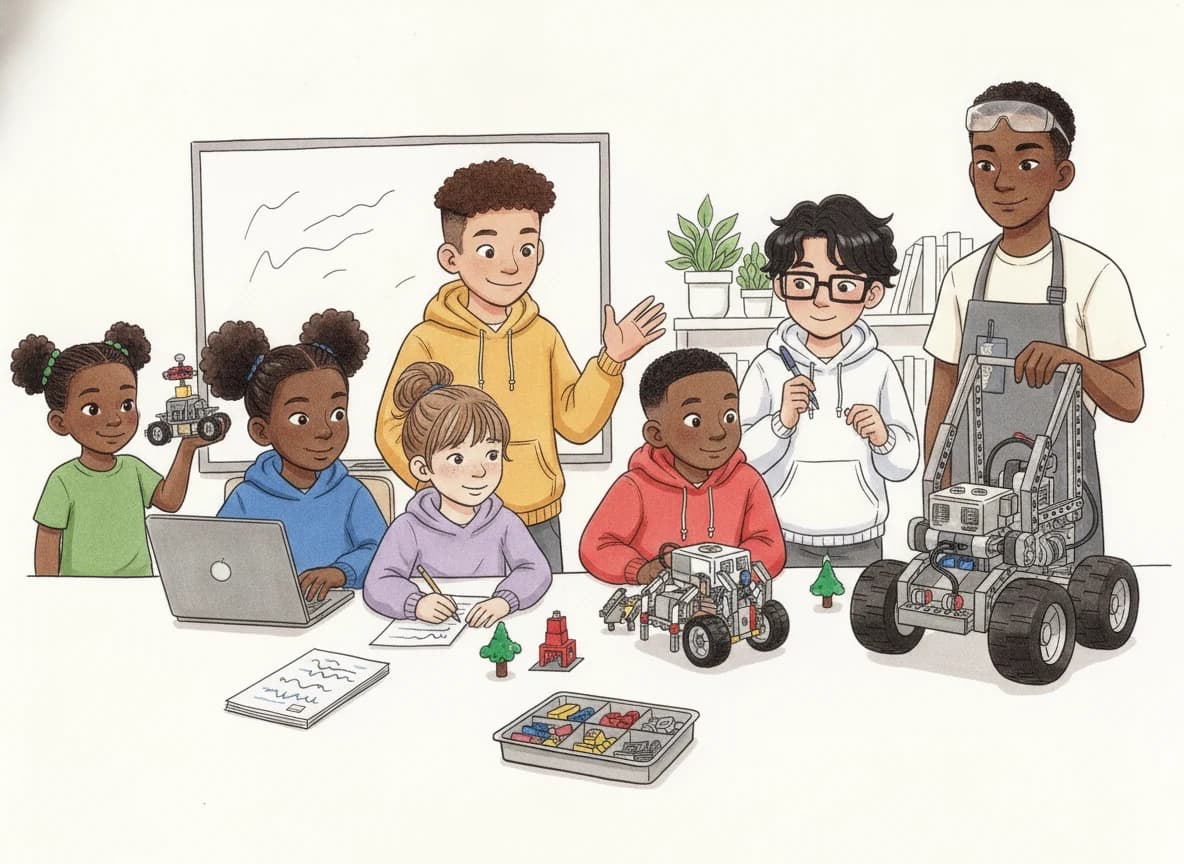
The team you are about to meet
Five children and a coach, drawn from the teams we actually run.
- Amahle, 11 — the coder
- Daniel, 12 — the builder
- Sipho, 10 — the ideas
- Yusuf, 13 — the presenter
- Zoë, 9 — the careful eye
- Coach Naledi
A good team doesn’t need everyone to be good at everything.
Fair is not the same as everyone doing the same amount. One child gets the program running, another builds the attachment, another writes up what was tested. Every one of those is pushing the same goal forward — and a child with a strength still has to learn from the others.
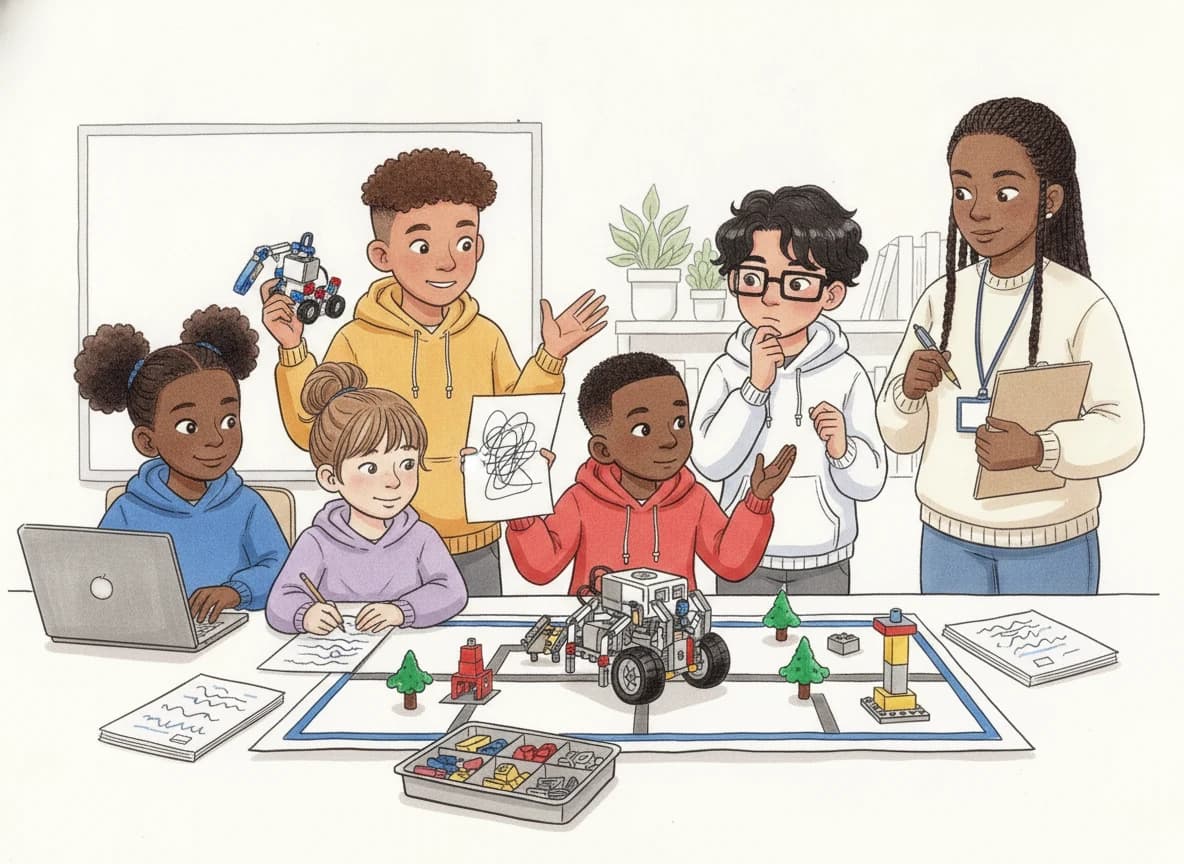
Fair ≠ everyone doing the same amount.
A good teammate remembers what they said they would do.
A season runs on four or five small promises a week: test the new attachment, fix the line-following program, research for the Innovation Project, write up the test log. What makes a team work is not that every promise is kept perfectly. It is a child who can say “I said I would, so I do it — and if I can’t, I say so.”
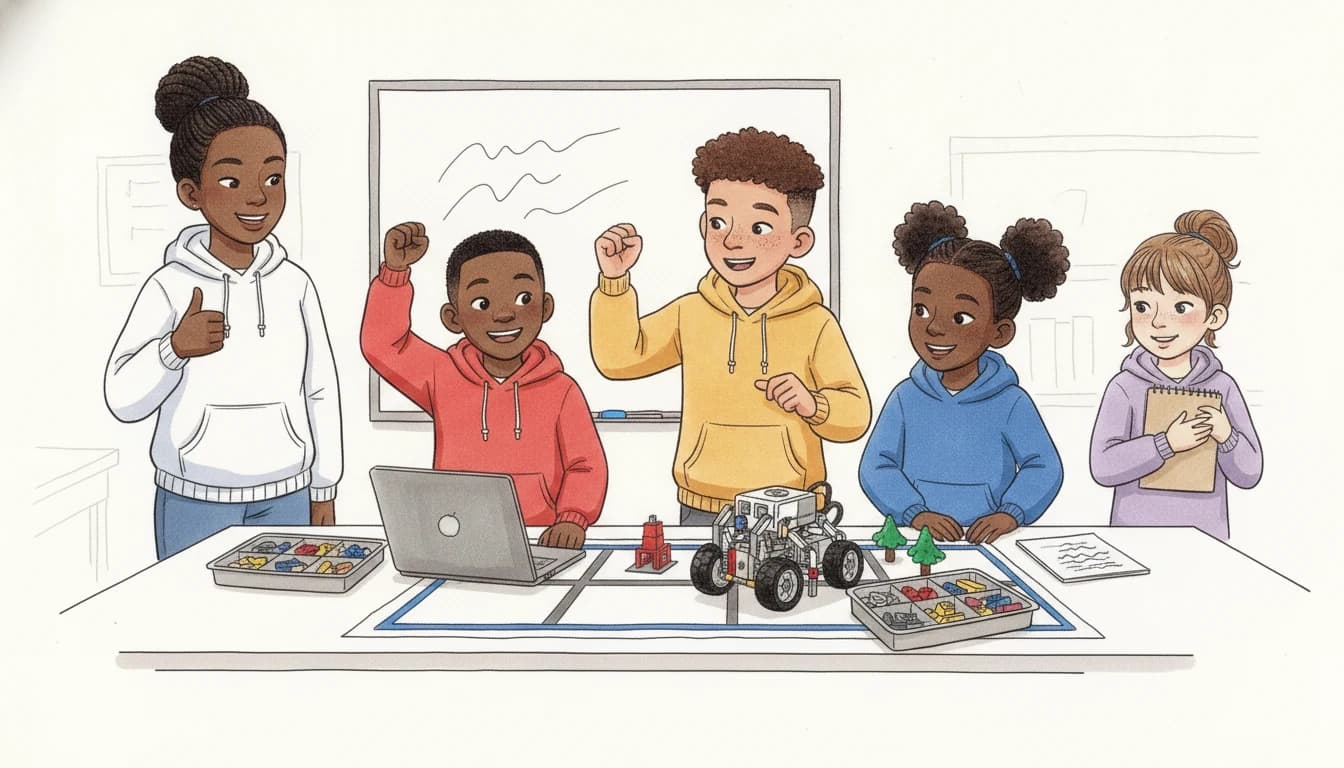
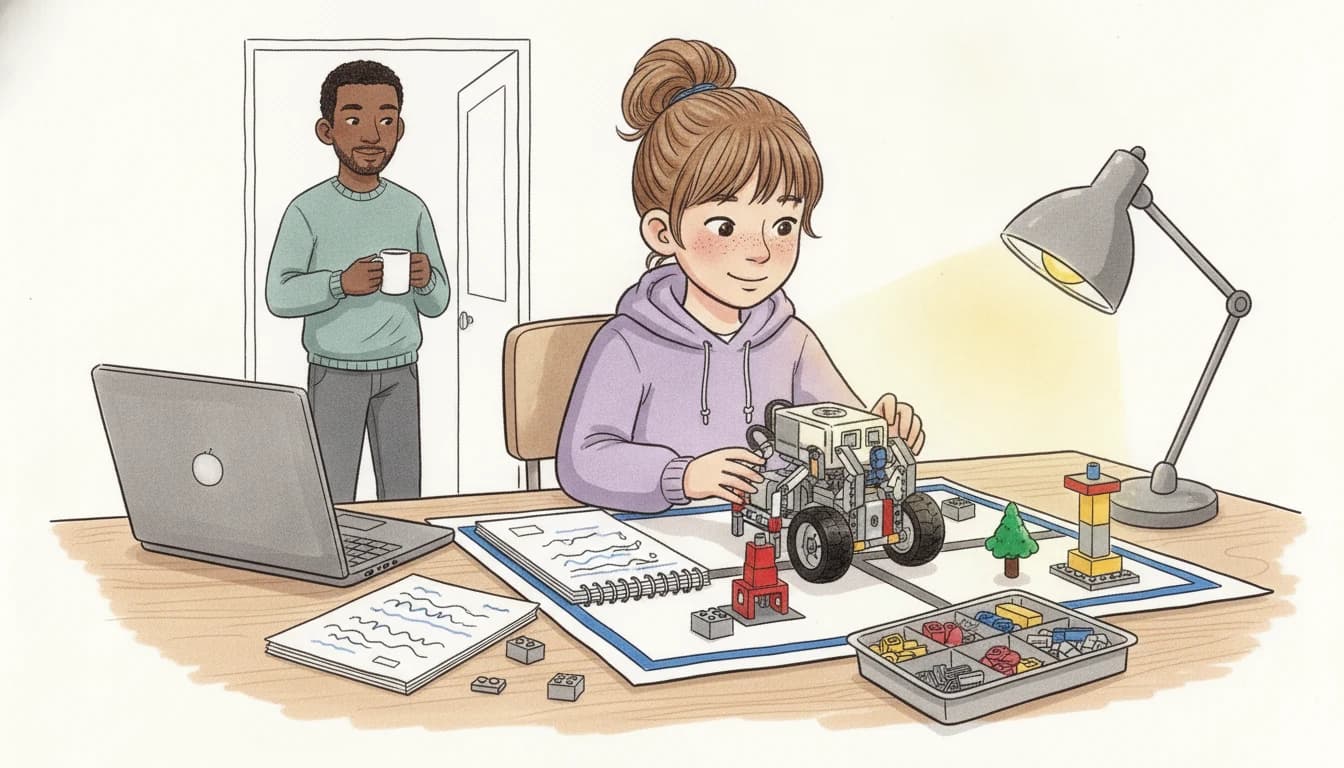
Saying so is part of being responsible.
“It’s my job — so if I can’t do it, I keep quiet.”
That is the one habit that costs a team a season. A child stuck alone at the laptop, with the robot turning the wrong way for the tenth time, is a child whose problem stays stuck. What a really good teammate says is: “I’m stuck — can we look at this together?” Take it on, try it, get stuck, say so early.
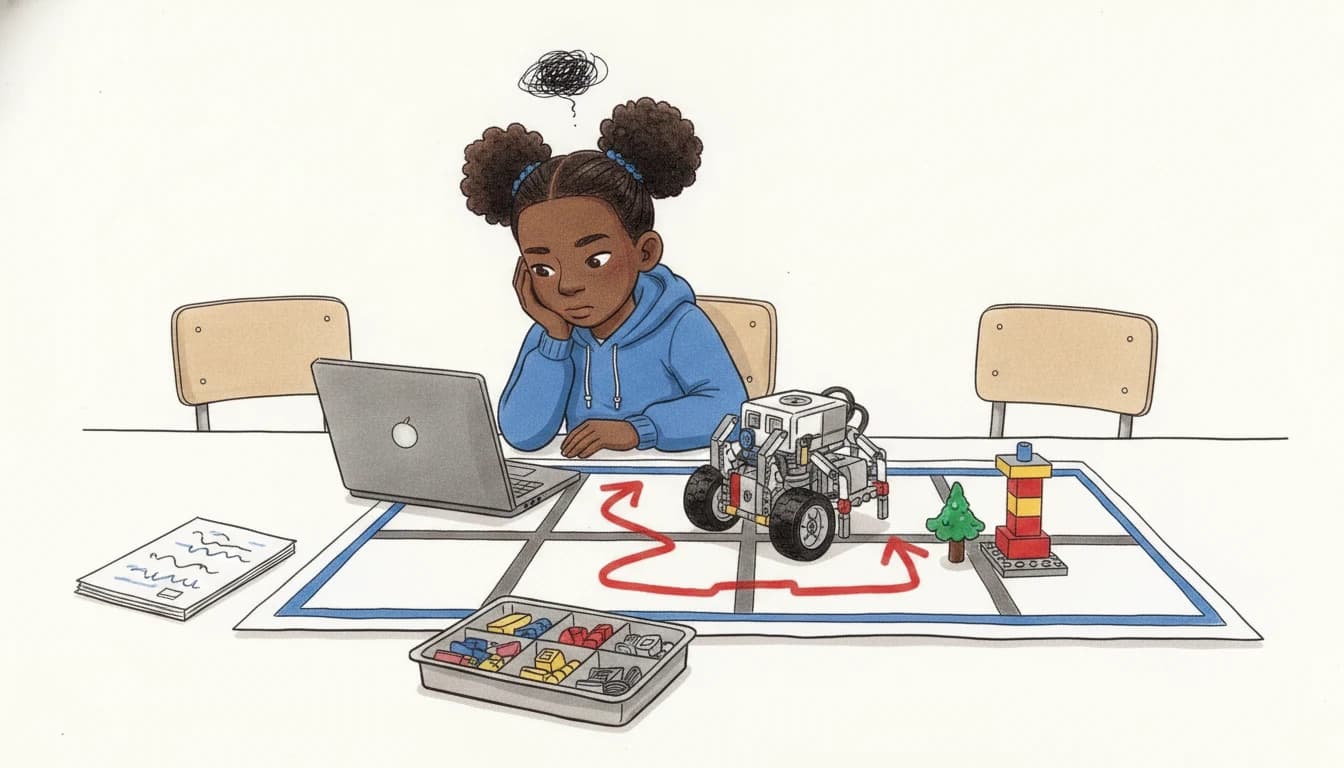
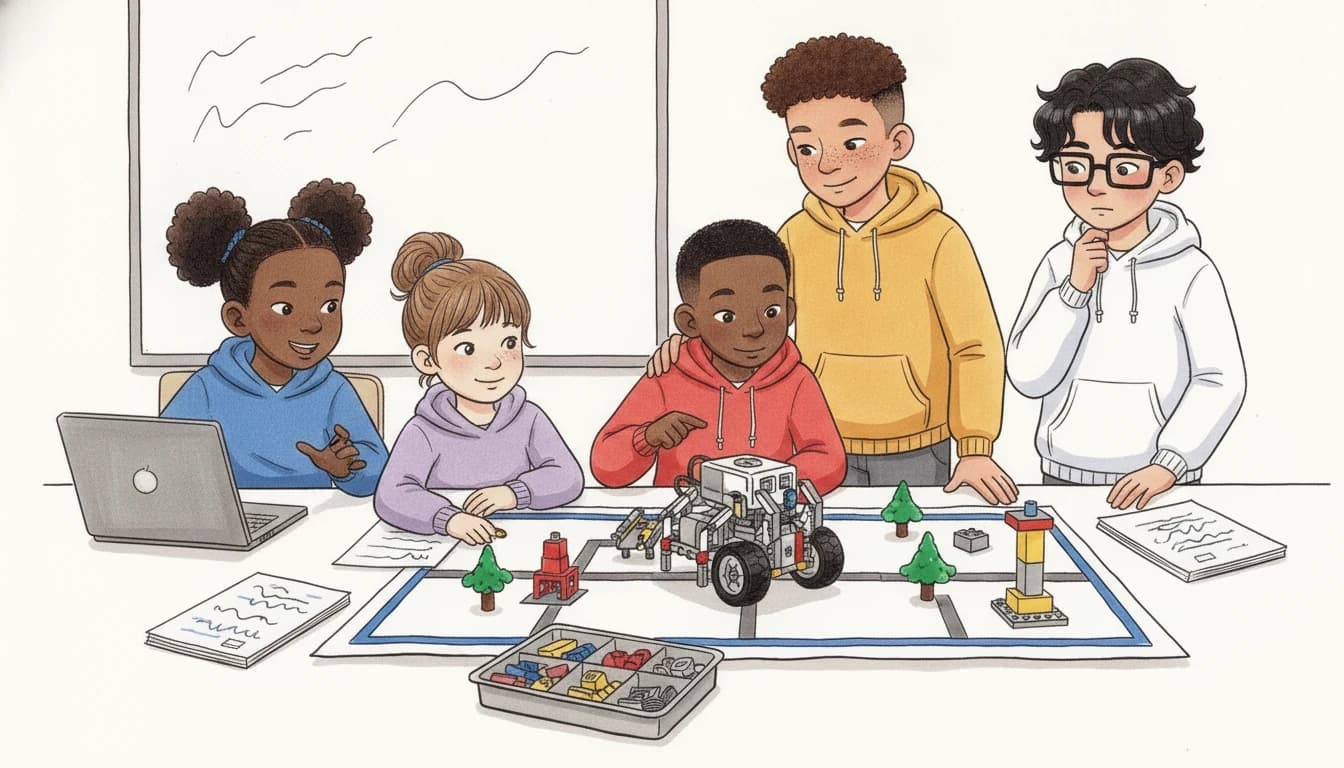
Getting stuck is normal. Saying so early is the skill.
Good teams argue too.
What matters isn’t avoiding the argument — it’s learning how to have one. Coming in from the left has to be faster. No, the right side works more often. So run both, five times each, and write the numbers down. Plan A scored three out of five. Plan B scored five out of five. The argument is over, and nobody had to lose it.
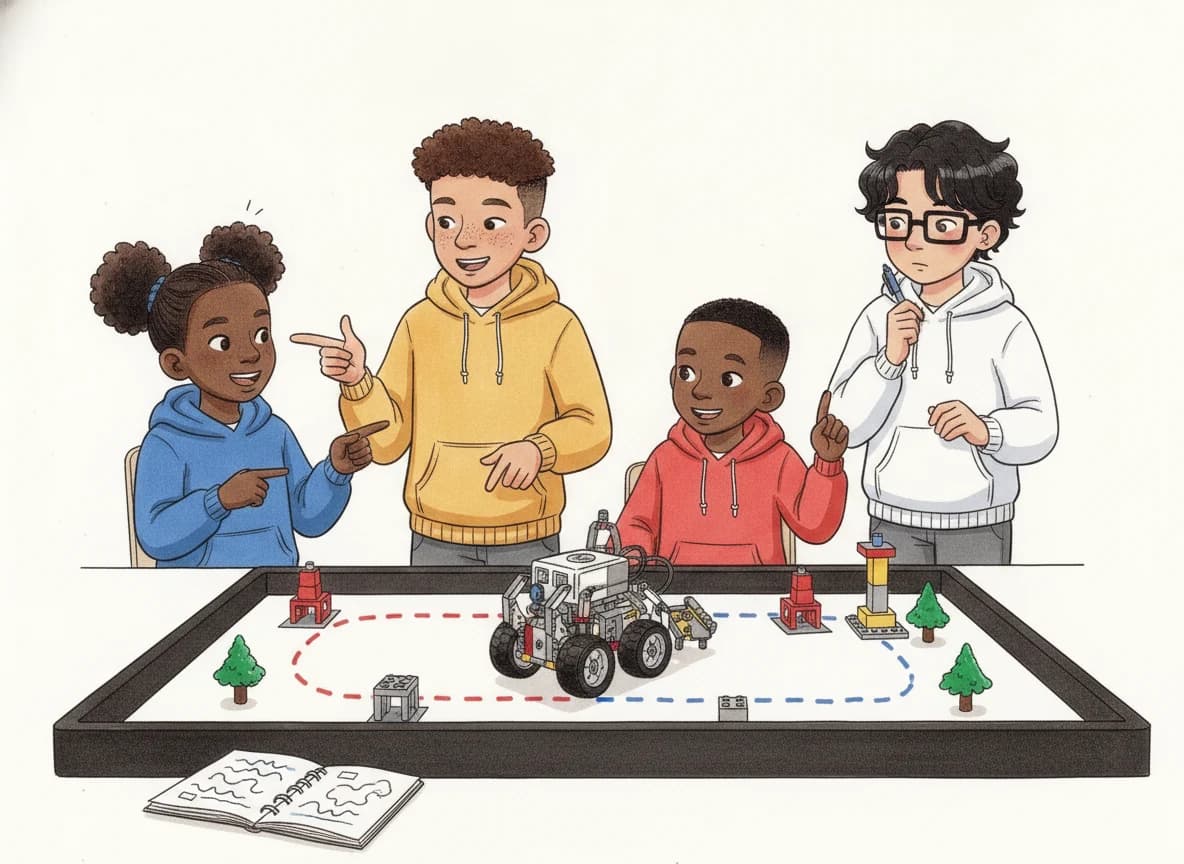
Don’t argue about who’s right. Let the test decide.
The strongest child on the team sometimes has to learn to slow down.
“Here, give it to me — I can build that in a minute” is usually true, and it is the fastest way to lose a teammate. “You try. I’ll talk you through step one” costs ten minutes and gives the team a second builder for the rest of the season.
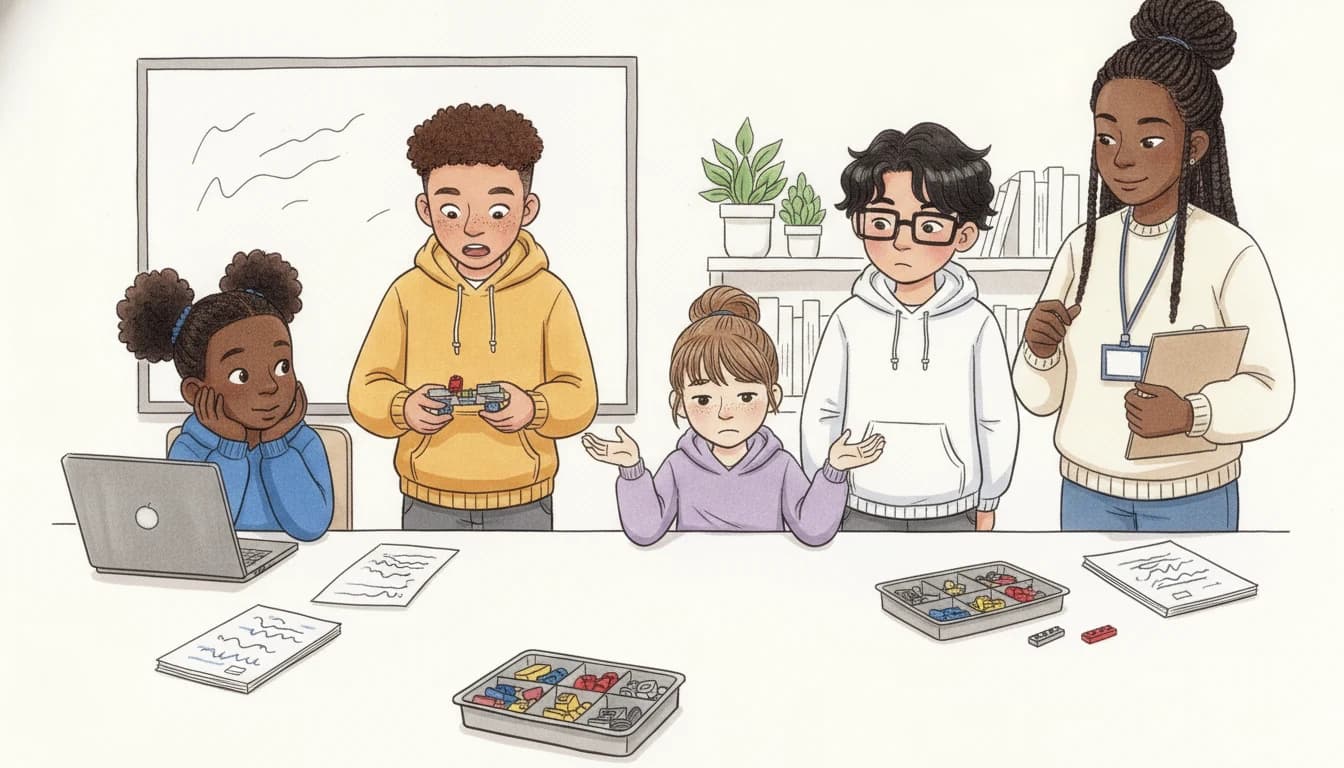
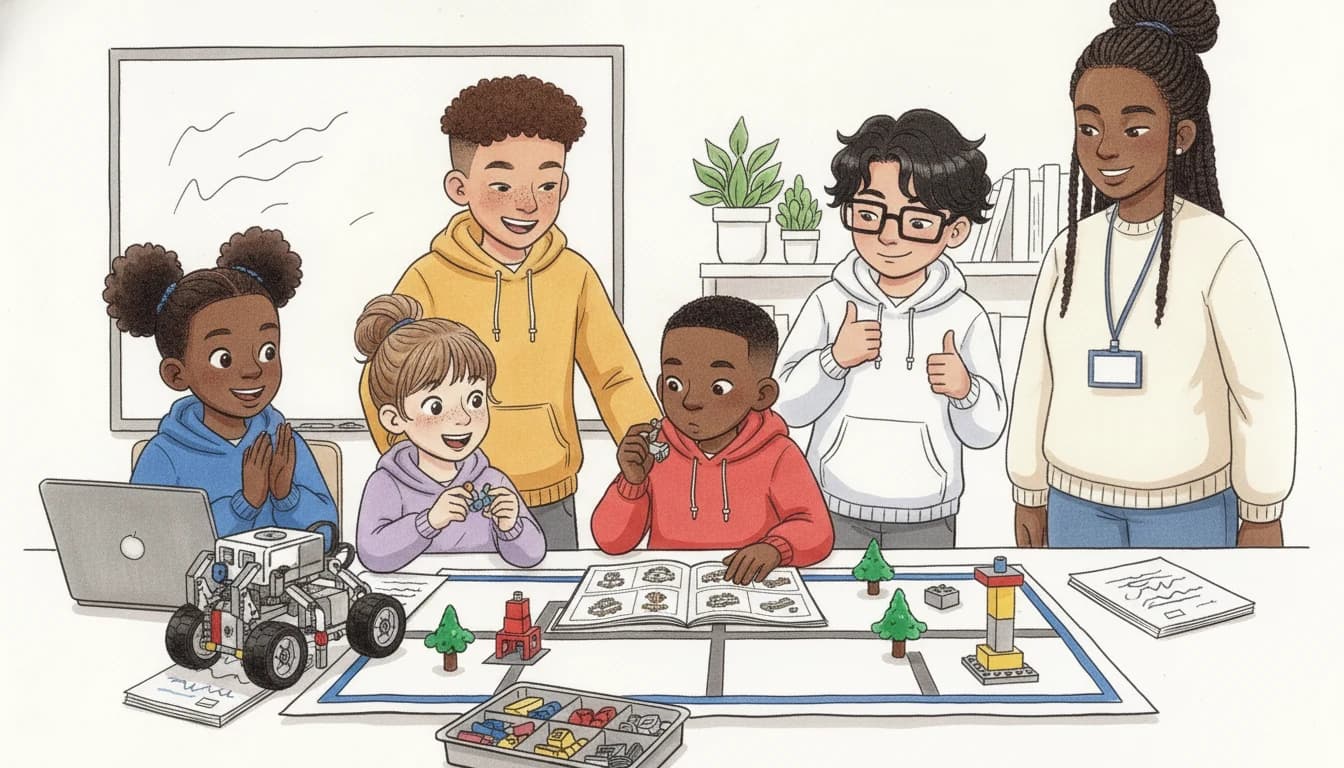
Doing it yourself is faster. Teaching your teammate is what makes the team stronger.
Some children need to learn to step back. Others need to learn to step forward.
In every team there is a child holding an idea they have not said, because everyone else seems to know more. The same afternoon that teaches one child to make room teaches another one to take it — and both of those are the point.
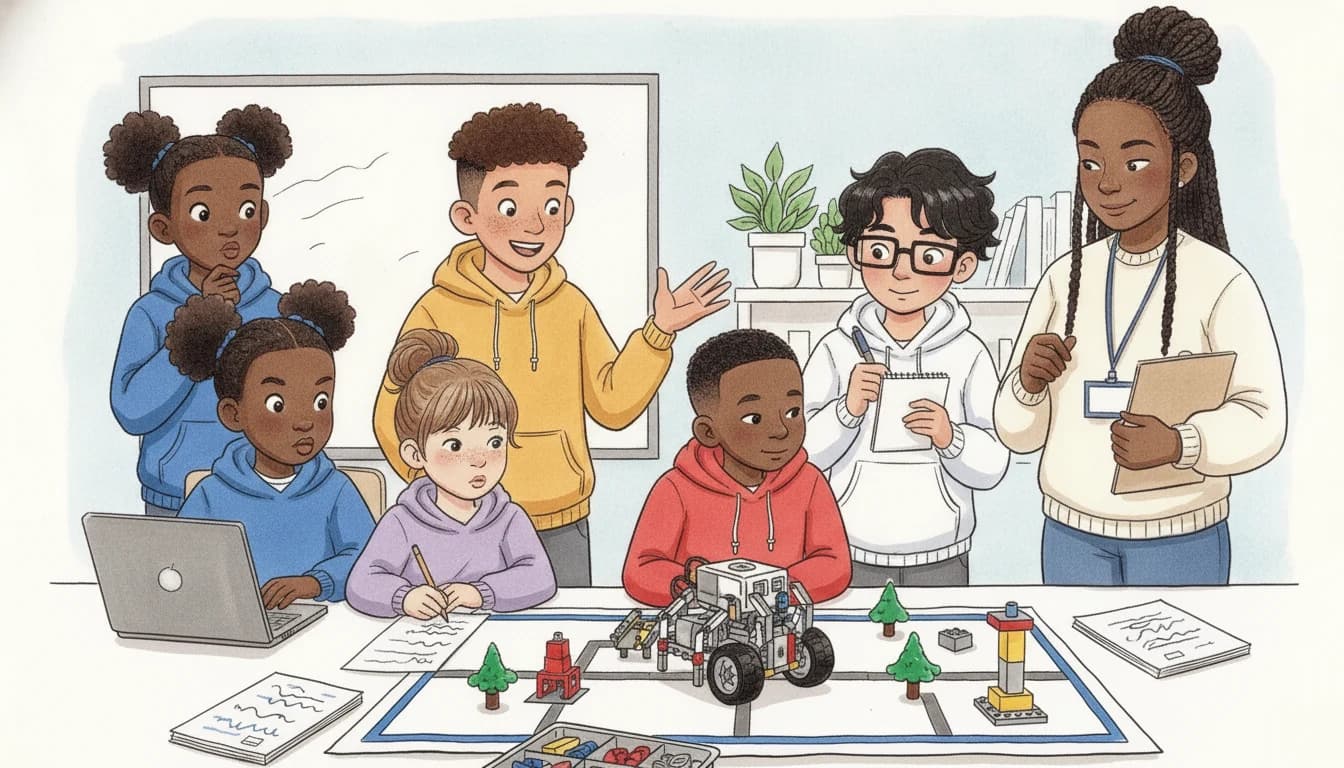
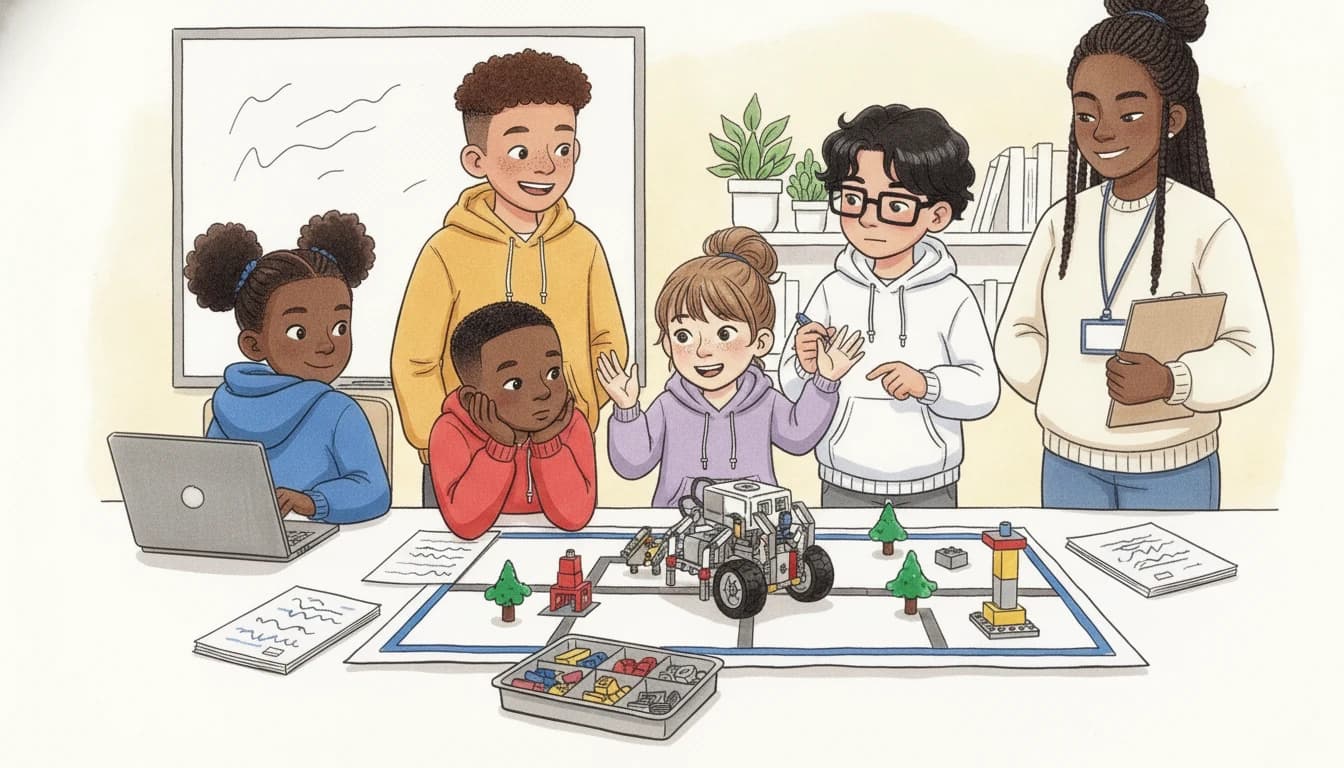
Give someone else the chance — and make your own.
“I did three jobs. Why did he only do one?”
Teamwork is not an equal split of arithmetic. One child’s single job may be the Innovation Project presentation — the part the judges spend eight minutes on. Different jobs carry different difficulty, and every stage of a season needs different people.
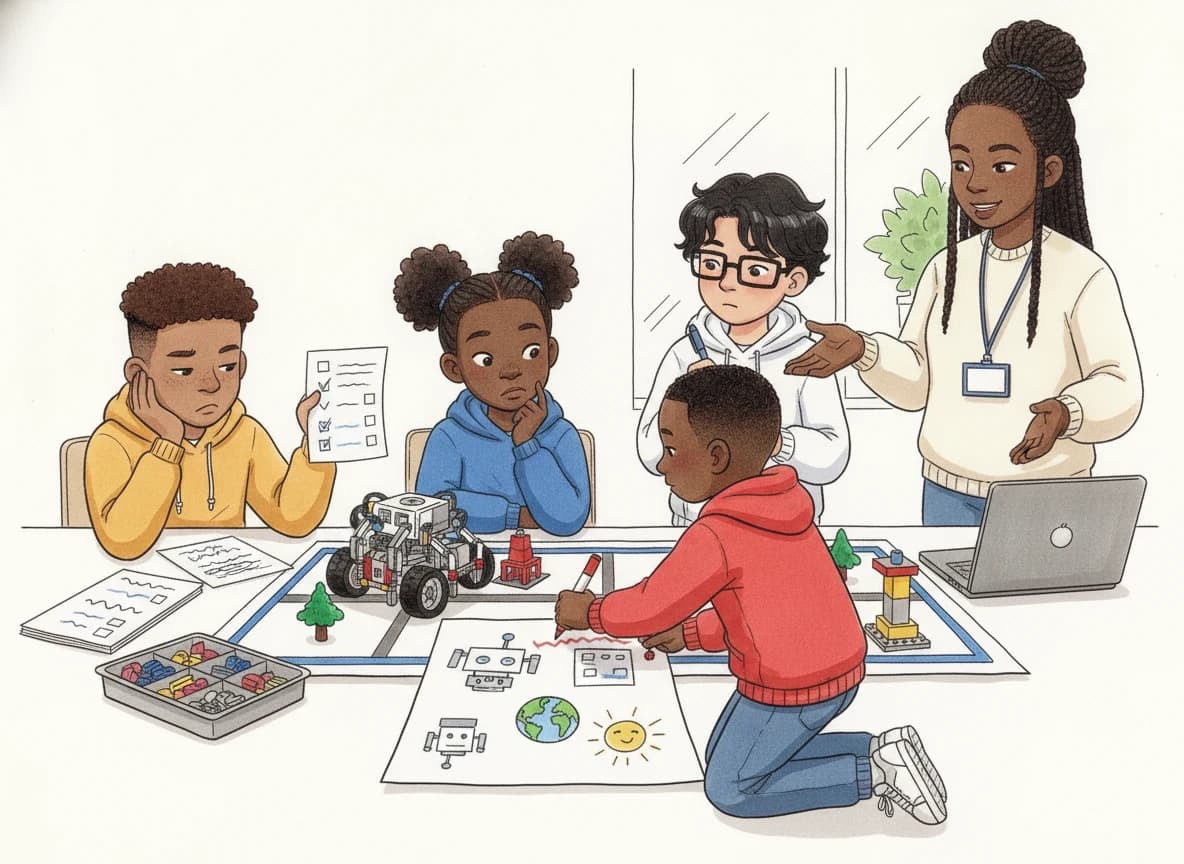
- 1. Did everyone take part?
- 2. Did they carry what they took on?
- 3. Did it bring the team something?
Different contribution, same value.
Scaffold, not solve.
This is the one for the grown-ups. Deciding it for a child costs them the chance to think it through and fix it themselves. Asking the next question lets them find their own way, and grow inside the conversation. Three questions do more than any answer:

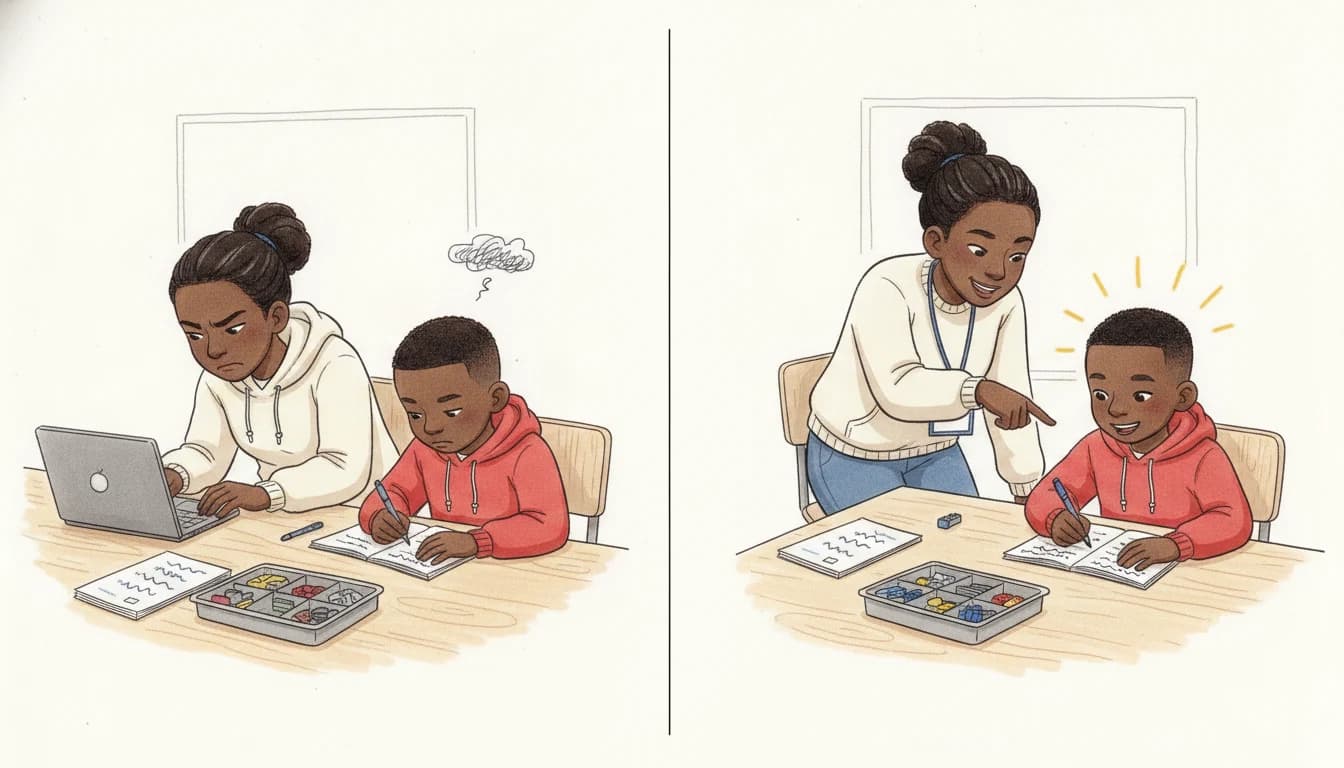
- 1. Have you explained your idea so they can follow it?
- 2. Have the two of you tried it two different ways?
- 3. What will you say to your teammate next time?
Prompting: yes. Replacing: no.
So what is good FLL teamwork?
Different ideas, pulled in the same direction, make something bigger possible.
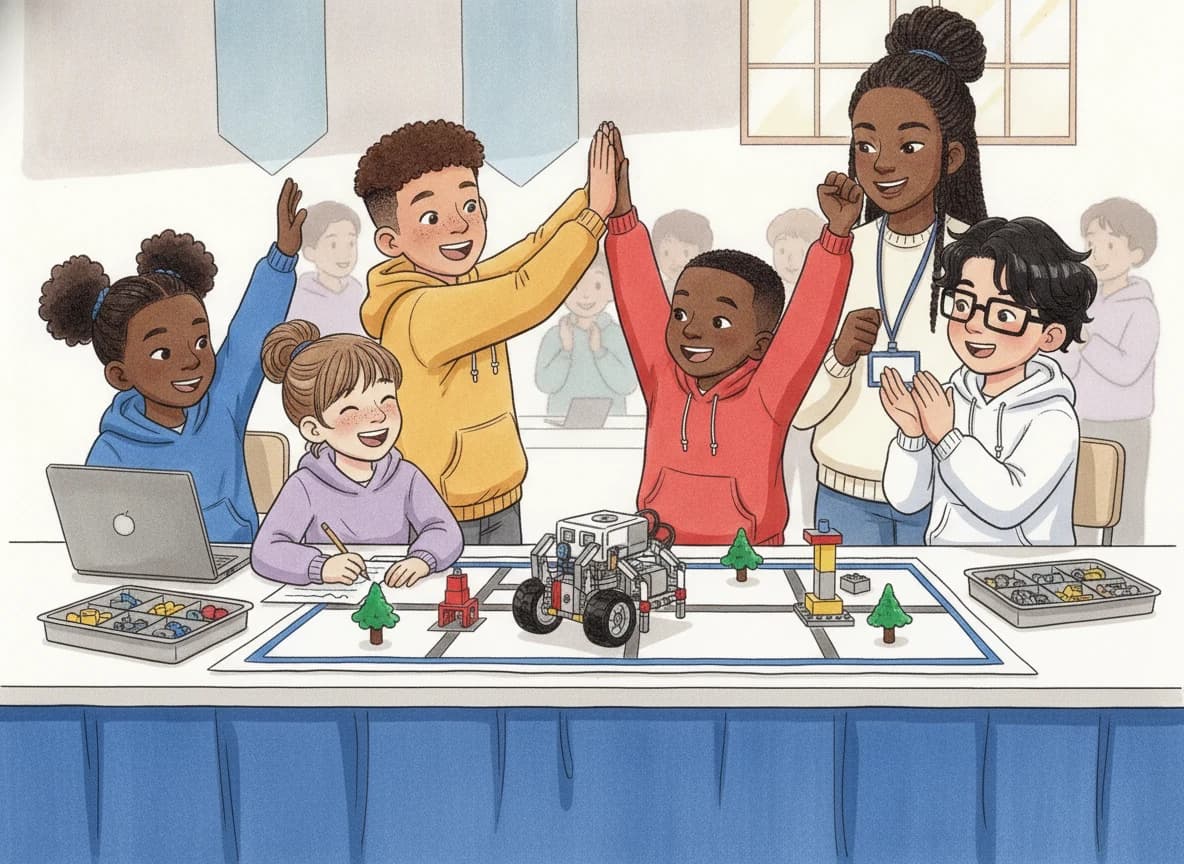
A good team is not
- a team that never argues
- everyone doing exactly the same thing
- the strongest one doing all of it
- adults solving every problem
It’s children slowly learning to
- own the job they took on
- speak up early when they’re stuck
- actually listen to someone else’s idea
- settle a disagreement with a test
- leave room for someone else to get in
- pick up their share without being asked
- need less and less adult managing
FLL looks like it is about robots. What it is really practising is how to do something complicated, with other people — for the rest of their lives.
This is what your child practises at Sheen Academy.
Come and build a team.
FLL teams fill on a first-come basis, and the FTC squad has just ten seats.
See the programmes and registerTake it home
The same twelve pages as a printable flyer — handy for a school noticeboard or a parents’ evening.
Download the flyer (PDF)FIRST®, FIRST® LEGO® League and FIRST® Tech Challenge are trademarks of FIRST and the LEGO Group, which do not sponsor or endorse Sheen Academy.